Beyond Meta and Nuclear: Inside Vistra’s Real Power Play
Vistra just signed 20-year nuclear deals with Meta and AWS, acquired thousands of megawatts of gas generation, and committed a billion dollars to an AI venture with NVIDIA and KKR. What CEO Jim Burke is actually assembling underneath all of…

This post may contain links from our sponsors and affiliates, and Flywheel Publishing may receive compensation for actions taken through them.
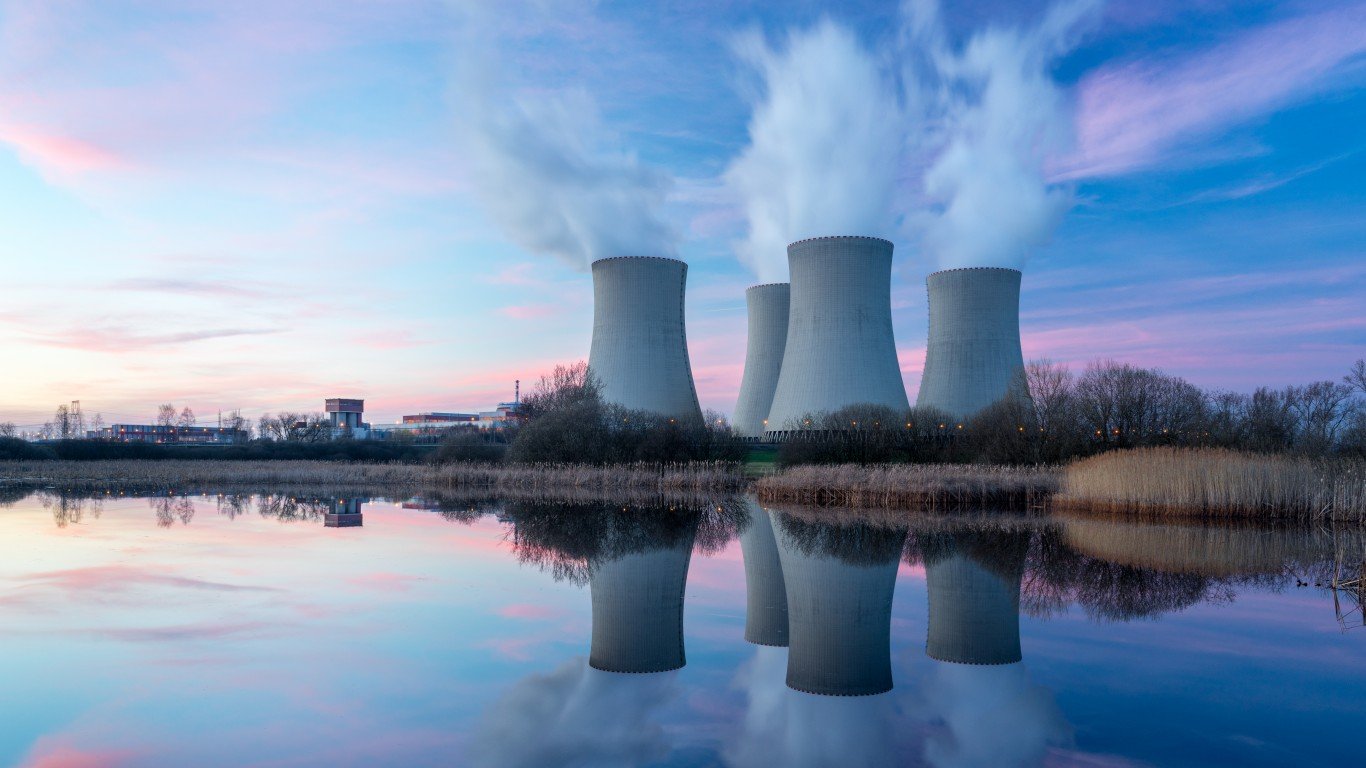
Vistra (NYSE:VST | VST Price Prediction) has become a multi-asset, hyperscaler-anchored power platform spanning nuclear, gas and solar. In the last nine months the company has closed the Cogentrix natural gas acquisition, signed 20-year power purchase agreements with Meta Platforms (NASDAQ:META) for more than 2,600 MW across its PJM nuclear fleet and moved forward on restarting a nuclear plant.
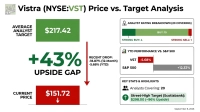
Shares are up 8.4% over the past week to $149.46 as of Sept. 8, though still down nearly 23% over the past year. The question is what CEO Jim Burke is actually building underneath all of it.
A Merchant Fleet Rebuilt for AI Load Growth
Start with scale. The Cogentrix close adds a 5,500-MW natural gas generation portfolio across the Midwest, Northeast, and California, layered on top of the 2,600-MW Lotus portfolio Vistra closed in November 2025. Add two new Permian Basin gas units totaling 860 MW under construction, and the merchant footprint is expanding into exactly the regions where PJM tightness and Texas load growth are most acute.
Burke framed the customer dynamic bluntly on the Q2 call: “The large load customers, they are interested in contracting with existing, and they are interested in contracting at a premium with existing because it’s still a discount to what new build costs.” He added that “the price of equipment in some cases has doubled, if not tripled.”

Nuclear Is the Crown Jewel
The Meta deal covers energy, capacity, and uprates across Vistra’s four PJM nuclear units, and supports subsequent 20-year license renewals. It follows a 20-year PPA with AWS for up to 1,200 MW of carbon-free power at Comanche Peak, which Burke said “we expect will underwrite continued operations at the plant through the middle of this century.” The Meta PPAs are expected to begin contributing to Adjusted EBITDA in 2027.

Helix Is the Optionality Layer
Then there is Helix Digital Infrastructure, the new venture with NVIDIA, KKR, and the Kuwait Investment Authority, where Vistra committed up to $1.0 billion and is the preferred power provider. Burke called it “an additive proposition for Vistra” and said if milestones are hit, “we’d put in an additional $500 million.” Vistra is one of a small set of names quietly powering the AI data-center buildout: We profiled seven of these picks-and-shovels suppliers in a free report you can grab here.
Numbers Backing the Build
Q2 2026 delivered Ongoing Operations Adjusted EBITDA of $1.77 billion, up more than 30% from $1.35 billion, on revenue of $4.02 billion. Guidance was reaffirmed at $6.80B to $7.60B for 2026, with a 2027 midpoint opportunity of $7.40B to $7.80B that still excludes Cogentrix and Meta. CFO Chris Moldovan quantified the upside: “You could reasonably conclude that they’d add roughly $700 million to our midpoint opportunity, absent any other impacts.”
Risks Investors Should Not Ignore
The balance sheet is doing heavy lifting. Vistra is funding gas builds, nuclear uprates, the Helix commitment, and buybacks simultaneously, while carrying meaningful debt against a merchant cash flow base. Unrealized mark-to-market hedging losses of $472 million hit Q2 GAAP results, and Moss Landing decommissioning costs remain in the Asset Closure segment. Integration risk from Cogentrix is real. Moldovan also warned that on the 2027 range, “we would be trending towards the lower end” given softer ERCOT forwards.
What Vistra is actually building is a contracted, hyperscaler-anchored generation platform spanning nuclear, gas, and solar, with Helix as the growth channel. Watch the Q3 call for the first guidance refresh that folds Cogentrix and Meta in.
Contact [email protected] for any questions or corrections.
Joel South covers large-cap stocks, dividend investing, and major market trends, with a focus on earnings analysis, valuation, and turning complex data into actionable insights for investors.
He brings more than 15 years of experience as an investor and financial journalist, including 12 years at The Motley Fool, where he served as an investment analyst, Bureau Chief, and later led the Fool.com investing news desk. He has also co-hosted an investing podcast and appeared across TV and radio discussing market trends.