OpenAI Picked Broadcom for Its First Custom AI Chip. The Race for Number Two Just Got Dangerous.
OpenAI just disclosed a Samsung chip partnership, and investors are already punishing Broadcom stock for it. But the key question nobody is asking is whether Samsung actually took anything Broadcom had.


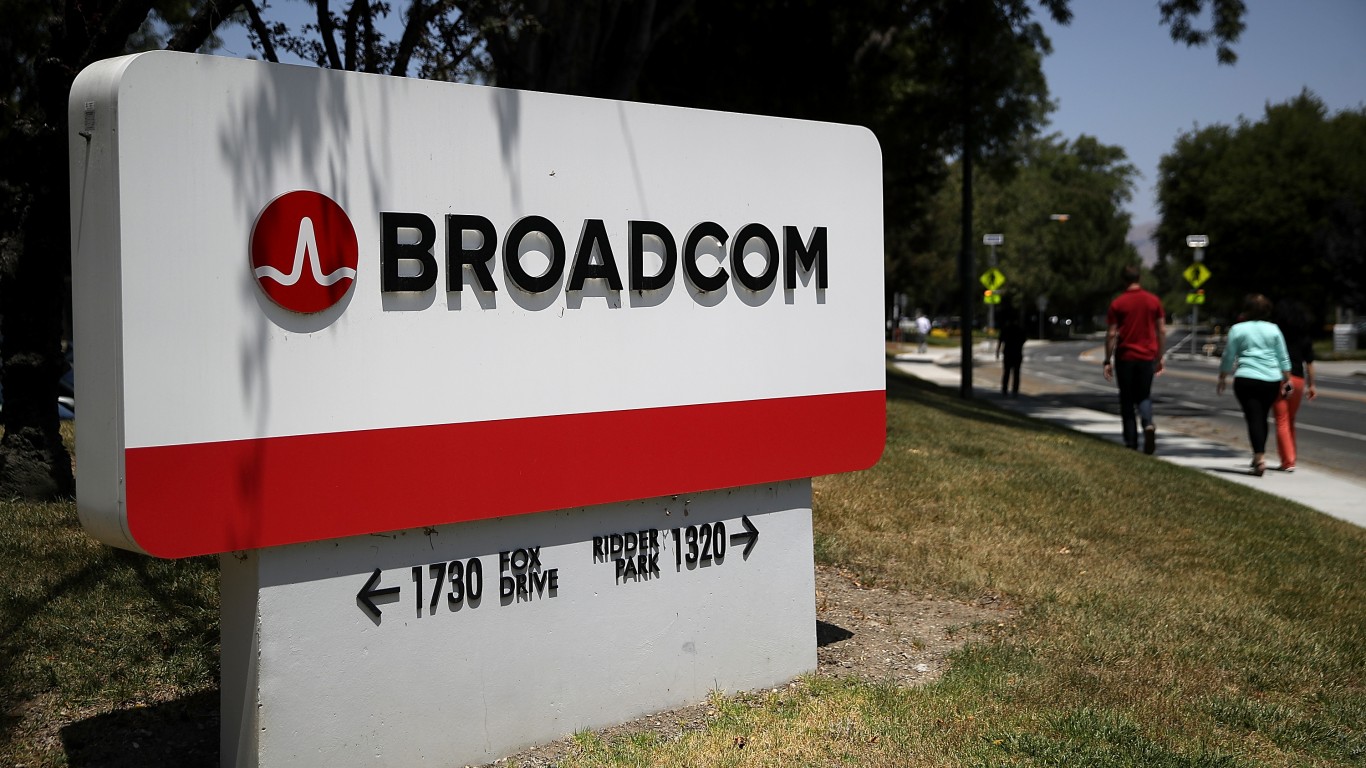
Broadcom’s (NASDAQ:AVGO | AVGO Price Prediction) position inside OpenAI became one of the most valuable customer relationships in semiconductors in June, when OpenAI unveiled Jalapeno, its first custom AI inference chip, developed with Broadcom. That work put Broadcom inside a customer that could become one of the largest silicon buyers on the planet.
Then OpenAI disclosed that it is working with Samsung on next-generation chips, without specifying Samsung’s role. Samsung could supply memory, fabricate logic, contribute design work, or eventually compete for a successor to Jalapeno. Nobody outside the two companies knows which.
Broadcom stock closed at $364.38 on Wednesday, down 13.74% over the past month, and part of that drawdown is investors pricing the Samsung uncertainty into a name trading at 47 times trailing earnings.
What Broadcom Actually Won Inside OpenAI
On the September 2 earnings call, CEO Hock Tan said Broadcom shipped Jalapeno to OpenAI during the quarter and is on track for a planned deployment of 1.3 gigawatts in 2027, with line of sight to over five gigawatts in 2028. That trajectory would make OpenAI Broadcom’s second-largest XPU customer behind Anthropic.
Tan’s framing was direct:
“The lesson here is when you co-develop a chip that is optimized for your particular LLM workloads, you will outperform any GPU.”
Broadcom is already developing OpenAI’s third-generation XPU, which suggests the design relationship extends well beyond Jalapeno itself.
The company projects $115 billion in AI semiconductor revenue in fiscal 2027 and $230 billion in fiscal 2028. Those are Broadcom’s forecasts, and they assume the marquee lab customers stay marquee.
Reading the Samsung Disclosure Without Overreading It
Nothing OpenAI has said supports the claim that Samsung has displaced Broadcom or won any specific piece of work. The disclosure is preliminary and vague on specifics.
The layers matter here. Someone designs the accelerator, someone fabricates it, someone supplies the HBM stacked next to it, and someone supplies the switch silicon that lashes thousands of them together. Broadcom’s moat sits in accelerator co-design and Ethernet networking.
Samsung is a foundry and a leading memory vendor. A second partner at the memory or fab layer does not automatically displace an incumbent at the design and networking layer, and Broadcom’s Tomahawk 6 and Tomahawk Ultra platforms are what tie the XPUs together regardless of who fabs them.
What would actually threaten Broadcom is OpenAI awarding Samsung the design mandate for a Jalapeno successor, or standardizing on a non-Broadcom scale-up fabric. Neither has been announced.
Numbers Backing the Thesis
Q3 AI semiconductor revenue reached $16.7 billion, up 221% year-on-year, with XPUs at 73% of AI revenue. Free cash flow was $13.66 billion.

Analysts carry an average price target of $533.41, with 37 Buy and 8 Strong Buy ratings against 4 Holds. Forward earnings sit at 19 times, which is not demanding if the fiscal 2027 AI plan lands anywhere close.

Is AVGO Stock a Buy?

Broadcom looks well-positioned based on the current setup. The Samsung disclosure is a legitimate risk to monitor, but it doesn’t change the fact that Broadcom sits inside four hyperscale design programs (Google, Meta, Anthropic, OpenAI) with multi-generation roadmaps and owns the Ethernet fabric those clusters run on.
The same buildout is pulling in a wider cast of suppliers beyond the accelerator names, which we profiled in a free report on seven AI infrastructure stocks that aren’t chipmakers. Until OpenAI names Samsung as the designer of Jalapeno’s successor, the base case remains that the June win still counts.
Contact [email protected] for any questions or corrections.
Omor Ibne Ehsan is a writer at 24/7 Wall St. He is a self-taught investor with a focus on growth, cyclical, and dividend equities that have strong fundamentals, value, and long-term potential. He also has an interest in high-risk, high-reward investments such as penny stocks.