Hershey’s Dividend Is Finally Growing Again After a Nearly 2-Year Freeze
Hershey froze its quarterly dividend for five straight cycles, and shareholders who only watched the yield number missed the warning buried in the income statement. Now that the payment is moving again, the real question is whether this resumption signals…

This post may contain links from our sponsors and affiliates, and Flywheel Publishing may receive compensation for actions taken through them.
Most Hershey shareholders spent the last two years watching a yield number and missed the more important story hiding behind it. The quarterly dividend stopped growing. From the February 2024 ex-date through the November 2025 ex-date, Hershey (NYSE:HSY | HSY Price Prediction) held its quarterly payment flat at $1.37 per share for five consecutive quarterly cycles. Then, starting with the February 17, 2026 ex-date, the payment stepped up to $1.452 per share, a level that has now held for three consecutive quarters, including the September 15, 2026 payment investors just received.
A freeze differs from a cut, and that distinction matters. But a company that stops growing its dividend is choosing to protect cash, and boards do not do that when everything is running smoothly.
What the Freeze Actually Signaled
Hershey’s income statement during the freeze window tells the story the dividend was trying to warn about. Full-year 2025 net income came in at $883.3 million, down sharply from $2.22 billion in 2024. Operating income collapsed to $1.42 billion from $2.90 billion a year earlier. Adjusted EPS fell to $6.31, a decline of roughly 36% to 37%, pressured by record cocoa costs and $160 million to $170 million in tariff expenses.
The single quarter that best captures the squeeze is Q2 2025: net income of just $62.7 million on revenue of $2.61 billion, with operating income compressed to $192.8 million. Against that backdrop, the annual dividend outlay was still climbing: total dividends paid rose to $1.085 billion in 2025 from $1.085 billion in 2024 and $889 million in 2023. Holding the per-share rate flat was how management kept that outlay from swallowing more of a shrinking earnings base.
Why the Resumption Matters More
Boards do not restart dividend growth casually. The bump to $1.452 for the February 2026 ex-date, and its persistence through the May and August ex-dates, is a statement about forward cash flow that carries more weight than any management quote.
The 2026 numbers back the confidence. Q1 2026 adjusted EPS came in at $2.35 versus $2.05 estimated on revenue of $3.10 billion, up 10.7% year over year. Q2 2026 followed with adjusted EPS of $1.90 versus $1.43 estimated, revenue of $2.79 billion, up 6.6%, and adjusted gross margin expansion of 350 basis points to 41.6%. Full-year 2026 guidance now calls for adjusted EPS of $8.36 to $8.52, implying 32.5% to 35% growth off the 2025 base.

On the July 30 call, CFO Steve Voskuil said the company has “good visibility into cocoa deflation next year” and that hedging strategies “will allow flexibility to participate in further deflation as the markets normalize.” He also placed the buyback behind organic investment and M&A in the capital allocation order, calling repurchases something that “puts good tension into the process” rather than a top priority. The dividend, notably, did not come up.
Business Behind the Payout
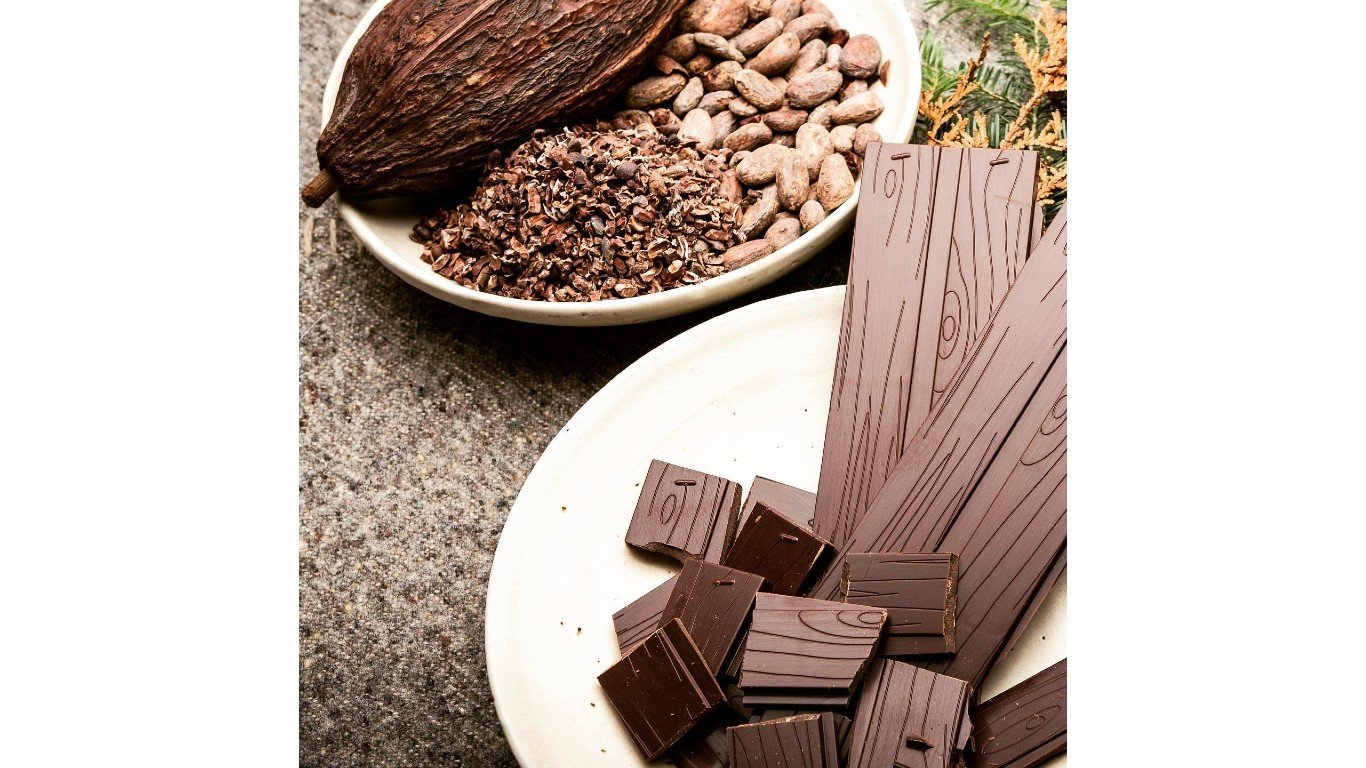
Hershey sells chocolate and confectionery under Reese’s, Hershey’s, Kit Kat, Jolly Rancher, and Cadbury, plus a fast-growing salty snacks portfolio built through acquisitions including LesserEvil and the DOTS pretzel business. Distribution runs through grocery, mass, convenience, and e-commerce. The North America Confectionery segment is the largest, with North America Salty Snacks the fastest growing.
Scoring the Payout
The current yield sits at 3.24%, with an annualized forward rate of $5.808 and a trailing 12-month total of $5.726. Against trailing diluted EPS of $7.28, the payout ratio is elevated but covered. The balance sheet shows $791.2 million in cash against $5.61 billion in total debt at June 30, 2026, with retained earnings of $5.81 billion. Operating cash flow was $2.28 billion in 2025, comfortably above the $1.085 billion dividend outlay even in a bad earnings year.
Grade: B. The yield is solid, coverage held through the worst earnings year in recent memory, and management just signaled forward confidence with a real increase. What keeps it out of A territory is the fact that this dividend already froze once. A payout that stopped growing for five consecutive quarters when cocoa spiked and tariffs hit can do it again if either pressure returns. Income investors buying HSY for reliability should treat the growth streak as reset to a small number rather than a multi-decade record like some peers offer.
What to Watch Next
Three signals will determine whether this growth resumption sticks. First, cocoa. Voskuil said management does “not expect cocoa to remain at current levels long term” and cited “historic surpluses” and healthier inventories. If deflation lands as expected in 2027, the next increase gets easier. Second, the salty snacks margin. Management flagged “margin pressure in the snacking business in the back half” and said the business will be “in better shape as we get to 2027.” Third, the declaration cadence. Hershey historically declares its increase with the late-October or early-November board action; the October 29, 2025 declaration was the last at the old rate, and the February 4, 2026 declaration delivered the increase. If the next fall declaration lifts the rate again, the resumption becomes a trend. If it holds at $1.452, the freeze story is still live.
The stock, for context, is down 2.62% year to date and 3.77% over the past year, closing at $173.32 on September 11, well below the analyst target price of $205.52. The market is not yet pricing the resumption as a durable turn. That is the disagreement worth watching.

Contact [email protected] for any questions or corrections.
Chris Lange is a financial and geopolitical writer with more than a decade of experience covering a myriad of topics. He has published thousands of articles for 24/7 Wall St., with past coverage focused heavily on stocks, IPOs, healthcare, defense, global affairs, and technology.
His work has been quoted, or referenced by a number of outlets including Business Insider, USA Today, Yahoo Finance, MSN, The Motley Fool, and many other publications. A graduate of Southwestern University, he studied business with a focus on investments and has previous experience in banking and startups.
When not reading or writing the news, he is following his passion for Lacrosse, playing chess, or building solar projects with his dad.