Larry Ellison Cancels Plan To Sell $7.5 Billion In Oracle Stock After His Net Worth Dropped $200 Billion In A Year
Larry Ellison registered a plan to sell billions in Oracle stock, then pulled it one day after regulators made it public. The timing raises questions Oracle has chosen not to answer.

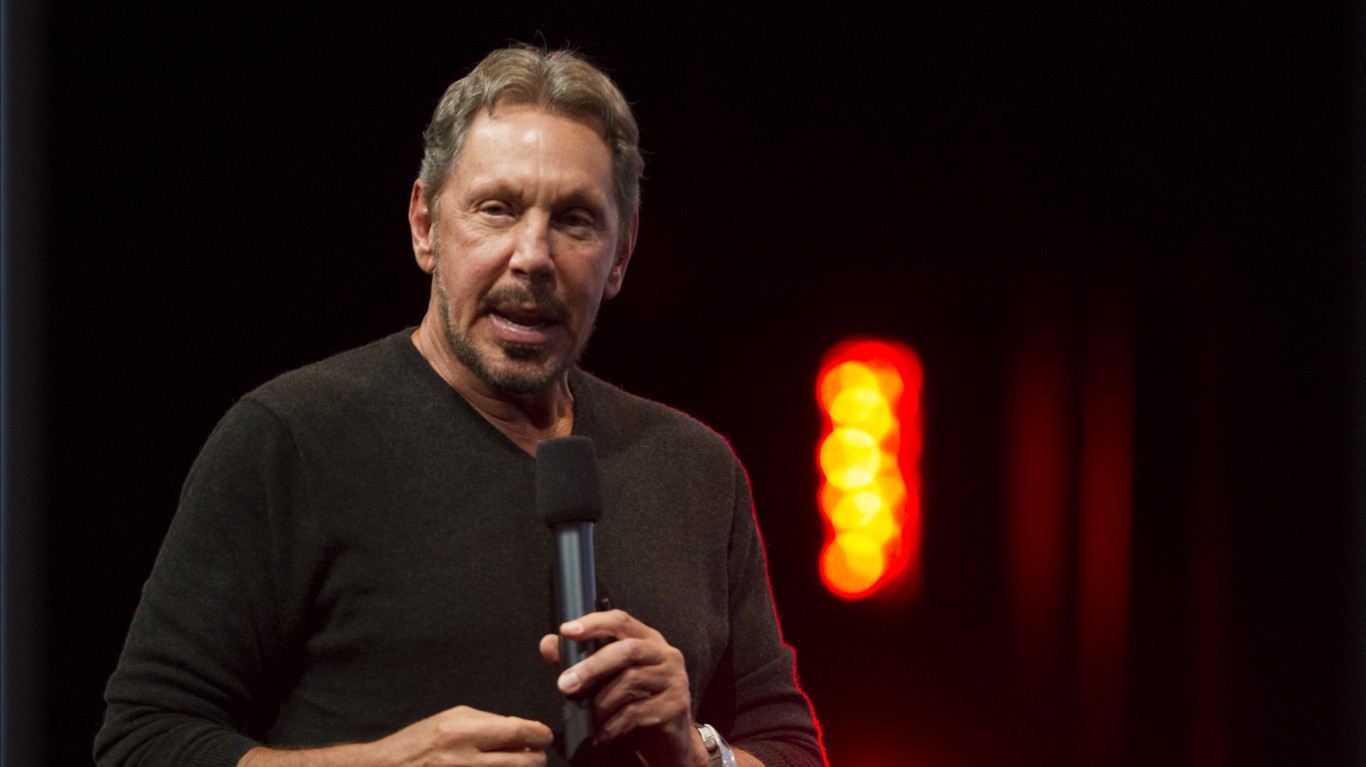
Larry Ellison cancelled a Rule 10b5-1 trading plan that would have allowed him to sell up to 50 million of his Oracle (NYSE:ORCL | ORCL Price Prediction) shares, an arrangement CNBC valued at roughly $7.5 billion at the price at the time of reporting. The size was denominated in shares, so the dollar figure moves with the stock.
According to CNBC, no Oracle stock had been sold under the 10b5-1 plan, and Ellison has no other plans to sell any of his shares. Not a single share moved. He registered an intention and then withdrew it.
Sequence and Timing
The plan itself was a Rule 10b5-1 trading plan, according to CNBC, the standardized mechanism executives use to schedule sales in advance. Per CNBC, the plan was adopted on June 22 and was set to end on Oct. 24. A regulatory filing disclosed its existence on September 11, 2026, as reported by CNBC. Ellison cancelled it the next day, and Oracle announced the cancellation in a news release dated September 12, 2026, CNBC reported. The reversal came one day after public disclosure. Oracle did not explain the reason.
A $400 Billion Peak, Then a Sharp Round Trip
Forbes reported that in September 2025, Ellison became only the second person ever worth more than $400 billion, on the back of an AI-driven surge in Oracle’s stock. Twelve months later, the Bloomberg Billionaires Index showed him at $204 billion and seventh-richest in the world as of September 13, 2026, down $3.14 billion on the day. The two endpoints of the roughly $200 billion decline come from two different wealth trackers, Forbes and Bloomberg, which use different methodologies and routinely publish different valuations for the same person.
Oracle’s Stock and the Debt Story Behind It
Oracle traded at $141.61 on the morning of September 14, 2026, off 5.77% in that session and 10.81% over the prior week. Year to date, the shares are down 26.64%, and over the trailing year they are down 53.48%.
The drop has coincided with a costly transformation from legacy software vendor into AI infrastructure operator. Oracle’s Q1 fiscal 2027 results, filed via 8-K on September 10, showed cloud infrastructure revenue up 121% and remaining performance obligations of $664 billion. The offset: capital expenditures of $28 billion in a single quarter, free cash flow of negative $5 billion, and a completed $20 billion at-the-market equity issuance. Forbes contributor Jim Osman wrote on September 12, 2026 that Oracle continues to burn cash amid AI spending, capital raises and negative cash flow. CFO Hilary Maxson told analysts that infrastructure projects deliver “a free cash flow conversion ratio of something like 100% to post-tax EBITDA” once they ramp, without committing to a date for a return to positive free cash flow.
A Fortune Tied to One Ticker
Ellison is 82, CNBC reported, and founded Oracle in 1977. He continues to control more than 40% of Oracle, CNBC previously reported. That concentration is what makes his standing on any given wealth index track one company’s chart, and it is why a share-denominated 10b5-1 plan of this size registered as news in the first place, according to CNBC. Trading plans are adopted and withdrawn for tax, estate and liquidity reasons that issuers rarely disclose. Oracle did not disclose one here.
Contact [email protected] for any questions or corrections.
AJ spent 10 years writing about financial markets at The Motley Fool. His coverage centers on technology stocks and the broader macroeconomic trends, from interest rates to geopolitics, that shape where markets are headed next. AJ is drawn to the stories where big-picture economics and individual companies collide.