Musk and Cramer Agree on One Thing About the AI Panic
Elon Musk and Jim Cramer landed on the same suspicion about AI doom warnings within hours of each other, but the reasons behind their shared skepticism put them on a collision course with very different conclusions for investors holding Nvidia…

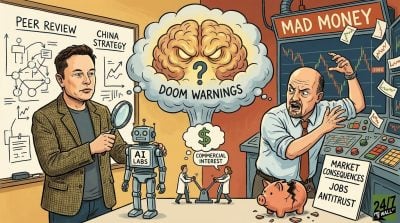
Elon Musk and Jim Cramer do not agree on much. Within a single evening this week, on two different broadcasts, they landed on the same suspicion about doom warnings from top AI labs.
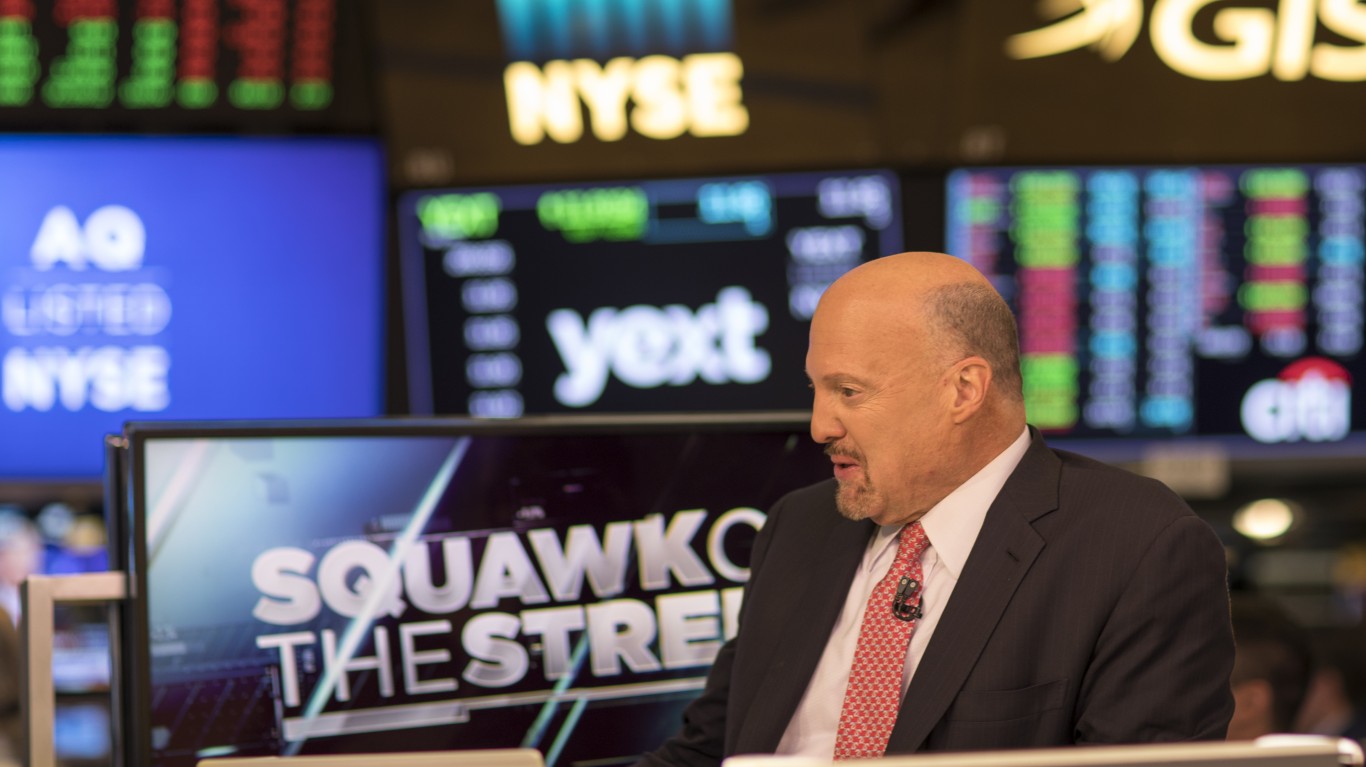
Cramer, on CNBC’s Mad Money, told viewers he is “naturally skeptical when these leading AI labs are pushing policies that could make them a heck of a lot more profitable and leave everyone else behind.” Hours earlier, on the All-In podcast, Musk floated a solution carrying the same premise: “Instead of grading your own homework, have all the smartest humans try to figure out if this model is going to be a bad actor.”
Both agree that those raising the alarms have a commercial interest in doing so. Everything after that splits.
Musk Answers With a Mechanism
Musk’s proposal is procedural. He wants rival artificial intelligence companies applying each other’s test harnesses before a model ships. A test harness is a battery of scripted prompts and adversarial probes designed to see if a model will lie, leak data, help build a weapon, or otherwise behave badly under pressure. Today, each lab writes its own harness and grades its own model. Musk wants peer review, with OpenAI running Anthropic’s probes, Anthropic running xAI’s, and so on.
His second point matters more for policy. “Any given proposal has to be something that China is willing to accept. Otherwise we’re just handicapping ourselves and China will essentially win and it won’t really matter what we do,” Musk said. Any safety regime the Chinese frontier will not adopt slows U.S. labs without slowing the frontier itself.
Cramer Answers With Consequences
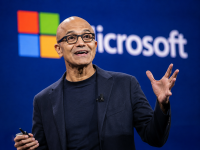
Cramer is looking at what the panic already did to portfolios. “Any company that actually makes or designs or constructs part of a data center got blown out in an attack that lasted most of the session,” he said. That characterization matters for holders of Nvidia (NASDAQ:NVDA | NVDA Price Prediction) and Microsoft (NASDAQ:MSFT).
He points to three pressure points. First, jobs. “They have no answers for the jobs question. None,” Cramer said. Second, antitrust exposure. “You don’t need the government to tell you to slow it down, and you certainly need to worry about antitrust.” Third, politics. “So now there’s this huge blowback to the point where data centers become politically toxic going into election.” His key line is this: “Trust, once destroyed, is very hard to restore.”
The operating picture at these anchor names clashes with the panic. Nvidia reported Q2 FY27 revenue of $96.22 billion, up 105.8% year over year. Data Center revenue of $89.02 billion was up 117% year over year. Management guided Q3 to $108.0 billion in its Q2 FY27 8-K. CFO Colette Kress said Nvidia expects to grow roughly 70% in fiscal 2028 and described the outlook as “supply-constrained.” Microsoft’s Azure crossed $100 billion in full-year FY26 revenue, with commercial RPO at $678 billion, up 84% year over year, and Satya Nadella saying, “Demand continues to exceed available supply.”


Market action tells a different story. Nvidia stock is down 9.5% over the past week, while Microsoft is up 2.6%.
Where the Two Men Disagree
Both are responding to an Anthropic researcher putting 10% odds on AI killing humanity. Cramer discounts the extinction scenario while keeping a concrete near-term threat. “I’m skeptical that AI agents will be able to wipe out the human race. Skeptical, but lots of business owners could certainly have their data held hostage by smart but rogue agents,” he said, telling viewers, “Bottom line, we wait. We see if the existential threat is off the table.”
Musk accepts the danger as plausible but objects to the credibility of the people raising it. Yet the two figures who appear to agree are actually arguing from opposite premises. Cramer thinks the danger is overstated and the political fallout is real. Musk thinks the danger is real and the political process cannot be trusted to price it. Investors in Nvidia and Microsoft should view the panic through both lenses.


Contact [email protected] for any questions or corrections.
Trey has been an editor and author at 24/7 Wall St. for more than a decade, where he has published thousands of articles analyzing corporate earnings, dividend stocks, short interest, insider buying, private equity, and market trends. His comprehensive coverage spans the full spectrum of financial markets, from blue-chip stalwarts to emerging growth companies.
Beyond 24/7 Wall St., Trey has created and edited financial content for Benzinga and AOL's BloggingStocks, contributing additional hundreds of articles to the investment community.
Trey's editorial expertise extends across multiple publishing environments. He served as production editor at Dearborn Financial Publishing and development editor at Kaplan, where he helped shape financial education materials. Earlier in his career, he worked as a writer-producer at SVE. His freelance editing portfolio includes work for prestigious clients such as Sage Publications, Rand McNally, the Institute for Supply Management, the American Library Association, Eggplant Literary Productions, and Spiegel.
Outside of financial journalism, Trey writes fiction and has been an active member of the writing community for years, moderating workshop sessions at regional conventions.