Amazon Buys DuckDB Talent but Leaves the Code Free for Rivals
Amazon just acquired the team behind a wildly popular open-source analytics engine, but the code stays free for Microsoft, Google, and every other rival to use. So what exactly did Amazon buy, and can it turn that into a competitive…

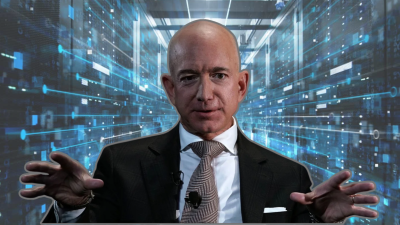
Amazon (NASDAQ:AMZN | AMZN Price Prediction) announced the acquisition of DuckLabs and its founders confirmed the deal had closed, handing the company the engineering team behind one of the most widely adopted analytics engines on the planet. The DuckDB project stays with an independent nonprofit foundation and remains free under a permissive MIT license, which means Microsoft Azure and Google Cloud can keep shipping it without owing Amazon a cent.
AWS is a $42.23 billion quarterly business growing 37% year over year. Every new bolt-on has to justify itself against that base.
What Amazon Bought and What It Did Not
Amazon bought people and roadmap influence. It did not buy the intellectual property, the trademark, or the right to prevent competitors from using the same code.
A permissive MIT license means any competitor can fork the project and build a paid managed service on top. DuckLabs itself has cited more than one million daily downloads, which signals reach rather than paying customers. The purchase price was not disclosed, and against $54.2 billion in quarterly capital expenditures, it is not the kind of transaction that moves the model.
What AWS Can Actually Charge For
Because the engine is free, the monetizable layer is everything around it: S3 storage integration, managed operations, security, billing, and tight coupling to existing services.
Data gravity is the durable lever. Customers usually query where their data already lives, and CEO Andy Jassy has argued that “more of it resides in AWS than anywhere else”. Jassy has also noted that “growth in one is driving growth in the other” between AI and core services.
MotherDuck already commercializes a managed DuckDB service, and Azure and Google Cloud retain the same access AWS has. Closer engineering ties can accelerate features that fit S3 and Bedrock, but every upstream improvement benefits rivals equally.
The optimistic read is ecosystem expansion: a bigger DuckDB user base means more workloads that eventually need a managed home, and AWS starts with the largest installed footprint. With an AWS backlog of $496 billion, the pool AWS is fishing in is genuinely large.
Bull and Bear Case for AMZN Stock
The bull case rests on AWS reacceleration and operating leverage: 39.4% AWS operating margin, a 7.62% year-to-date gain to $248.42, and an analyst target of $328.17 with 44 Buy ratings.


The bear case is the capex bill and its cash-flow cost, with roughly $200 billion planned for 2026 and trailing free cash flow at-$7.6 billion, alongside GAAP earnings flattered by a $53.4 billion non-operating gain tied to Anthropic.
The key variable is whether AWS converts AI demand into paid, high-margin core consumption fast enough to earn a return on that infrastructure buildout.
Contact [email protected] for any questions or corrections.
Omor Ibne Ehsan is a writer at 24/7 Wall St. He is a self-taught investor with a focus on growth, cyclical, and dividend equities that have strong fundamentals, value, and long-term potential. He also has an interest in high-risk, high-reward investments such as penny stocks.