Taiwan Semiconductor Is a No-Brainer Buy On Repeat And Not For The Reason You Think
Everyone buying TSMC stock is watching the wrong number. The real reason to own shares hides one layer beneath the AI headlines, inside a bottleneck so tight that even TSMC's own customers cannot get enough of it.

This post may contain links from our sponsors and affiliates, and Flywheel Publishing may receive compensation for actions taken through them.

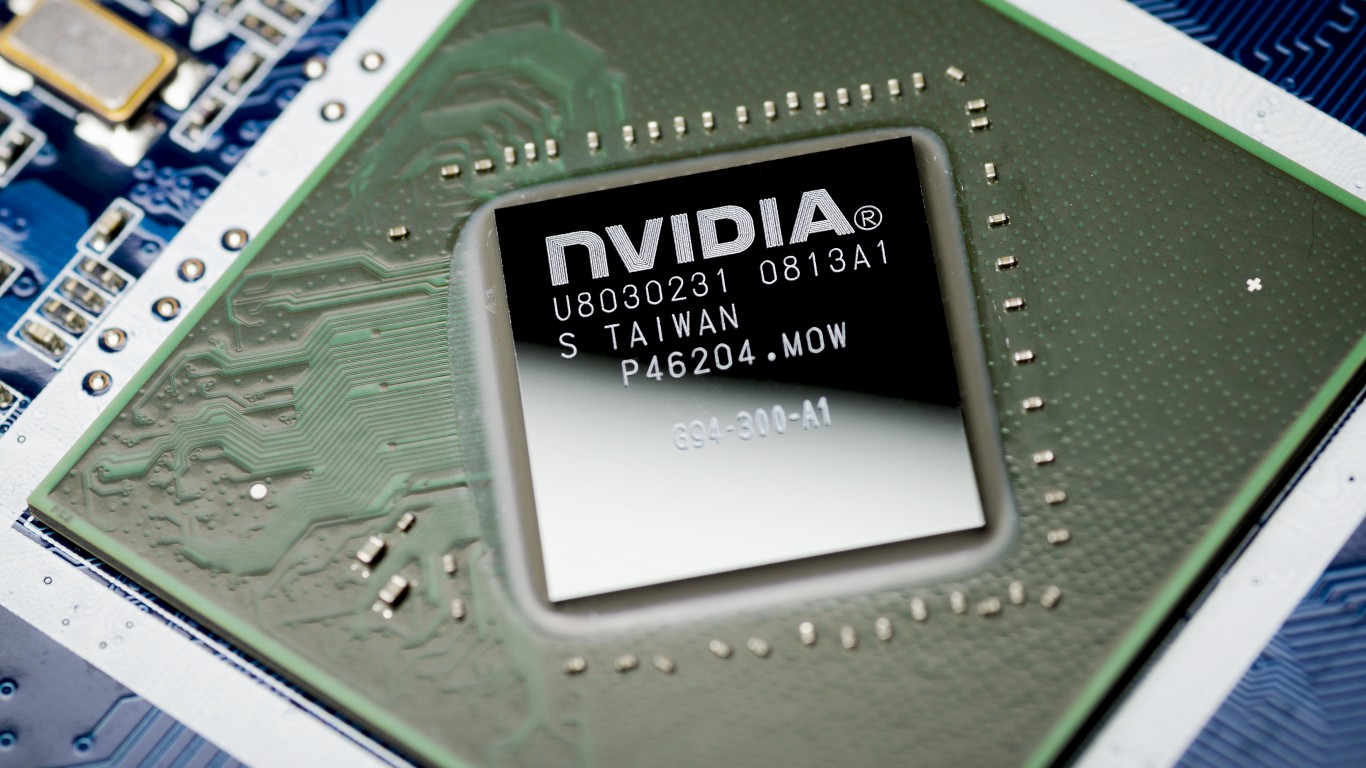
I keep adding shares of Taiwan Semiconductor Manufacturing (NYSE:TSM | TSM Price Prediction), and the reason has almost nothing to do with the AI accelerator headlines you have been reading. The reason lives one layer deeper, inside a packaging technology called Chip-on-Wafer-on-Substrate. The market routinely focuses on TSMC’s nanometer logic nodes (3nm, 2nm, A16), but the real choke point in modern AI accelerators is advanced packaging, specifically CoWoS. Once I understood that, my conviction stopped wavering.
What Actually Earns The Repeat Buy
Management put it plainly on the Q2 call: “Our packaging capacity is so tight that now it’s a little bit of my customers’ growth.” That is a foundry telling you demand exceeds what it can physically ship, and the constraint sits in the substrate and interposer step between the die and the board, not in the transistors themselves. Every leading AI accelerator on the market flows through this bottleneck, and TSMC owns it.
The financials confirm the pricing power that comes with a chokepoint. In Q2 2026, TSMC posted EPS of $4.31 against a $3.8866 estimate, a 10.89% beat, on revenue of $40.2 billion, up 36.0% year over year. Gross margin came in at 67.7%, up 9.1 percentage points year over year. Advanced nodes at 7nm and below made up 77% of wafer revenue, with 3nm at 30%, 5nm at 33%, and 2nm debuting at 3% in its first commercial quarter. Then August monthly revenue landed up 53.3% year over year, and management raised full-year 2026 growth guidance to “slightly above 40% year-over-year in U.S. dollar terms.”
Why My Money Goes Here Instead
The obvious alternatives get reached for first, and I have passed on each. Intel (NASDAQ:INTC) is an integrated device maker that has repeatedly missed on leading-edge execution while TSMC ships 305 distinct process technologies and debuted A13 at the 2026 North America Technology Symposium. GlobalFoundries (NASDAQ:GFS) is a trailing-edge foundry with no sub-7nm exposure, meaning it does not compete for the wafer mix that generated 77% of TSMC’s revenue. NVIDIA (NASDAQ:NVDA) sits on the customer side of this relationship, with a product that exists only because TSMC’s fabs and CoWoS capacity exist. Owning the toll road appeals to me more than owning one truck on it, especially when TSM trades at a forward P/E of 20 and a PEG of 0.816.
Risk I Refuse To Wave Off
Geographic concentration in Taiwan is real. Any escalation in cross-strait tension could interrupt production the market cannot easily replace. The 2nm ramp also carries near-term cost pressure. Management guided that the steep 2nm ramp will dilute Q3 gross margin by about 3 to 4 percentage points. What has not changed my thesis: the additional $100 billion U.S. investment and total Arizona commitment cited at $265 billion spread the geographic risk, and the margin dilution is investment-phase spending against demand management calls “stronger and stronger and stronger.”
What Keeps The Buy Button Live
TSMC is guiding to a 2024 to 2029 revenue CAGR approaching 25% in USD and a long-term gross margin above 56%, holds $110 billion in cash and marketable securities, and told investors to expect “a continued and increasing cash dividends per share in 2027 as well.” The stock is already up 60.06% over the past year and 270.13% over five, and the thesis still holds. When the world’s AI build-out has to pass through one company’s back-end capacity, I want to own that company for the next decade (and the power, cooling, and networking suppliers feeding those fabs are worth a look too, which is why we pulled seven of them into a free AI infrastructure report).
Contact [email protected] for any questions or corrections.
Alex Sirois is a financial writer with experience spanning both retail and institutional investing. He has written for InvestorPlace and held roles at BNY Mellon and Bernstein, giving him a perspective that bridges Main Street portfolios and Wall Street analysis.
Alex holds an MBA from George Washington University and has built his career across multiple industries, including e-commerce, education, and translation — a breadth of experience that informs how he breaks down complex financial topics for everyday investors. His writing is conversational, actionable, and grounded in long-term, buy-and-hold investing principles.
At 247 Wall St., Alex focuses on delivering analysis that is both accessible and useful, with a clear emphasis on helping readers make more informed decisions with their money.