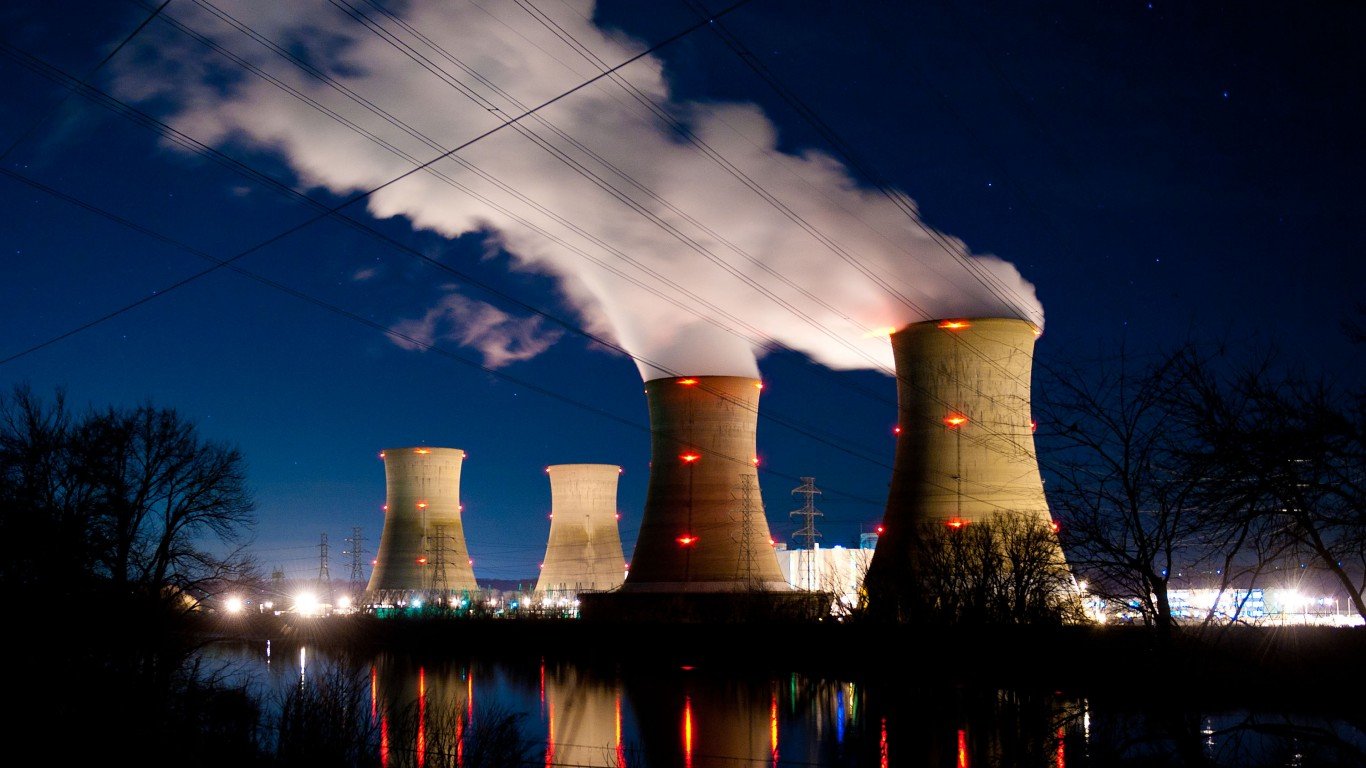
Oklo Jumps 13%, NuScale Power Climbs 10%: Does the House Data Center Power Vote Reach Nuclear?
A House vote targeting data center power costs sent Oklo and NuScale Power surging past the broader nuclear complex, but the way uranium miners sat out the rally tells a more complicated story about what the market actually believes.


Shares of Oklo (NYSE:OKLO | OKLO Price Prediction) and NuScale Power (NYSE:SMR) are leading a nuclear rally in Thursday morning trading after a House vote that sharpens the case for dedicated data center generation. Oklo stock is up 13% to $40.37, while NuScale Power stock is up 10% to $9.14. Both moves put the two reactor developers well ahead of the tape.
The bid is concentrated in developer equities. The SPDR S&P 500 ETF Trust (NYSEARCA:SPY) is up 1% to $762.04, and the Global X Uranium ETF (NYSEARCA:URA) is up 4% to $42.92. The uranium fund is participating, but it’s trailing the two reactor developers by a wide margin.
That gap already answers part of the title question. If the market thought this vote meant more reactors actually getting built, the fuel and mining side of the nuclear complex would move with the builders. Today it isn’t, which puts the bid in the developer equities rather than across the whole nuclear supply chain.
Ratepayer Protection Act Passes House
The House of Representatives passed the Ratepayer Protection Act by a near-unanimous margin. The bill would require large data centers to pay for the power generation and transmission upgrades their electricity demand creates, rather than spreading those costs across other utility customers. It has cleared one chamber, and it isn’t law yet, since it still requires the Senate.
The plausible mechanism for Oklo and NuScale Power is straightforward. A data center operator facing the full cost of grid upgrades has a stronger reason to buy dedicated generation, and small modular reactor developers sell exactly that product (we mapped five ways to play the nuclear restart, utilities and fuel included, in a free report here). No reporting ties the vote directly to either name, so this reads as a policy tailwind that fits the story rather than a confirmed cause.
Oklo’s Bounce, Explained

Oklo’s pitch is dedicated generation for a customer that wants power without waiting on a utility, and this vote makes that customer’s alternative more expensive. Its bull case leans on Oklo’s signed pipeline, which includes a 12 GW master power agreement with Switch and a 500 MW letter of intent with Equinix that included a $25 million pre-payment. Those anchor customers are the exact profile the bill would push toward securing their own generation.
One complication for Oklo is timing. Oklo targets first commercial power delivery in late 2027 to early 2028, so a reactor that hasn’t been built yet can’t serve demand created in the meantime. The company is also pre-revenue in its core reactor business, and a policy tailwind reaches its income statement years from now, if it reaches it at all.
The plain read is that Oklo stock bounced hard on a headline that fits its story, which is a reason to look rather than a change in what Oklo has delivered. Oklo shares are down 44% year to date (YTD), so today’s rally recovers a slice of a much larger drawdown.
NuScale Power in the Nuclear Bid
NuScale Power carries a different profile from Oklo. The company is the only U.S. NRC design-certified small modular reactor technology provider, and it ended Q2 2026 with $1.9 billion in cash and investments after raising fresh equity earlier this year. That balance sheet buys time that pre-revenue peers don’t have.
The growth catalyst that has driven NuScale Power’s story is ENTRA1 Energy advancing discussions with TVA toward a definitive PPA for up to 6 GW of NuScale Power capacity, described as potentially the largest nuclear deployment program in U.S. history. A bill that pushes hyperscale power costs onto hyperscalers themselves makes that kind of long-dated procurement easier to justify at the customer end.
However, NuScale Power is still working through a brutal stretch. NuScale Power stock is down 36% YTD, and shares trade near their 50-day moving average of $9.06. Today’s move puts NuScale Power back in focus without changing the underlying operating story.
What to Watch Next
The Ratepayer Protection Act still needs the Senate, and its rules would ultimately be written by state regulators after that. Traders can watch for whether the Senate takes it up on a similar timeline, since the developer bid tends to fade when the policy noise stops. For Oklo specifically, the next hard data point is progress on its planned NRC combined license application.
Shareholders should size their exposure to the reality that Oklo and NuScale Power shares are policy-sensitive and pre-revenue in their core business. A moderate position lets investors participate in the headline without taking full risk on a bill that hasn’t cleared the Senate. The two developer stock can lead the nuclear complex on days like this, and they can also give a lot of it back when the story cools.
Contact [email protected] for any questions or corrections.
David Moadel is financial writer specializing in stocks, ETFs, options, precious metals, and Bitcoin. David has written well over 1,000 articles for leading online publications, helping investors understand markets, income strategies, and risk.His work has appeared in The Motley Fool, InvestorPlace, U.S. News & World Report, TipRanks, ValueWalk, Benzinga, Market Realist, TalkMarkets, Finmasters, 24/7 Wall St., and others.With a master’s degree in education, David has taught at the elementary, high school, and college levels. That teaching background shapes his writing style: clear, educational, and practical. David has also built a loyal social-media audience by providing trustworthy financial content on YouTube, X/Twitter, and StockTwits.