Norwegian Is Now Down 32% This Year: Is NCLH Stock Dead in the Water or Due for a Bounce?
Norwegian Cruise Line stock has cratered while Royal Caribbean climbed and record bookings pile up, and the gap between those two facts points to a balance sheet story that demand alone cannot fix.

This post may contain links from our sponsors and affiliates, and Flywheel Publishing may receive compensation for actions taken through them.
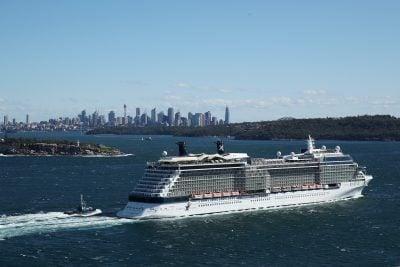
Record demand signals haven’t rescued Norwegian Cruise Line Holdings (NYSE:NCLH | NCLH Price Prediction) stock, it seems. The stock trades at $15.21, down 32% this year.
Meanwhile, Carnival (NYSE:CCL) stock is at $26.36, down 12% over the same stretch. Royal Caribbean Group (NYSE:RCL) stock is at $286.60, up 4% so far this year.
Elsewhere, energy is rallying. The Energy Select Sector SPDR ETF (NYSEARCA:XLE) trades at $63.25, up 44% this year. For a broad-market gauge, the SPDR S&P 500 ETF Trust (NYSEARCA:SPY) is at $777.50, up 14% over the same period. That leaves Norwegian stock far behind the SPY ETF, and the energy rally hints at one reason why.
Norwegian Signals Upside and Lines Up Refinancing
In late September, Norwegian stated that it expected results for the third quarter of this year to exceed its prior guidance. The company confirmed its full-year outlook. Behind that call, the company cited record booked occupancy and pricing for next year, plus strong demand for cruises the year after that.
Norwegian also announced a planned senior notes offering of $750 million to refinance its existing debt. The company intends the proceeds to redeem higher-coupon notes. These are bonds that carry higher interest rates, and the company will also pay down its revolving and export credit facilities.
Why Norwegian Fell Further Than Its Rivals
This year’s moves split the cruise group along company lines, with Norwegian stock falling far more than Carnival stock while Royal Caribbean stock climbed. Each operator faced the same travel demand, yet investors have judged the three very differently.
Norwegian operates a smaller fleet than either rival and carries heavier debt relative to its size. That leverage increases earnings swings on pricing or fuel-cost changes, and refinancing terms matter more to Norwegian equity than to Carnival or Royal Caribbean.
Carnival operates the largest fleet across multiple brands and price points, and Royal Caribbean has concentrated on premium itineraries and private destinations, while only Norwegian stock, among the three cruise names, is being valued primarily on whether it can service its balance sheet.
Fuel adds strain for Norwegian. Energy prices rose through this year, as the 44% gain in the Energy Select Sector SPDR ETF shows, and fuel is a major cruise cost. Rising energy costs hit the most leveraged operator hardest, explaining the sharper slide in Norwegian stock.
Bounce or Dead Money for Norwegian

The bull case for Norwegian stock rests on faster business improvement than the market recognizes, even as management describes record demand and a confirmed outlook while NCLH stock has fallen throughout the year. Supporters add that the $750 million offering buys breathing room (according to Norwegian, at least).
The skeptics may read the same facts differently. Record bookings haven’t lifted Norwegian stock yet, and that lag may signal deeper issues. Norwegian’s leverage remains the binding constraint, and refinancing mainly pushes the problem further out.

Royal Caribbean stock climbing this year while Norwegian stock fell 32% is the comparison that matters most. With demand shared between Royal Caribbean and Norwegian, the gap points to balance sheet strength and fuel sensitivity at the smaller operator.
What to Watch Next
The central question is whether Norwegian turns record forward bookings into the pricing its guidance implies. Shareholders can watch for third-quarter results, which Norwegian expects to top prior guidance.
Traders could look for signs that the $750 million refinancing eases Norwegian’s interest burden by retiring higher-coupon notes. Energy prices matter as well, since further gains in the Energy Select Sector SPDR ETF would signal more fuel pressure.
Norwegian offers a credible recovery argument alongside genuine balance sheet risk, while Carnival and Royal Caribbean show what firmer ground looks like. Investors weighing their exposure should adjust their holdings carefully given the leverage at Norwegian and a 32% slide in NCLH stock so far this year.
Contact [email protected] for any questions or corrections.
David Moadel is financial writer specializing in stocks, ETFs, options, precious metals, and Bitcoin. David has written well over 1,000 articles for leading online publications, helping investors understand markets, income strategies, and risk.His work has appeared in The Motley Fool, InvestorPlace, U.S. News & World Report, TipRanks, ValueWalk, Benzinga, Market Realist, TalkMarkets, Finmasters, 24/7 Wall St., and others.With a master’s degree in education, David has taught at the elementary, high school, and college levels. That teaching background shapes his writing style: clear, educational, and practical. David has also built a loyal social-media audience by providing trustworthy financial content on YouTube, X/Twitter, and StockTwits.