This Goldman Sachs Indicator Hit 0 Only 4 Other Times in the Last 20 Years. History Says Big Tech Rallies Followed
A Goldman Sachs options gauge just flashed a signal so rare it has appeared only four other times in two decades, and the timing of each previous instance tells a striking story about where tech stocks headed next.

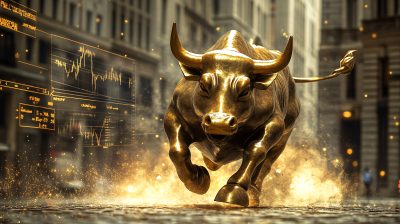
Markets have rewarded technology leadership for much of the past several years. The Nasdaq-100 has climbed on AI investment, resilient earnings from mega-cap growth companies, and investors’ willingness to pay for future growth.
Now, a Goldman Sachs options gauge tracking one-month put-call skew across Nasdaq-100 stocks has hit zero — just the fifth time in 20 years, based on data going back to September 2006.
That level of calm is rare. All five instances have only occurred since the start of the AI era: once in late 2023, twice in 2024, and once earlier this year. Each occurred as technology stocks were beginning or continuing strong rallies.
What Put-Call Skew Measures
Put-call skew essentially shows how much investors are willing to pay for downside protection compared with upside bets.
Puts function like insurance against a market decline, while calls offer exposure to further gains. Normally, investors pay more for puts because protecting against losses is more valuable than betting on additional gains. That creates a positive skew reading.
When the average one-month skew across Nasdaq-100 stocks falls to zero, puts and calls are roughly equal in cost. Investors are no longer paying a meaningful premium for protection. Goldman’s long-term average is about 0.11, making zero an unusually low reading.
In other words, options traders are showing unusually little fear. That can signal confidence — or complacency. It does not predict the market’s next move, but it does show that investors are pricing in relatively little downside risk.
What Happened Last Time?
The previous readings near zero occurred during periods of strong technology leadership, not at obvious market tops.
In late 2023, skew compressed as the Nasdaq-100 recovered and accelerated on expectations that the Federal Reserve would eventually cut interest rates. The index continued higher into 2024, powered by the biggest AI beneficiaries.
The gauge returned to zero several times during 2024 as the AI rally continued. There was a sharp interruption in August, when the unwinding of the yen carry trade triggered a rapid sell-off and volatility spike. But markets recovered, and the broader uptrend resumed.
The most recent reading earlier this year also came during continued technology strength following the rebound from the April 2025 tariff-related sell-off. Geopolitical tensions briefly increased demand for puts in March 2026, but the broader pattern of low skew during technology rallies remained intact.
So far, extreme calm in tech options has coincided with strong gains more often than with lasting reversals.
The Current Setup
Today’s zero reading comes with the Nasdaq-100 still heavily concentrated in a handful of mega-cap technology companies. The Goldman gauge has declined 0.25 points since March 2026, one of its larger six-month drops on record, while one-month implied volatility across the average Nasdaq-100 stock also fell sharply in the latest week.
For investors, the historical pattern suggests that exceptionally low skew has been more closely associated with confidence during an ongoing rally than with the end of one.
That does not mean risk has disappeared. When positioning becomes one-sided, sharp pullbacks can still happen, as August 2024 showed. Valuations, diversification, and position sizing still matter.
The Invesco QQQ Trust (NASDAQ:QQQ) provides liquid exposure to the Nasdaq-100, while leaders such as Nvidia (NASDAQ:NVDA | NVDA Price Prediction) and Microsoft (NASDAQ:MSFT) remain major forces behind both the index and the options activity shaping the gauge. Their earnings and capital-spending plans will ultimately matter more than any single options signal.
Key Takeaway
Goldman’s Nasdaq-100 put-call skew hitting zero is a rare sign that investors are demanding unusually little protection against a downturn. Historically, the previous readings since late 2023 occurred during powerful technology advances and were followed by further gains, although sometimes with sharp volatility along the way.
The signal does not guarantee that tech stocks will keep climbing. But so far, extreme calm in technology options has been more consistent with rising prices than with lasting declines.
Contact [email protected] for any questions or corrections.
After two decades of patrolling the dark corners of suburbia as a police officer, Rich Duprey hung up his badge and gun to begin writing full time about stocks and investing. For the past 20 years, he’s been cruising the markets looking for companies to lock up as long-term holdings in a portfolio while writing extensively on the broad sectors of consumer goods, technology, and industrials. Because his experience isn’t from the typical financial analyst track, Rich is able to break down complex topics into understandable and useful action points for the average investor. His writings have appeared on The Motley Fool, InvestorPlace, Yahoo! Finance, Money Morning, and, of course, 24/7 Wall St. He has been featured in both U.S. and international publications, including MarketWatch, Financial Times, Forbes, Fast Company, and USA Today.