As Buffett Ends His Legendary Career, These Were His 5 Best Investments
Warren Buffett just handed over the last title he held at Berkshire Hathaway, closing a run few investors will ever match. His five biggest stock positions reveal exactly how he thought about money, conviction, and time.

This post may contain links from our sponsors and affiliates, and Flywheel Publishing may receive compensation for actions taken through them.
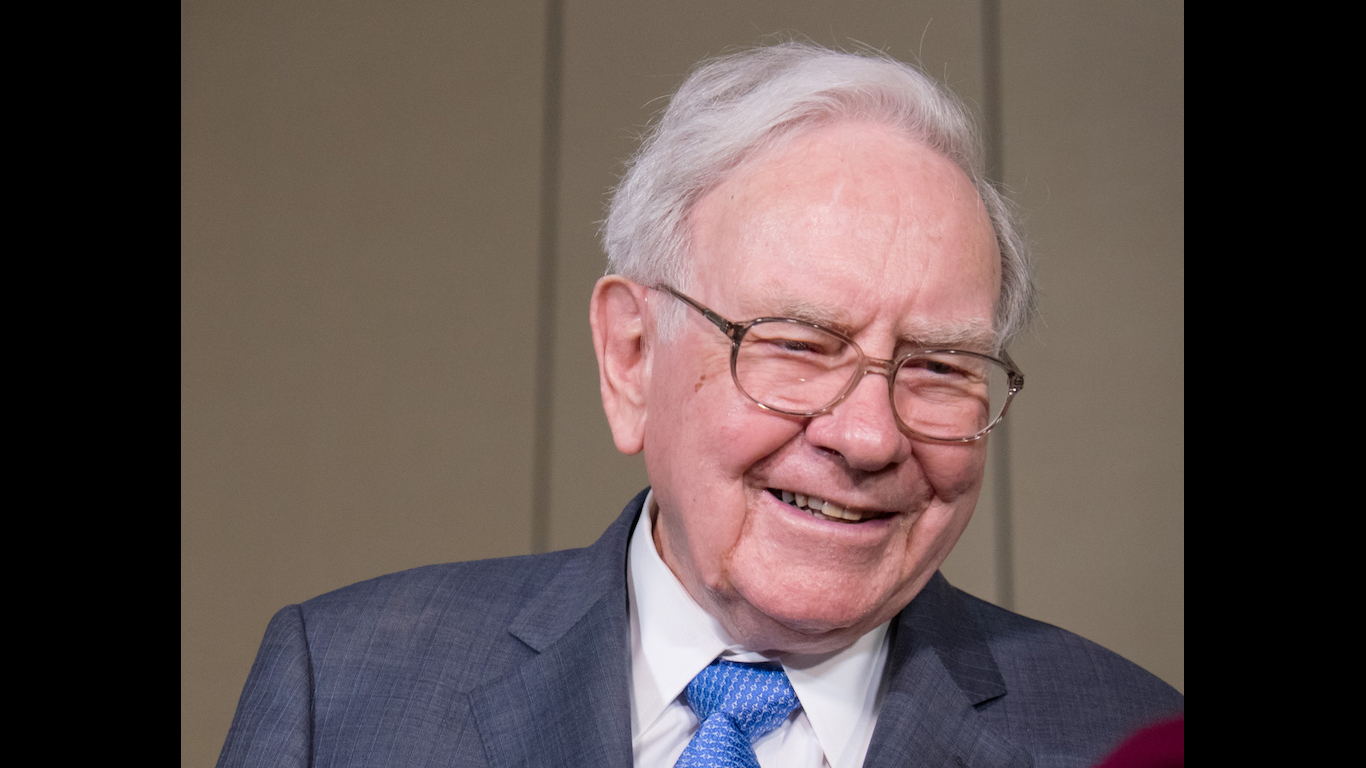
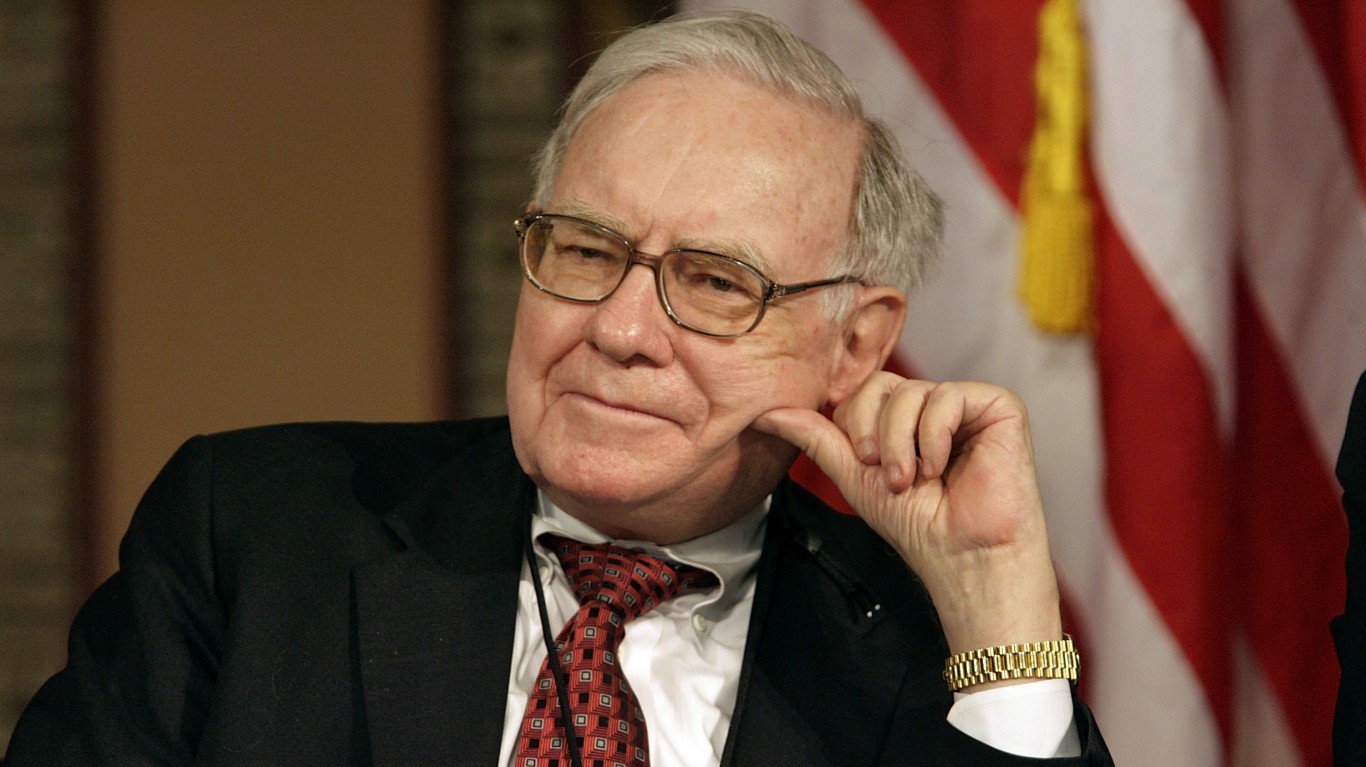
“Father Time always wins.” That was Warren Buffett’s line, according to The New York Times, on September 18, 2026, the day he announced he was stepping down as chairman of Berkshire Hathaway. The New York Times reported he named his son to replace him, identified by Yahoo Finance as Howard. The Australian Financial Review noted he is stepping down at 96.
Berkshire got a new operator about a year ago, when Greg Abel became chief executive, and reporting on September 2, 2026 noted from finance.biggo.com that Berkshire shares barely budged in his first year. Chairman was the last title Buffett held, which is what makes today the actual close of one of the longest runs anyone has ever had at this job.
What follows is a walk through the five largest positions on Berkshire’s most recent 13F, disclosed as of June 30, 2026 and filed August 14, 2026. That filing describes what Berkshire held at the end of June and disclosed in August, so it is a portrait of a moment rather than a live account of what sits in the portfolio this morning. It also covers only US-listed equity. Some of Buffett’s finest calls, GEICO, See’s Candies, BNSF, do not appear here at all, because he bought the entire company rather than a slice of one. The filing captures half of what he built.
Apple, the Position That Rewrote the Book
The largest disclosed position was Apple (NASDAQ:AAPL | AAPL Price Prediction), at 227,917,808 shares worth $65,950,296,923, representing 22.038266729497398% of the disclosed portfolio and 1.561703418760081% of Apple itself, according to Australian Financial Review. Apple designs the iPhone, the Mac, and the services stack that now hangs off both.
Fundamentally, Apple sits at a P/E of 44 with ROE of 171.4%, and its fiscal Q3 2026 report showed EPS of $2.02 versus $1.89 expected on revenue of $109.42B, up 16.4% year over year. Nine-month buybacks ran to $62.09B through June 27, 2026. Tim Cook told analysts Apple had its “strongest June quarter ever, with double-digit revenue growth across iPhone, Mac and Services, and in every geographic segment.” That Buffett let a single technology company grow into more than a fifth of the disclosed book is itself the point.
American Express, the Position That Started in the Salad Oil Scandal
American Express (NYSE:AXP) was second at 151,610,700 shares valued at $51,282,319,275, or 17.136745146261052% of the portfolio. Amex runs the closed-loop card and network that anchors the premium payments franchise Buffett has admired since the 1960s, according to Australian Financial Review.
Q2 2026 delivered EPS of $4.53 against $4.40 expected on revenue of $19.64B, with billed business of $455.8B, up 9%. Management raised FY26 revenue growth guidance to 10% and maintained EPS guidance of $17.30 to $17.90. CEO Stephen Squeri described the premium proposition this way: “a great premium value proposition is not just a product. It’s a multifaceted relationship between the brand and the customer.” The quarterly dividend has climbed to $0.95 per share. Six decades on, the thesis still reads like the same one.
Coca-Cola, and Owning a Tenth of the Company
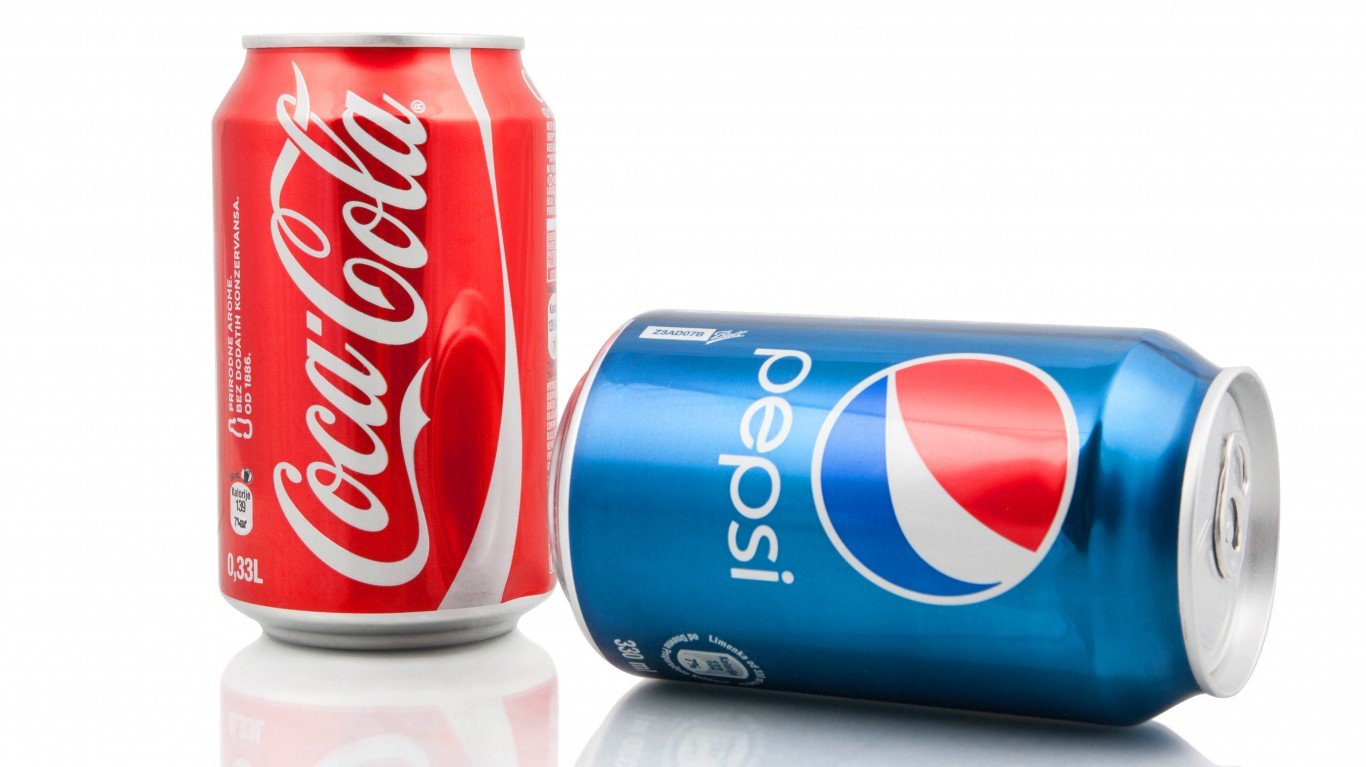
Coca-Cola (NYSE:KO) is the position that best captures the Buffett method. Berkshire disclosed exactly 400,000,000 shares worth $32,508,000,000, a stake equal to 9.296814516232121% of the entire company, according to Australian Financial Review. He owned close to a tenth of Coca-Cola.
The business earned it. Q2 2026 delivered adjusted EPS of $0.97, revenue of $13.38B up 6.7%, and management raised FY26 guidance to comparable EPS growth of 9% to 10% and free cash flow of ~$12.4B. The quarterly dividend has climbed from $0.16 in 1999 to $0.53 today. New CEO Henrique Braun described the machine as “the strength of our total beverage portfolio” operating across “more than 200 countries and territories.” A brand held since the late 1980s, still compounding.
Alphabet, the Regret That Became a Holding
Alphabet (NASDAQ:GOOGL) came in at 78,791,167 Class A shares worth $28,157,599,351, or 9.40927810657434% of the portfolio. Berkshire’s filings historically report GOOGL and GOOG separately, and both classes represent the same company. Buffett had publicly called missing Google early one of his regrets, and eventually a position was established.
The fundamentals now look like a Buffett stock. Alphabet trades at a P/E of 15 with operating margin of 32.1% and ROE of 35.7%. Q2 2026 revenue was $119.80B, up 24.2%, with Google Cloud revenue of $24.77B, up 82%. Sundar Pichai told analysts “nearly 90% of the Fortune 100 using Gemini Enterprise.” The consensus analyst target sits at $428.07, with 13 strong buy, 45 buy, and 5 hold ratings. Better late than never.
Bank of America, the Warrant Deal That Became Common Stock
Bank of America (NYSE:BAC) rounded out the top five at 483,394,015 shares valued at $27,543,790,975, or 9.204164963158451% of the portfolio, according to Australian Financial Review. The position originated in Buffett’s 2011 preferred and warrant deal, later converted into common stock.
Q2 2026 was one of the better quarters the bank has printed: EPS of $1.21 versus $1.12 expected, revenue of $31.56B, and net income of $9.07B, up 27.5% year over year. Global Markets sales and trading came in at $7.2 billion, up 33%, with equities revenue at a record $3.6 billion, up 70%. CEO Brian Moynihan framed it plainly: “Our results show organic growth, operating leverage, and efficiency ratio improvement in every business segment.” A crisis-era rescue turned into a decade-plus core bank holding.
What the Top Five Says About Buffett’s Approach
Concentration is the through line. One consumer electronics company held 22.038266729497398% of the disclosed portfolio, one card network held 17.136745146261052%, and one soft-drink maker was owned at 9.296814516232121% of its entire share class, according to Australian Financial Review. The sector tilt is unmistakable: two financials in Amex and Bank of America, one branded consumer staple in Coca-Cola, and two dominant technology platforms in Apple and Alphabet. Behind the top five sat energy exposure, with Chevron at $13,986,141,890 and Occidental Petroleum at $12,868,205,304. Holding periods span from the 1960s salad oil trade in Amex to a recent Alphabet build, according to Australian Financial Review. Different decades, same pattern: a business he understood, held with unusual patience, sized with unusual conviction.
Arithmetic of a Life
A 96-year-old handing the chair to his son, with the company already in an operator’s hands, closing out one of the longest runs anyone has had at this, according to Australian Financial Review. The 13F is a backward-looking disclosure and none of this is investment advice. What it shows is a book built by someone who thought in decades and treated position size as a form of speech. He said what he thought about Coca-Cola by owning nearly a tenth of it. He said what he came to think about Apple by letting it grow into more than a fifth of the disclosed portfolio. Father Time gets everyone eventually. Very few get to hand off a body of work that reads like this one.
Contact [email protected] for any questions or corrections.
AJ spent 10 years writing about financial markets at The Motley Fool. His coverage centers on technology stocks and the broader macroeconomic trends, from interest rates to geopolitics, that shape where markets are headed next. AJ is drawn to the stories where big-picture economics and individual companies collide.