Micron Just Built One Memory Stick That Replaces Four. Is MU Stock a Buy?
Micron just pulled off a server memory breakthrough that has both AMD and Intel on board, but the revenue from it sits two fiscal years away while the stock already trades near all-time highs. Here is what that gap means…


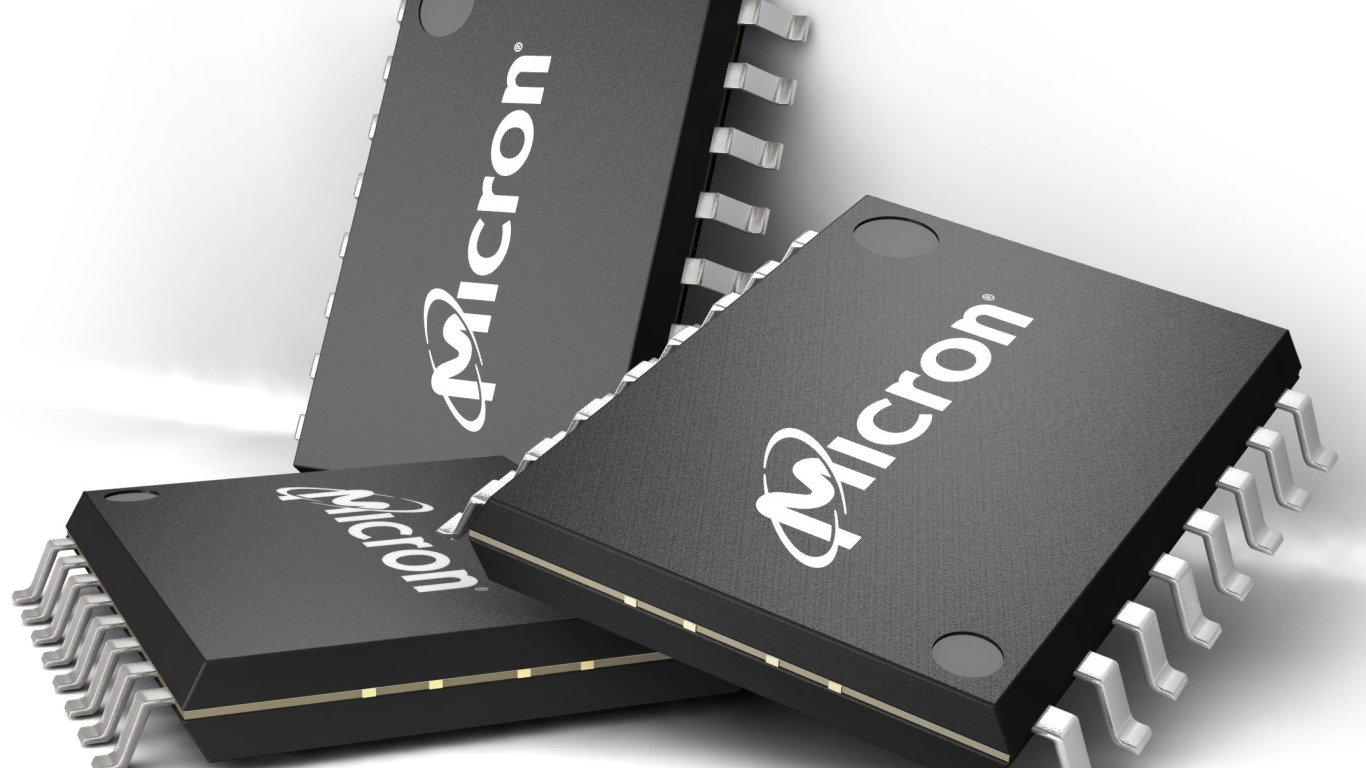
Micron (NASDAQ:MU | MU Price Prediction) demonstrated a 512GB server memory module that holds as much memory as four 128GB modules, and says AMD and Intel have validated it for future platforms. That is a genuine engineering step, but the investing tension is simple.
Volume production is expected in the second half of 2027, so nothing in this launch touches Micron’s fiscal 2026 pricing or the fiscal 2027 estimates already published. MU stock closed at $977.50 Thursday after gaining 5.5% on the session, extending a 511.97% one-year rally. Density likely commands some premium, but much of it may simply reshuffle what customers already buy from Micron.

A Milestone Priced Two Fiscal Years Out
The module fits the AI-server thesis already powering current results. Fiscal Q3 2026 revenue reached $41.46 billion, up 345.7% year over year, at a non-GAAP gross margin of 84.9%.

CEO Sanjay Mehrotra told investors that “DRAM and NAND industry demand continues to significantly exceed industry supply” and that tightness should persist beyond calendar 2027.
Even so, revenue from this specific module cannot land until qualification, yield ramp, and contract pricing arrive in 2027. Investors should watch each checkpoint rather than treat platform validation as a purchase order.
How MU Compares to NVIDIA and Western Digital
NVIDIA (NASDAQ:NVDA) sits on the demand side of the same trade, consuming Micron’s HBM4 in AI accelerator platforms. Micron said HBM4 has already crossed $1 billion in revenue, with the 12-high ramp running twice as fast as HBM3E.
Western Digital (NASDAQ:WDC) rides the same data-center build-out through hard drives, but no longer plays in NAND after the SanDisk (NASDAQ:SNDK) spinoff. That leaves Micron uniquely exposed to both DRAM and NAND pricing (we profiled seven other suppliers riding the same AI infrastructure wave, from power to cooling, in a free report you can grab here).
Micron has also signed 16 Strategic Customer Agreements covering roughly 25% of revenue over their term, with cumulative minimum-price RPO of approximately $100 billion.
Valuation Against the Cycle
MU trades at a trailing PE of 21x and a forward PE of 6x, with the average analyst target at $1,513.11.

Consensus points to fiscal 2027 EPS of $156.0661 on revenue of $244.46 billion, up from a fiscal 2026 EPS estimate of $73.4388.
Memory is the most cyclical corner of semiconductors, and the 2027 pricing backdrop the new module lands into cannot be forecast from here. That is the case for restraint even after a record quarter.

Bull and Bear Case for MU Stock
The bull case rests on structural supply tightness, take-or-pay SCAs whose floor prices Mehrotra said support margins “significantly above prior peak margins”, and Micron’s status as the only US-based memory maker. If HBM4E and the 512GB RDIMM arrive into a still-tight 2027, earnings power expands again.
The bear case is cycle math. At a market cap near $1.1 trillion, MU already discounts continued industry discipline, and the density milestone will not rescue the stock if DRAM prices roll over before qualification revenue shows up.
Contact [email protected] for any questions or corrections.
Omor Ibne Ehsan is a writer at 24/7 Wall St. He is a self-taught investor with a focus on growth, cyclical, and dividend equities that have strong fundamentals, value, and long-term potential. He also has an interest in high-risk, high-reward investments such as penny stocks.