NASA Hitches Ride with SpaceX for StarBurst Satellite. Is RocketLab the Big Loser?
NASA just awarded SpaceX another satellite launch, and the ripple effects for small-launch rivals are real. Before you buy either name for a retirement portfolio, the valuation math tells a story Wall Street often glosses over.

This post may contain links from our sponsors and affiliates, and Flywheel Publishing may receive compensation for actions taken through them.
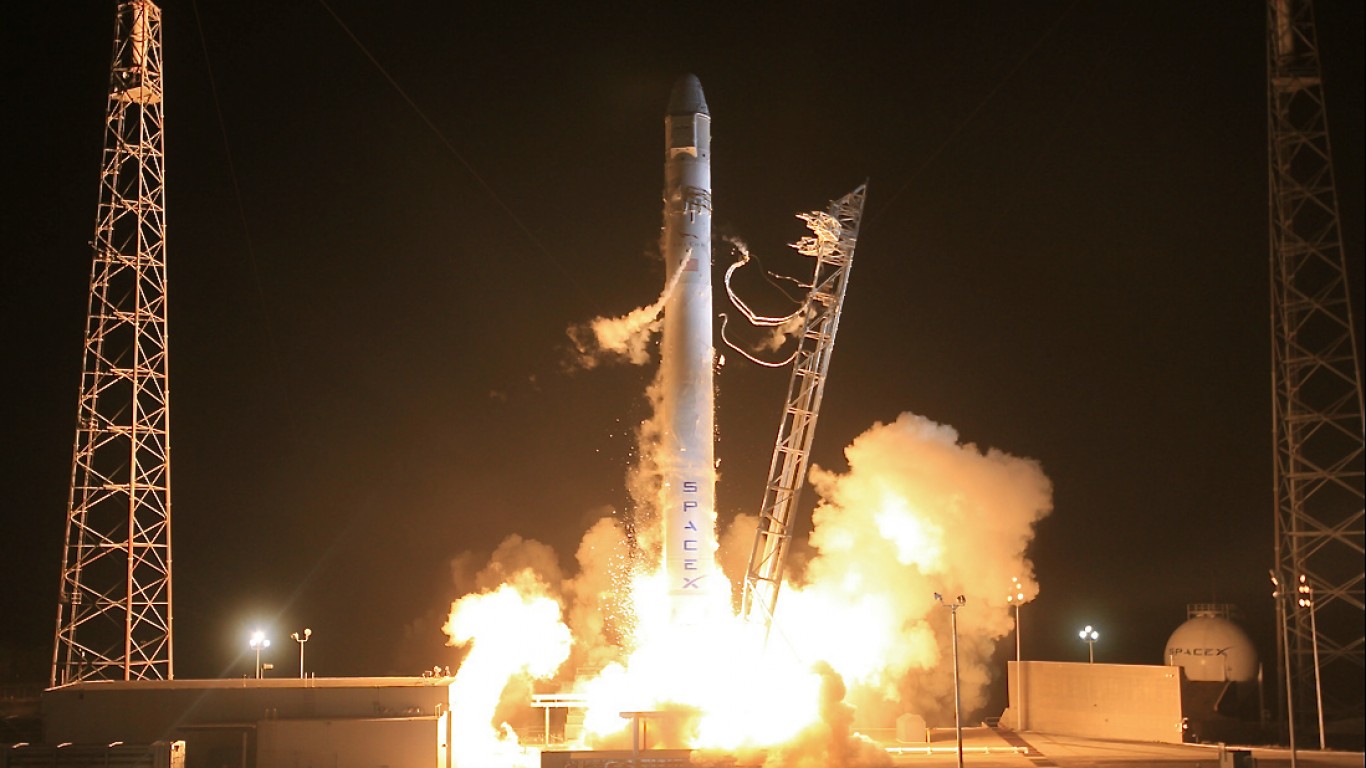
NASA just handed SpaceX another launch manifest slot, and the question for retirement-focused investors is direct: how do SpaceX (NASDAQ:SPCX | SPCX Price Prediction) and Rocket Lab (NASDAQ:RKLB) compare for retirement-focused portfolios after the StarBurst decision? The StarBurst satellite will fly on a Falcon 9 rideshare mission no earlier than 2028, and while the dollars are modest, rideshare keeps siphoning missions that might otherwise have gone to dedicated small-launch providers. That structural squeeze frames everything below.
Valuation: Premium Priced, but One Has Real Cash Flow
Both names trade at eye-watering multiples. SpaceX carries a 204x forward P/E, a price-to-sales ratio of 88.56, and an EV/EBITDA of 510. Rocket Lab looks cheaper on sales at a 52.96 price-to-sales, but its forward P/E sits at 1,111 and its EV/EBITDA is negative at -16 because EBITDA itself is negative.
The tiebreaker is quality of cash generation. SpaceX put up $3.54 billion in adjusted EBITDA last quarter, up 191% year over year, and sits on $93.5 billion in cash. Rocket Lab’s adjusted EBITDA loss narrowed to $8.8 million, an improvement, but still red ink. Winner: SPCX. Paying up for a franchise that already prints EBITDA beats paying up for one that doesn’t.


Growth Trajectory: Small Base, Bigger Percentage Runway
SpaceX grew Q2 revenue roughly 92% year over year to $7.81 billion, with the AI segment alone up 247% to $2.56 billion and Starlink subscribers doubling to 12 million. Backlog sits at $47.5 billion.
Rocket Lab grew 62% to $234.07 million and guided Q3 to $250 million to $265 million. Backlog jumped 137% to $2.36 billion, and CEO Peter Beck told analysts “the launch demand is extreme” and “launch has never been so constrained.” The Neutron medium-lift rocket is targeted for a Q4 2026 debut, and pending deals for Mynaric, Motiv, and Iridium widen the aperture materially.
Winner: RKLB. Off a $769 million TTM revenue base, Neutron plus the Iridium takeout offers more percentage torque than SpaceX can deliver at a $1.17 trillion market cap.


Volatility and Balance Sheet Risk: Not Even Close
Rocket Lab carries a beta of 2.612, has traded between a 52-week low of $37.57 and a high of $151, and just dropped 18.77% over the past month. Shareholders funded that ride with heavy dilution: $1.53 billion raised via ATM offerings in the first half of 2026 alone. Add Neutron execution risk (a prior stage 1 tank test failure delayed launch) and three simultaneous acquisition integrations, and the risk stack is dense.
SpaceX, freshly public, is volatile too, but the $93.5 billion cash pile and a $25 billion investment-grade bond issuance give it staying power no small-cap can match. Winner: SPCX.
Verdict for Retirement-Focused Investors
SpaceX wins two of three dimensions that matter for a long-horizon, capital-preservation-minded portfolio: valuation quality and downside protection. For a retiree or near-retiree researching space-economy exposure without funding a dilution treadmill, SPCX screens more favorably on cash flow and balance sheet metrics. The Barron’s read that AI demand keeps pulling SpaceX higher only reinforces the diversified-cash-machine thesis.
Rocket Lab wins one dimension outright, growth trajectory, and it wins it decisively. But that win belongs to a different investor: a younger, risk-tolerant buyer who can stomach a 2.6 beta, ATM dilution, and Neutron execution risk in exchange for a real shot at multi-bagger returns if Neutron flies clean. Retirement portfolios generally prioritize capital preservation over speculative upside. RKLB may warrant further research for investors focused on speculative growth exposure.
Contact [email protected] for any questions or corrections.
After two decades of patrolling the dark corners of suburbia as a police officer, Rich Duprey hung up his badge and gun to begin writing full time about stocks and investing. For the past 20 years, he’s been cruising the markets looking for companies to lock up as long-term holdings in a portfolio while writing extensively on the broad sectors of consumer goods, technology, and industrials. Because his experience isn’t from the typical financial analyst track, Rich is able to break down complex topics into understandable and useful action points for the average investor. His writings have appeared on The Motley Fool, InvestorPlace, Yahoo! Finance, Money Morning, and, of course, 24/7 Wall St. He has been featured in both U.S. and international publications, including MarketWatch, Financial Times, Forbes, Fast Company, and USA Today.