Why Salesforce’s Homegrown AI Model Won’t Move the Stock Until 2027
Salesforce just unveiled Koa, its first homegrown AI model built for CRM reasoning, but a gap between launch and availability raises a pointed question: can a model nobody can buy yet actually move the stock?

This post may contain links from our sponsors and affiliates, and Flywheel Publishing may receive compensation for actions taken through them.
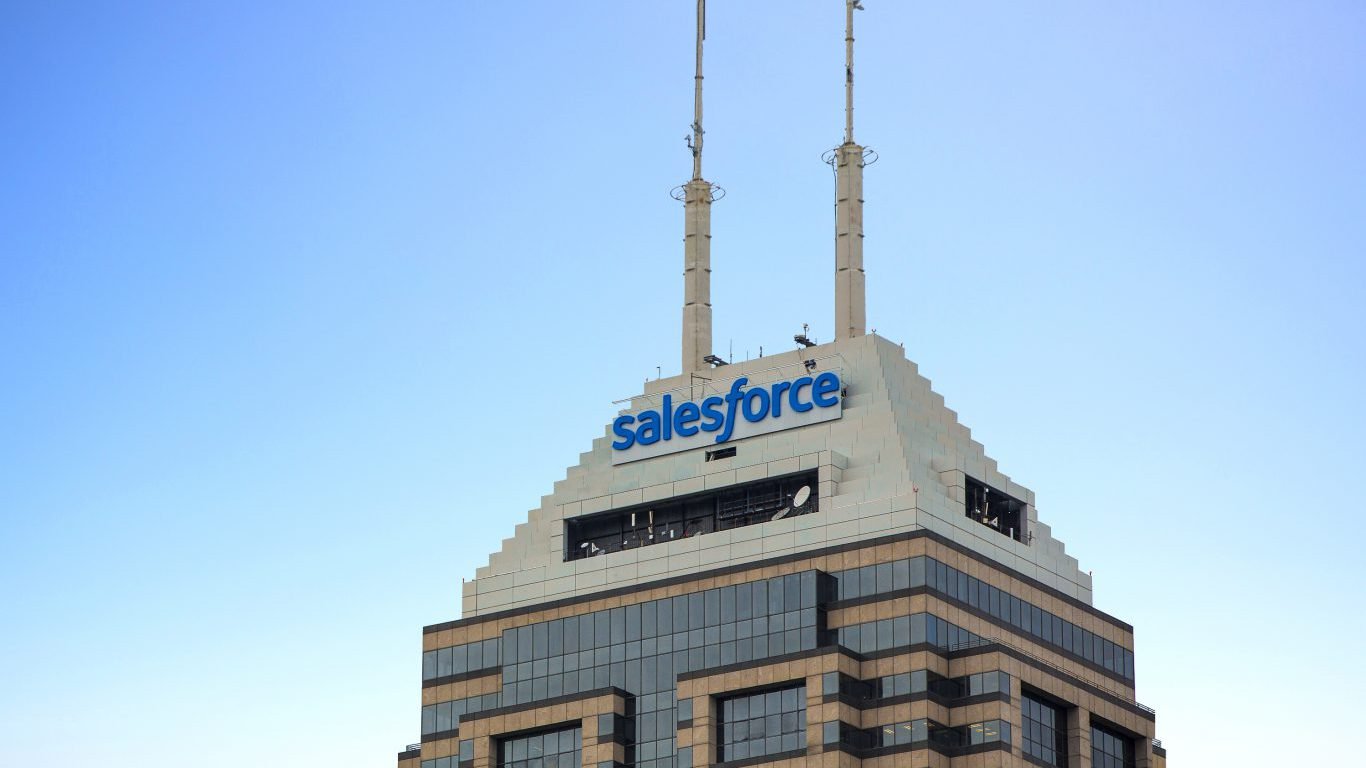
Salesforce’s (NYSE:CRM | CRM Price Prediction) Investor Day at Dreamforce on September 16, 2026, gave the company a stage to introduce Koa, a model it describes as its first tailored to CRM reasoning and actions. Salesforce post-trained Koa on an NVIDIA Nemotron foundation and says it controls the resulting weights, which is real ownership without the capital burden of frontier pretraining.
Select customers are piloting Koa now, with broader U.S. availability coming later. That gap matters because a model no one can buy yet cannot lift bookings, retention, or margins this quarter, and CRM closed at $243 Thursday after a 2.84% intraday decline.

What Post-Training on Nemotron Actually Buys
Post-training adjusts a pretrained model rather than building every layer from scratch, buying control over behavior, cost, and deployment, and specializing a general model for the workflows already sitting inside Salesforce’s cloud.
Salesforce claims Koa produces roughly three times fewer errors on CRM actions than leading alternatives on its own benchmark. That is a meaningful engineering signal but weak commercial proof, because the test is vendor-run on tasks Salesforce chose.
Independent validation would look like accuracy in live deployments, cost per action, whether Koa carries separate pricing, and whether it measurably lifts paid Agentforce adoption or reduces churn.
Why Winter Timing Governs the Revenue Impact
Enterprise customers typically time major deployments around the Dreamforce Winter release, so a September unveiling tends to convert into billable consumption months later. Agentforce ARR already exceeded $1.5 billion, up over 240% year-over-year in Q2 FY27, with combined Agentforce and Data 360 ARR nearly $3.9 billion.
Marc Benioff told investors, “AI is delivering value across every layer of our platform. We’re seeing incredible demand for our AI and data products, with ARR about to cross $4 billion.”
Salesforce added 2,000 paying customers into production last quarter, although management conceded that “Most of them have not started their AI transformations yet.”
Where CRM Sits Against Microsoft and ServiceNow
Microsoft (NASDAQ:MSFT) already ships Copilot inside the productivity suite most enterprises pay for, a distribution edge Koa’s benchmark score does not address. ServiceNow (NYSE:NOW) is monetizing its own agentic tier on similar consumption logic.
CRM’s 7.62% year-to-date decline against a $275.60 analyst target suggests the market is waiting for paid seat and consumption growth to catch the AI narrative.

Bull and Bear Case for CRM Stock
The bull case rests on compounding paid adoption. Q2 free cash flow reached $1.098 billion, up 81.49%, and management raised FY27 revenue guidance to $46.1 billion to $46.4 billion. If Koa lifts Agentforce win rates through the Winter release, a forward multiple near 15x looks inexpensive.

The bear case is that model capability is only an input to commercial outcomes. Noncurrent debt jumped to $39.3 billion to fund the accelerated buyback, and Q2 GAAP EPS was materially flattered by $2.61 billion in strategic investment gains.
The deciding variable is whether Koa carries pricing power and whether pilot accounts convert to production before fiscal year-end.
Contact [email protected] for any questions or corrections.
Omor Ibne Ehsan is a writer at 24/7 Wall St. He is a self-taught investor with a focus on growth, cyclical, and dividend equities that have strong fundamentals, value, and long-term potential. He also has an interest in high-risk, high-reward investments such as penny stocks.