Alibaba Jumps 4% as Zhenwu V900 Chip Targets the Gap NVIDIA Left in China; Baidu Sits Tight
Alibaba just unveiled a chip it claims reshapes the AI compute landscape inside China, and the stock is reacting sharply, but one key rival is barely moving, and that gap reveals exactly who the market thinks wins here.

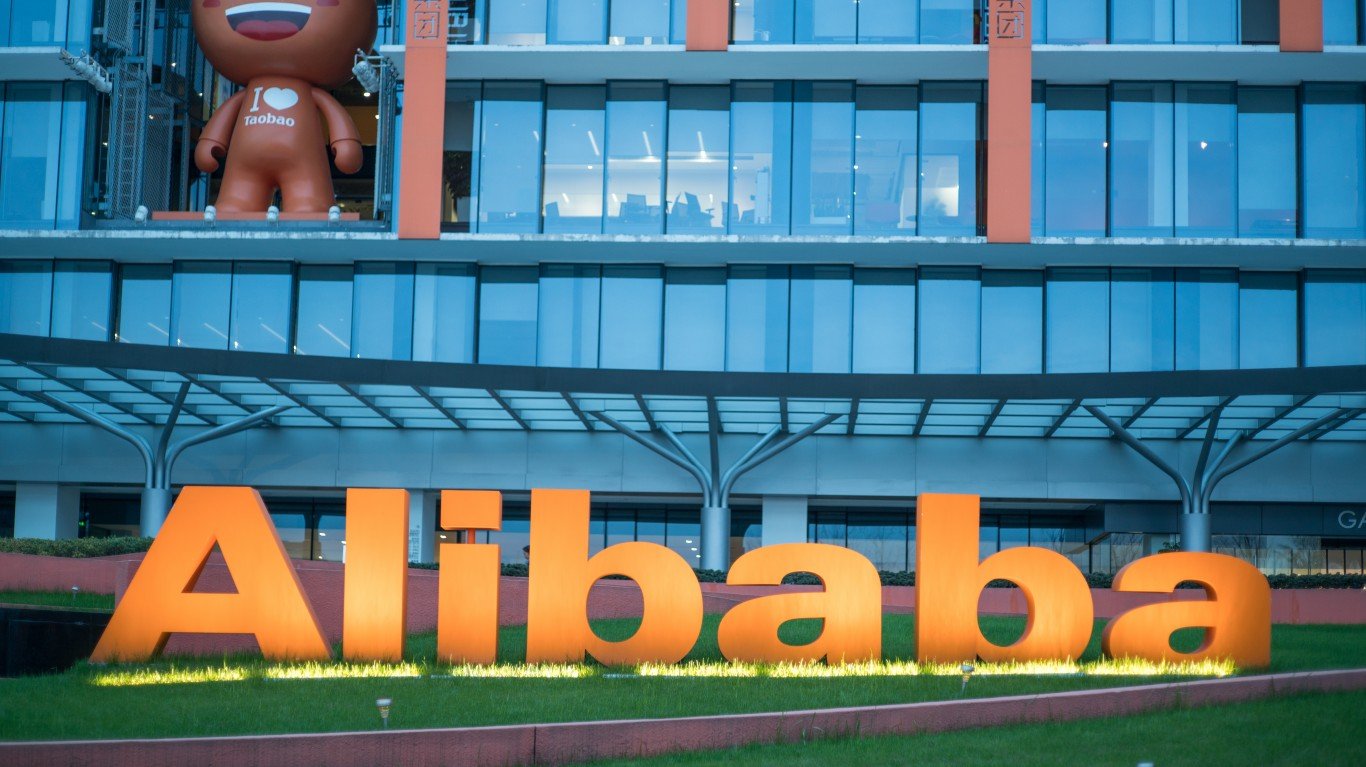
Shares of Alibaba Group (NYSE:BABA | BABA Price Prediction) are rallying Tuesday morning after the company unveiled its most powerful AI chip yet at Alibaba Cloud’s annual conference in Hangzhou. Alibaba stock is up 4% to $120.36 in early trading, a decisive break from a flat past month and the sharpest single-session move the name has posted in weeks.
Alibaba’s rally is out of step with the day’s session. The SPDR S&P 500 ETF Trust (NYSEARCA:SPY) is essentially unchanged at $774.23, up 0.1%. The KraneShares CSI China Internet ETF (NYSEARCA:KWEB) is up 1% to $25.44, a modest lift that suggests a company-specific catalyst rather than a broad China internet re-rate.
Positioning was thin heading in. Alibaba stock was up 0.85% over the past month, meaning traders carried little of this story beforehand. The reaction this morning is pricing an announcement, not follow-on shipments.

Zhenwu V900 Targets the Gap NVIDIA Left, according to Alibaba
Alibaba CEO Eddie Wu said the Zhenwu V900 delivers three times the performance of the chip Alibaba released earlier this year, with larger memory and greater bandwidth, and that a single cluster built on the new part can link up to 500,000 chips to train and run frontier AI models. He also stated that Alibaba anticipates “significant growth in annual AI chip shipment volumes.” T-Head, Alibaba’s semiconductor arm, designed the part.
The chip is scheduled by Alibaba for mass production and commercial release in the first quarter of 2027. Every performance claim is vendor-reported and hasn’t been independently benchmarked, which is the caveat worth holding in view before mapping today’s Alibaba share gain onto a future revenue line. Alibaba also outlined plans to train a substantially larger model than its current flagship, without attaching spending detail to the ambition.
NVIDIA’s Absence Reshapes China Compute
The bull case rests on a structural setup. U.S. export controls have kept NVIDIA‘s (NASDAQ:NVDA) most advanced AI accelerators out of the Chinese market, and NVIDIA has excluded China data-center compute revenue from its Q3 FY2027 outlook, according to Alibaba. That absence signals to buyers that the opening for domestic silicon is durable rather than temporary, which is exactly the framing Alibaba is trying to lean on.
Alibaba still sits well behind Huawei’s Ascend line inside China’s domestic accelerator market. However, owning the model and the silicon underneath at the same time is a position no Western supplier can currently contest inside the country, and it’s the kind of early setup we cataloged in a free playbook on spotting the next monster tech winner. That vertical integration is the edge Alibaba is pressing with the V900, and it’s what separates a hardware headline from a strategy shift.
Baidu Sits Tight While Alibaba Runs
The clearest read-across check is Baidu (NASDAQ:BIDU), which develops its own Kunlunxin AI accelerators alongside its models and is the closest listed comparison for a Chinese company building silicon under its own roof. Baidu stock is at $92.45, up 0.3%, essentially unchanged on the session. If today’s Alibaba move were being read as a repricing of Chinese AI-chip capability broadly, Baidu would have caught a bid too.
The flat Baidu reaction tells you the market is treating this as a company-specific win for Alibaba rather than a sector-wide upgrade. That framing matters for anyone trying to trade the Zhenwu headline through peers, and it lines up with the modest China internet ETF response flagged earlier. Even a partial catch-up in Baidu shares later this week would signal the read is broadening, and none of that has shown up yet.
What to Watch Next
Investors can watch for whether Alibaba stock holds the day’s gain into the close, since much of the move rests on a spec sheet rather than a shipment. The next hard test for Alibaba arrives in the first quarter of 2027, when the V900 is scheduled to move into mass production and paying customers. Between now and then, any independent benchmark, government policy shift, or customer disclosure can move the story either way.
Traders building new Alibaba stock positions should moderate their exposure given how much of the thesis is vendor-reported and still a year from commercial release. Shareholders may want to keep an eye on whether independent benchmarks and customer-adoption figures line up with Alibaba’s claims once V900 shipments actually begin. Sizing positions to survive a delayed ramp or a benchmark disappointment is the more defensible posture here, and it leaves room to add on confirmation rather than on hope.
Contact [email protected] for any questions or corrections.
David Moadel is financial writer specializing in stocks, ETFs, options, precious metals, and Bitcoin. David has written well over 1,000 articles for leading online publications, helping investors understand markets, income strategies, and risk.His work has appeared in The Motley Fool, InvestorPlace, U.S. News & World Report, TipRanks, ValueWalk, Benzinga, Market Realist, TalkMarkets, Finmasters, 24/7 Wall St., and others.With a master’s degree in education, David has taught at the elementary, high school, and college levels. That teaching background shapes his writing style: clear, educational, and practical. David has also built a loyal social-media audience by providing trustworthy financial content on YouTube, X/Twitter, and StockTwits.