Apple’s New CEO Is Already Being Pressured to Drop the Chinese Chip Deal Tim Cook Fought to Keep
John Ternus has barely settled into the CEO chair when Washington starts pressuring him to abandon the memory chip deal Tim Cook spent a year fighting to protect, and the pressure is arriving at the worst possible moment for iPhone…

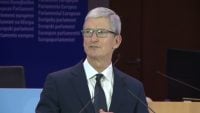
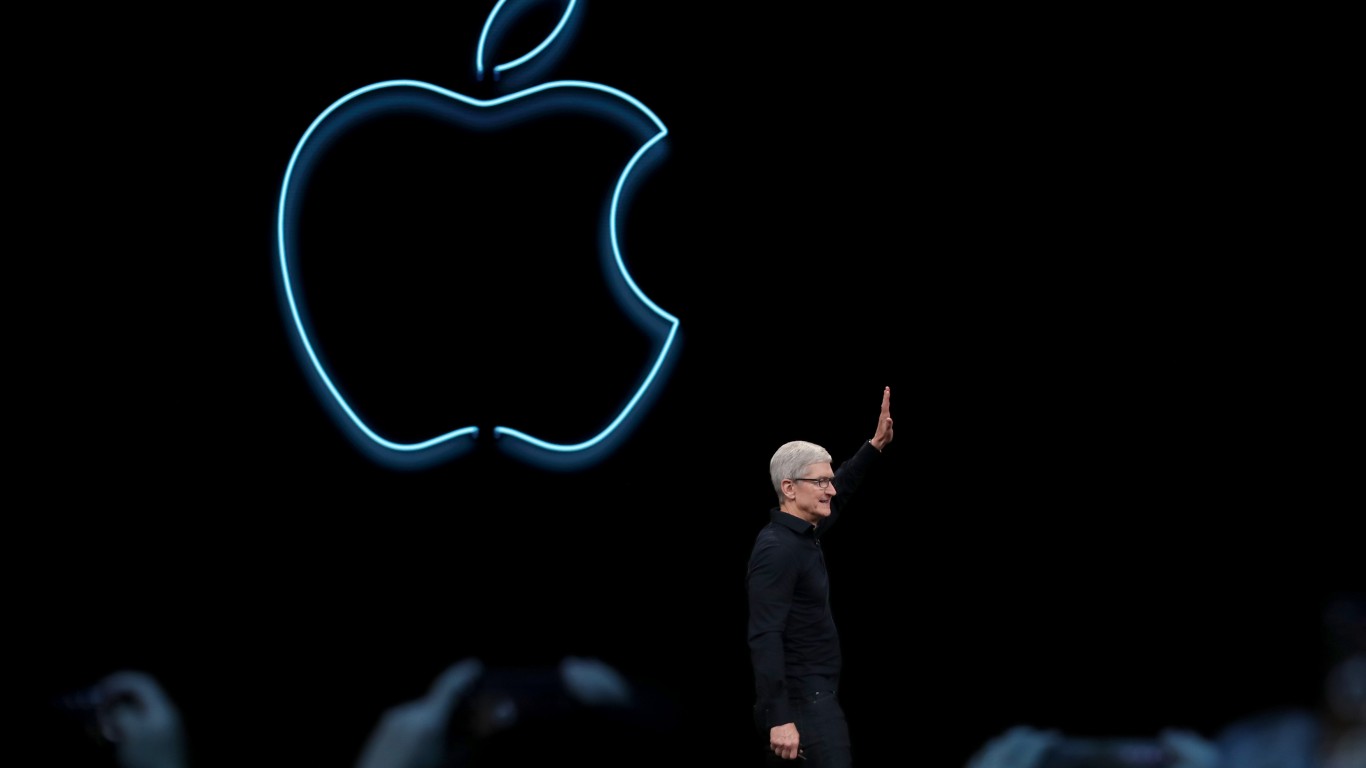
Apple has a new chief executive, and the first big geopolitical question on his desk concerns who makes the memory chips inside the iPhone. On CNBC Tuesday, Strategy Risks founder Isaac Stone Fish said there is “a real possibility that Apple decides to move closer to the American business community here, especially in things like memory” now that John Ternus has taken over as CEO from Tim Cook.
The memory supply line Cook spent the last year defending is the one Washington now wants Ternus to walk away from. And it is landing on the same week Apple (NASDAQ:AAPL | AAPL Price Prediction) is on track to close above a $5 trillion market cap for the first time.

Why Memory Suddenly Runs the Apple Story
On the July 30 earnings call, Cook described the pricing environment bluntly: “We reluctantly raised prices. We did it because we’re in what I would characterize as a 100-year flood on the memory pricing with exponential increases in memory prices.” He noted that “primarily the DRAM market has three suppliers” and Apple is “evaluating all options.”
CFO Kevan Parekh said “more than 100%” of gross margin compression came from memory. Cook warned that “for September, we expect to pay even higher memory costs” and beyond that “the market pricing for memory continuing to increase… could drive an increasing impact on our business.”

CNBC aired a segment on Cook’s CXMT lobbying the same day Ternus took over. Wedbush’s Dan Ives said on September 9 that memory costs drove the iPhone price hike. The cheap Chinese DRAM keeping iPhone costs manageable is exactly what U.S. policymakers want Apple to drop.
Peer Trade: Who Wins if Apple Pivots
Ternus inherits strength. Fiscal Q3 revenue hit $109.42 billion, up 16.36% year over year, with Greater China contributing $18.82 billion. AAPL trades at a P/E of 44, up 25.66% year to date.
Qualcomm (NASDAQ:QCOM) is the most direct beneficiary if Apple leans harder on U.S. silicon. CEO Cristiano Amon flagged the same input squeeze on the July call: “Despite a challenging memory and supply environment, our third quarter results reflect solid execution of our growth strategy.” Qualcomm sits at a $208.9 billion market cap with a P/E of 37.
NVIDIA (NASDAQ:NVDA) has already lived through the China-exclusion playbook. Its Q3 fiscal 2027 outlook of $108.0 billion, plus or minus 2%, explicitly excludes any Data Center compute revenue from China. Nvidia decoupled and kept growing.
What to Watch Next
Ternus is keeping his options open. Stone Fish warned that “the biggest signifier is not what happens this week, but what happens in the midterms” and if Democrats win, “a lot of the global business activities will be much further scrutinized.” Apple signaled where it will spend domestically, disclosing a new multi-year agreement with Broadcom expected to exceed $30 billion as part of its U.S. manufacturing program.
Contact [email protected] for any questions or corrections.
Joel South covers large-cap stocks, dividend investing, and major market trends, with a focus on earnings analysis, valuation, and turning complex data into actionable insights for investors.
He brings more than 15 years of experience as an investor and financial journalist, including 12 years at The Motley Fool, where he served as an investment analyst, Bureau Chief, and later led the Fool.com investing news desk. He has also co-hosted an investing podcast and appeared across TV and radio discussing market trends.