‘This Is the Pain That Comes With Bringing Inflation Down’: Home Sales Drop Below 4 Million
The Fed's rate hikes have quietly broken the arithmetic of buying, selling, and even staying put for millions of American homeowners. Now the builders absorbing the damage in real time are flashing warning signals worth watching closely.


“This is the pain that comes with bringing inflation down,” Julia Coronado, founder and president of Macro Policy Perspectives, told Marketplace listeners on September 21. It was two business days after the Fed delivered a unanimous quarter-point rate hike that pushed the federal funds upper bound range to 4.00%. The housing data released this month made her point in numbers.
Existing-home sales fell 1.2% YoY to a 3.98 million annualized pace in August, the weakest reading in a year and the first sub-4 million print of the cycle. The Case-Shiller National Home Price Index, meanwhile, hit an all-time high of 336.7 in June. Buyers are caught between record prices and the highest financing costs of the cycle at the same time.
Rates Broke the Math
On Sept. 18, the 10-year Treasury yield, the benchmark that anchors 30-year mortgage rates, touched 5.01% before easing to 4.96% by week’s end. That is a full percentage point above the 3.97% February low and puts the benchmark in the 97.6th percentile of the past year’s range. Housing starts have followed rates lower, sliding to a 1.27 million annualized pace in August from 1.52 million in March.
The retirement math is brutal. A homeowner sitting on a record-price asset would seem to be winning, until they try to move. Downsizing into a smaller property financed at roughly 7% while giving up a locked-in 3% mortgage destroys the arbitrage. Helping an adult child buy in 2026 means writing a bigger check against a bigger price at a worse rate. Credit-card APRs sit near 20.94%, so bridging the gap with plastic is a worse option than usual.
Builders Wear the Damage
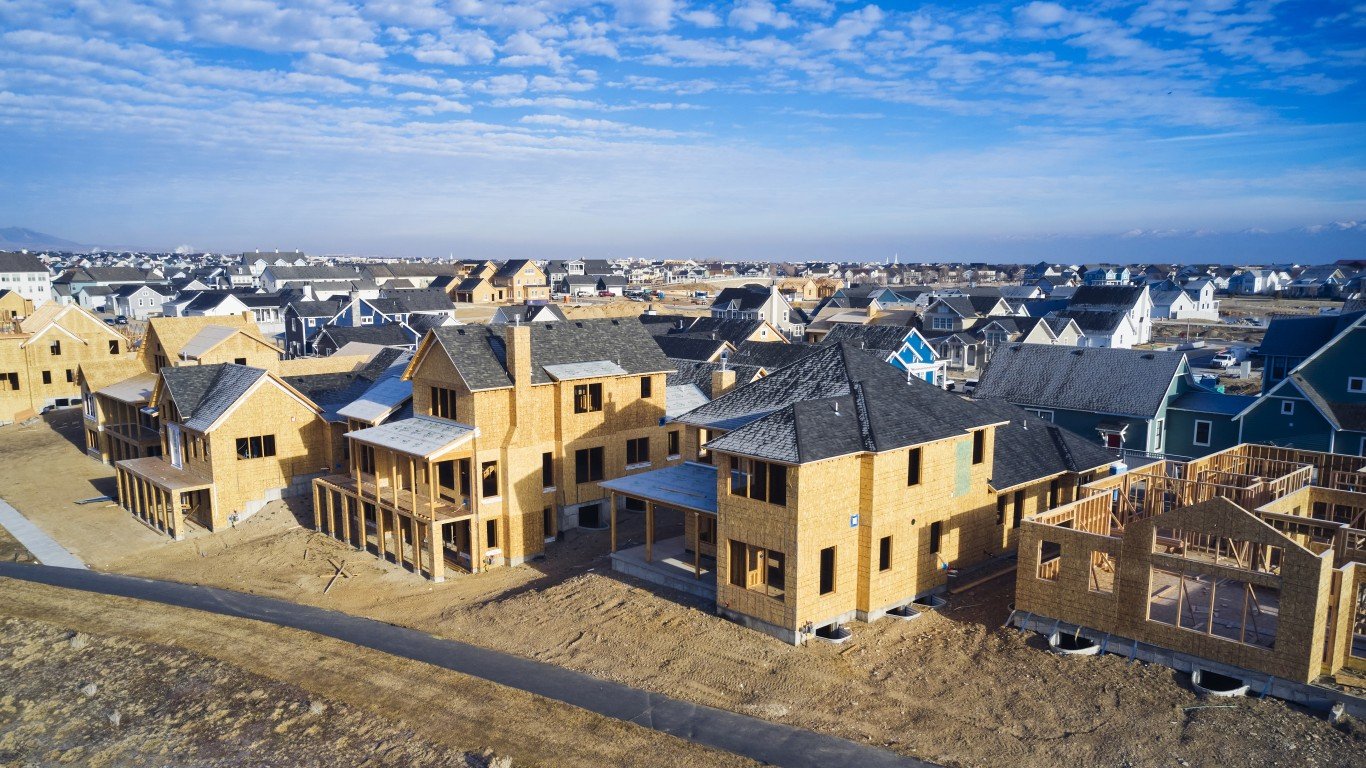
The homebuilders are absorbing the shock in real time. D.R. Horton (NYSE:DHI | DHI Price Prediction), the country’s largest builder by volume, reported fiscal Q3 earnings of $3.20 per share on $9.23 billion in revenue, with the cancellation rate climbing to 20% from 17% a year earlier. CEO Paul Romanowski told investors, “Affordability constraints and cautious consumer sentiment continue to impact new home demand.” The stock is down 15.7% over the past year and carries a $39.2 billion market cap.

KB Home (NYSE:KBH), a mid-cap heavily exposed to first-time buyers, reported fiscal Q3 results Tuesday. Deliveries fell 19% year over year to 2,732 homes, housing revenue dropped 20% to $1.3 billion, and homebuilding operating margin compressed to 5.2% from 8.1%. Executive Chairman Jeff Mezger described a market where “conditions have weakened since our last earnings call in June” and resale inventory, KB’s largest competitor, had climbed to “its highest levels in a decade.” KB shares are down 24.4% over the past year and 16.4% year to date.

What Breaks the Freeze
The Fed has chosen to risk a frozen housing market as the price of potentially getting inflation back to 2%. Nothing in the September statement suggests relief is imminent. Watch three signals over the next quarter: whether the 10-year yield can hold below 5% as Treasury supply keeps growing, if D.R. Horton’s cancellation rate stays elevated when it reports fiscal Q4 in November, and whether KB Home’s Q4 guide of 16% to 16.6% gross margin holds against continued Southern California weakness. If any one of those cracks, the pain economist Coronado described could stop being theoretical for millions of would-be movers still on the sidelines.
Contact [email protected] for any questions or corrections.
Gerelyn Terzo is the author of dividend investing handbook "Dividend Investing Strategies: How to Have Your Cake & Eat It Too." A veteran financial journalist, she covers agri-finance for outlets like Global AgInvesting and the broader stock market and personal finance for 24/7 Wall Street. She began at CNBC and later helped launch Fox Business in New York. Gerelyn currently resides in Woodland Park, Colorado and dabbles in nature photography as a hobby.