Oracle Declares Force Majeure on $165 Billion Project Jupiter Data Center
Oracle just handed its $165 billion flagship data center a force majeure notice, and the financing debt is already trading below par. Whether that spells opportunity or accelerating collapse depends on which number you trust more.

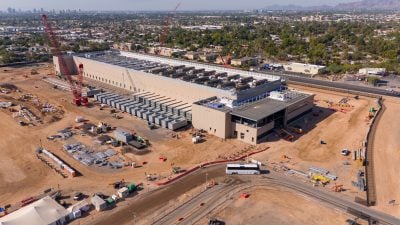
At $138.26, Oracle (NYSE:ORCL | ORCL Price Prediction) is a Hold. Bloomberg News reported that Oracle sent a force majeure notice to Blue Owl tied to Project Jupiter, the $165 billion New Mexico data center anchoring the Stargate AI announcement alongside OpenAI and SoftBank, and shares slid roughly 4% in premarket trading.

Oracle sells database, cloud infrastructure, and enterprise software. The stock surged through 2025 on record AI-training backlog, then unwound as investors questioned delivery capacity and costs. Today’s headline puts a name on that anxiety.
Why the Force Majeure Notice Actually Matters
Project Jupiter was designed for 2.45 gigawatts of electricity and planned to come online in 2028, but faced denial of a key permit for energy resources and debt financing trading below 90 cents on the dollar. The notice appears designed to delay payments should the project fail to meet the 2028 deadline. Management said “Neither of these sites will have any impact into our previously stated FY27 revenue or earnings guidance.”
Cloud Backlog Bulls Cannot Ignore
Q1 FY2027 revenue rose 29.61% to $19.345 billion, cloud revenue jumped 62% to $11.607 billion, and cloud infrastructure surged 121%. Remaining performance obligations reached $664 billion, up $209 billion year over year, with more than $30 billion in new AI contracts booked in a single quarter. Non-GAAP EPS of $1.92 beat estimates by 10.4%. Full-year guidance calls for at least $90 billion in revenue and $8.10 in EPS, against a forward earnings multiple of 18 and a PEG of 0.833.
Cash Burn and a Cracking Buildout
Capex hit $28.499 billion in Q1, pushing free cash flow to negative $5.396 billion. Interest expense rose 55% to $1.4 billion. FY26 free cash flow was negative $23.686 billion. Software license revenue fell 15%. Oracle completed a $20 billion at-the-market equity program to fund buildout, yet the stock is down 55.44% over one year. If Jupiter’s problems spread, RPO becomes theoretical.
Why Waiting Is Rational Right Now
Bulls have a real backlog and a $237.97 average price target. Bears have a broken chart and a flagship project financed by distressed debt. Waiting a quarter costs a modest dividend and possibly a rally on resolution.

What the Numbers Show About This Setup
Oracle trades at $138.26 against an average analyst target of $237.97. Coverage totals 44 analysts:
- Strong Buy: 8
- Buy: 28
- Hold: 7
- Sell: 1

Trailing P/E sits at 23, forward P/E at 18. The stock is down 28.37% year to date and 55.44% over one year.
Why Hold Is the Only Call at $138
At $138.26, Oracle is a Hold. Here is why.
Oracle booked more than $30 billion in new AI contracts in one quarter and RPO is $664 billion. Free cash flow is deeply negative, and a flagship data center is under stress with financing debt trading below par.
A Buy requires Jupiter reaching clean resolution, the New Mexico air permit landing, or free cash flow inflecting as CFO Hilary Maxson described: “a free cash flow conversion ratio of something like 100% to post-tax EBITDA” once projects come online. A Sell requires a second force majeure at another site or a downward revision to the $90 billion FY27 revenue commitment. Neither is on this quarter’s calendar.
Bloom Energy (NYSE:BE), whose fuel cells Oracle plans to deploy at the New Mexico site, is up 229.89% over one year at a 57x forward multiple (the power and cooling suppliers behind these data centers are the subject of our free report on seven AI infrastructure names that aren’t chipmakers). Blue Owl Capital (NYSE:OWL) is down 46.06% over the year. Wait a quarter and let Jupiter finish declaring itself.
Contact [email protected] for any questions or corrections.
After two decades of patrolling the dark corners of suburbia as a police officer, Rich Duprey hung up his badge and gun to begin writing full time about stocks and investing. For the past 20 years, he’s been cruising the markets looking for companies to lock up as long-term holdings in a portfolio while writing extensively on the broad sectors of consumer goods, technology, and industrials. Because his experience isn’t from the typical financial analyst track, Rich is able to break down complex topics into understandable and useful action points for the average investor. His writings have appeared on The Motley Fool, InvestorPlace, Yahoo! Finance, Money Morning, and, of course, 24/7 Wall St. He has been featured in both U.S. and international publications, including MarketWatch, Financial Times, Forbes, Fast Company, and USA Today.