Elon Musk Wants To Build 20,000 Optimus Robots A Week. There’s Just One Problem, Tesla Still Can’t Get The Hands To Work
Tesla is racing toward a production goal that sounds like science fiction, but a single component smaller than your palm is quietly derailing the entire timeline. The gap between Elon Musk's ambitions and what the factory floor can actually deliver…

This post may contain links from our sponsors and affiliates, and Flywheel Publishing may receive compensation for actions taken through them.
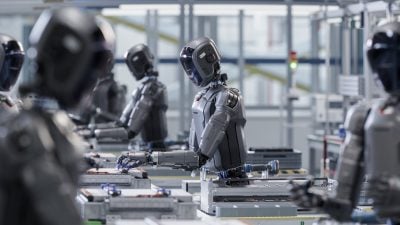
20,000 Robots a Week Runs Into a Hand Built Screw by Screw
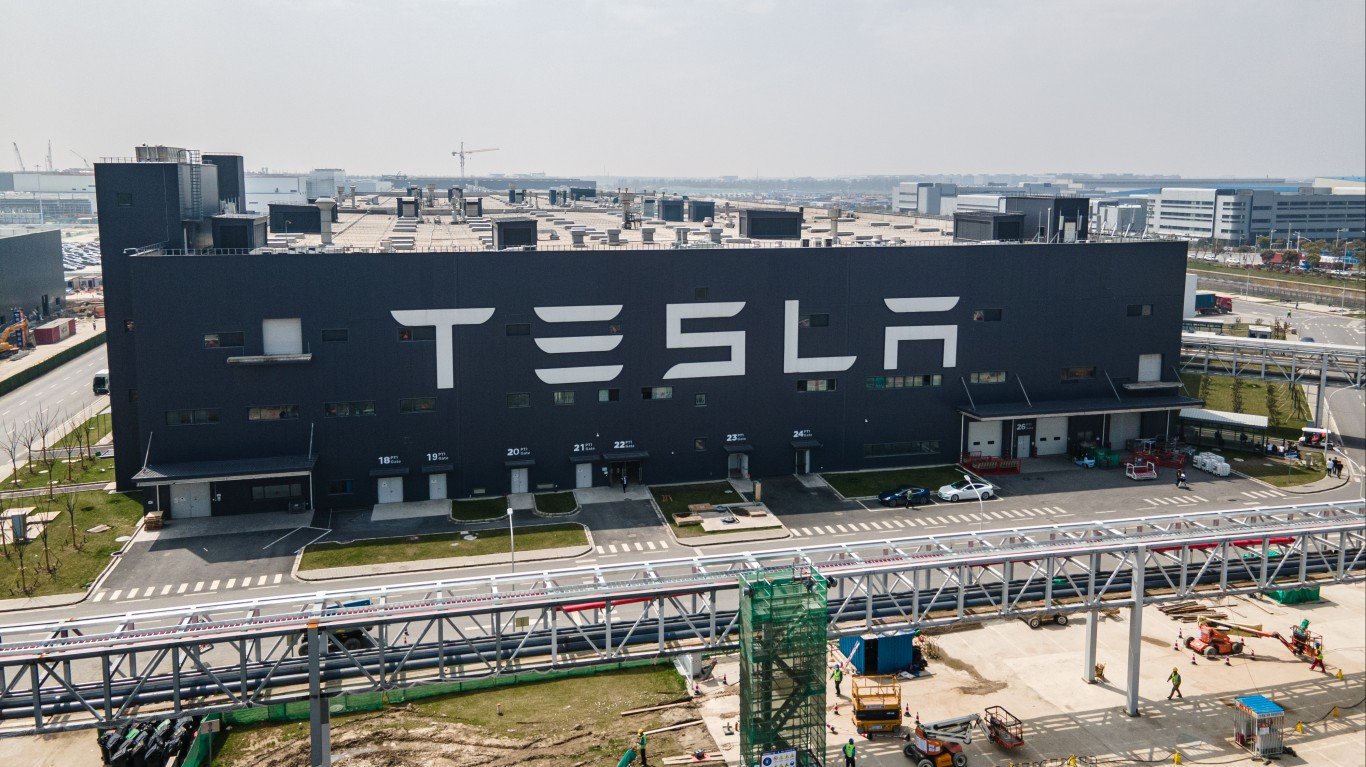
20,000 Optimus robots a week. That is Elon Musk’s stated production goal for Tesla (NASDAQ:TSLA | TSLA Price Prediction): a continuous line that eventually turns out humanoid robots at that pace, building toward a Gigafactory Texas line with capacity for 10 million units a year. The figure is an aspiration, and it should be read as one. Tesla has reported no production result anywhere in its neighborhood.

Now set a small part against it. Each Optimus hand reportedly contains more than 100 screws and small components that are still assembled by human workers, according to Electrek’s reading of reporting by The Information. The distance between that hand and that weekly target is the story. It is also the oldest story in manufacturing: a big number on a slide meets a small part that will not cooperate.
One caveat, stated plainly. The hand, sensor, supplier and AI details in this article trace to The Information’s reporting, which is paywalled and based on sources familiar with the matter, and which reached the public through Electrek and Futurism. Tesla has not confirmed those details, and they come from outside the company’s own disclosures. Electrek, Gizmodo and Futurism also covered this reporting before we did. Gizmodo framed it on September 26, 2026 as a company that wants 20,000 robots a week but first has to figure out hands.
How Big Musk Has Made the Optimus Vision
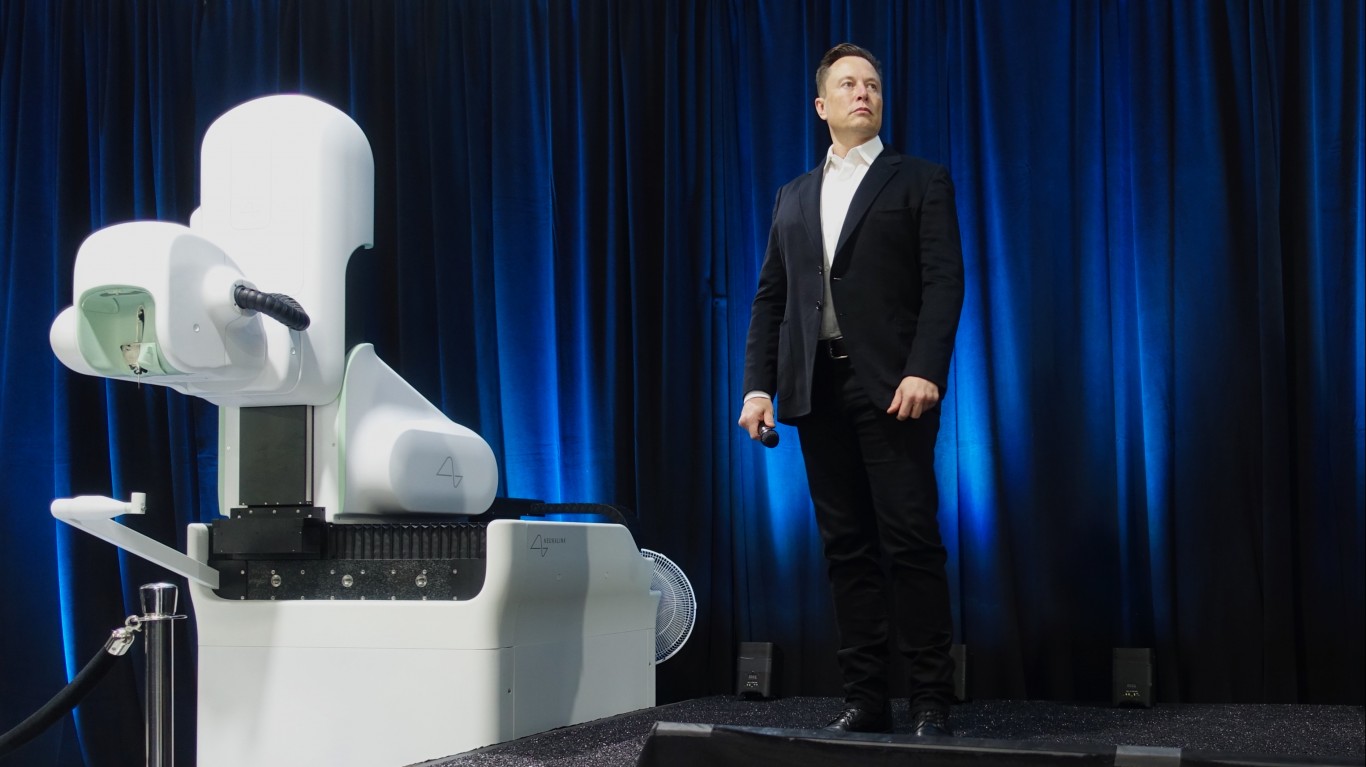
The scale of the promise explains why the hands matter so much. At Tesla’s We, Robot event in 2024, Musk described what Optimus would eventually do, as reported: “It’ll do anything you want. It can be a teacher, babysit your kids; it can walk your dog, mow your lawn, get the groceries; just be your friend, serve drinks.”
On Tesla’s Q1 2026 earnings call, Musk reportedly said: “I think Optimus will be our biggest product, not just Tesla’s biggest product ever, but probably the biggest product ever.” He has also floated up to $10 trillion in potential long-term Optimus sales.
That framing has been around for a while. Business Insider reported on July 24, 2026 that Musk said Optimus could be Tesla’s biggest product ever, in a piece headlined around the three major hurdles the robot still faced. Two months later, the hurdles are still there.
Musk himself has attached warnings to the numbers. On the July 22 call, he described the Texas ambition as “sort of aspirationally 10 million units a year versus a million units a year of Optimus 3,” adding “with all the caveats there, which is insanely difficult to scale production.” He also said “everything on the robot is new” and that “with Optimus, there is no supply chain.”
What Optimus Output Actually Looks Like Today
According to Electrek, Optimus production ramped from a few dozen units a week in Q2 testing to several hundred units a week in August 2026. Electrek reports that Tesla’s nearer-term goal is more than 1,000 robots a week by year-end.
Several hundred a week today. A stated goal of 20,000 a week eventually. Those two figures go next to each other, and they speak for themselves.
Tesla’s leadership has been open that the early climb would be slow. In April, Musk said: “I don’t know what the production rate of Optimus will be this year. It is impossible to predict these things.” In July, he said the initial portion of the ramp “will be quite flat and long because of the newness of the parts in the robot.”
Why a Robot Hand Is Harder Than Anything on a Car
A human hand packs many degrees of freedom into a very small volume. It has to carry real load, and it needs touch feedback to grip anything delicate without crushing it. A robot hand has to reproduce all three at once, repeatedly, for years. Nothing on a car resembles it. A door handle moves one way. A finger has to move many ways and report back what it senses.
Musk has acknowledged the benchmark. “The human hand is an incredible, incredible thing,” he said on the July call. He also described what happens when reliability falls short: “Otherwise, you’ve got sort of a 70 kilogram robot that just flopped over. You’ve got to carry it out like a buddy.”
The reported problems land exactly there. Electrek, citing The Information, said manufacturing fixtures are struggling with tolerances tighter than anything Tesla builds for cars, leading to heavy rework. Futurism, which reported on September 28, 2026 that Tesla reportedly cannot get the hands to work, said the hands’ touch sensors have had reliability issues. Rather than fix them in place, Tesla is reportedly developing a swappable “sensing glove” for next year. This specific problem has reportedly troubled Tesla for more than a year.
Musk warned in April that Optimus has “10,000 unique items” and that the line “will move as fast as the least lucky, slowest, dumbest part in the entire 10,000.” By the reporting, the hand is that part.
Supplier Snags, With the Details Still Missing
The Information’s report, published September 25, 2026, was headlined that Optimus hits snags in hands and suppliers as the scale-up begins. That points to a supply problem sitting alongside the assembly problem. We do not have the specifics of the supplier issue, including who is involved or what went wrong, and we will not guess at them.
Bear Case: Robots That Cannot Yet Generalize
The hands are the visible bottleneck. The deeper one may be the robot’s brain. Electrek’s own headline on September 25, 2026 was that Tesla ramps Optimus to hundreds a week but the robots cannot generalize.
As reported, Optimus’s AI cannot yet reliably handle a wide range of tasks and still takes several days to learn even basic tasks. That is despite more than 500,000 hours of training data, a pile Electrek says is set to double by year-end. Futurism reported that most Optimus units made so far go to internal testing and data collection rather than customer shipments, and remain limited to simple, repetitive tasks.
This may be the harder problem. A hand-assembly bottleneck is a manufacturing problem, and Tesla has solved manufacturing problems before. Better fixtures, redesigned parts and automation can shrink rework over time. A robot that takes days to learn a basic task and cannot generalize is a research problem, and research problems resist production-line fixes. Building more robots faster does little for a robot that cannot yet do enough once it is built.
Musk set that bar himself in July, saying the goal is a robot that can do a task “if you simply ask it to do something or show it a video.” The reporting describes a machine still some distance from that standard.
Market Reaction: A Shipping Product Buried by Robot Fingers
Eletric-vehicles.com reported on September 25, 2026 that Tesla stock fell as the Optimus hand snags overshadowed the Semi launch. There is irony in that. A product that actually shipped got pushed aside by a robot’s fingers.
As of 10:54 a.m. ET on September 29, 2026, Tesla traded at $354.99, down 0.69% in today’s session and down 5.41% over the past week. That weekly window contains the September 25 reporting, but many factors moved Tesla shares during those days, and the fall cannot be pinned on Optimus alone.

The longer view is mixed. Tesla is down 21.06% year to date and down 19.39% over the past twelve months. Over ten years, the stock is up 2,509.84%. Investors who have held for years have done extremely well, and any skepticism about Optimus sits against that record.

Bottom Line: Two Separate Tests Worth Tracking
The 20,000-a-week target is a statement of ambition, and Tesla’s own leadership has attached caveats to it. What would weaken the skepticism is measurable. If Tesla reaches its reported goal of more than 1,000 robots a week by year-end, the manufacturing objection loses much of its force. If those units are still going to internal testing rather than customers, the harder problem has not moved.
Those are two different tests, and investors with a long horizon can watch both. The first measures how fast Tesla can build a hand. The second measures whether the robot attached to it can learn to use one.
Contact [email protected] for any questions or corrections.
AJ spent 10 years writing about financial markets at The Motley Fool. His coverage centers on technology stocks and the broader macroeconomic trends, from interest rates to geopolitics, that shape where markets are headed next. AJ is drawn to the stories where big-picture economics and individual companies collide.