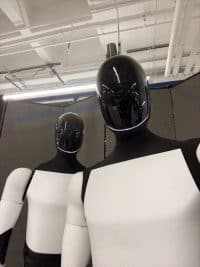
Tesla Will Make Millions of Optimus Robots. Texas Instruments Can Get Paid on Every One

This post may contain links from our sponsors and affiliates, and Flywheel Publishing may receive compensation for actions taken through them.
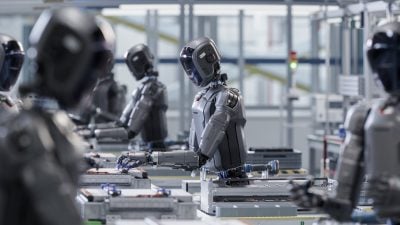
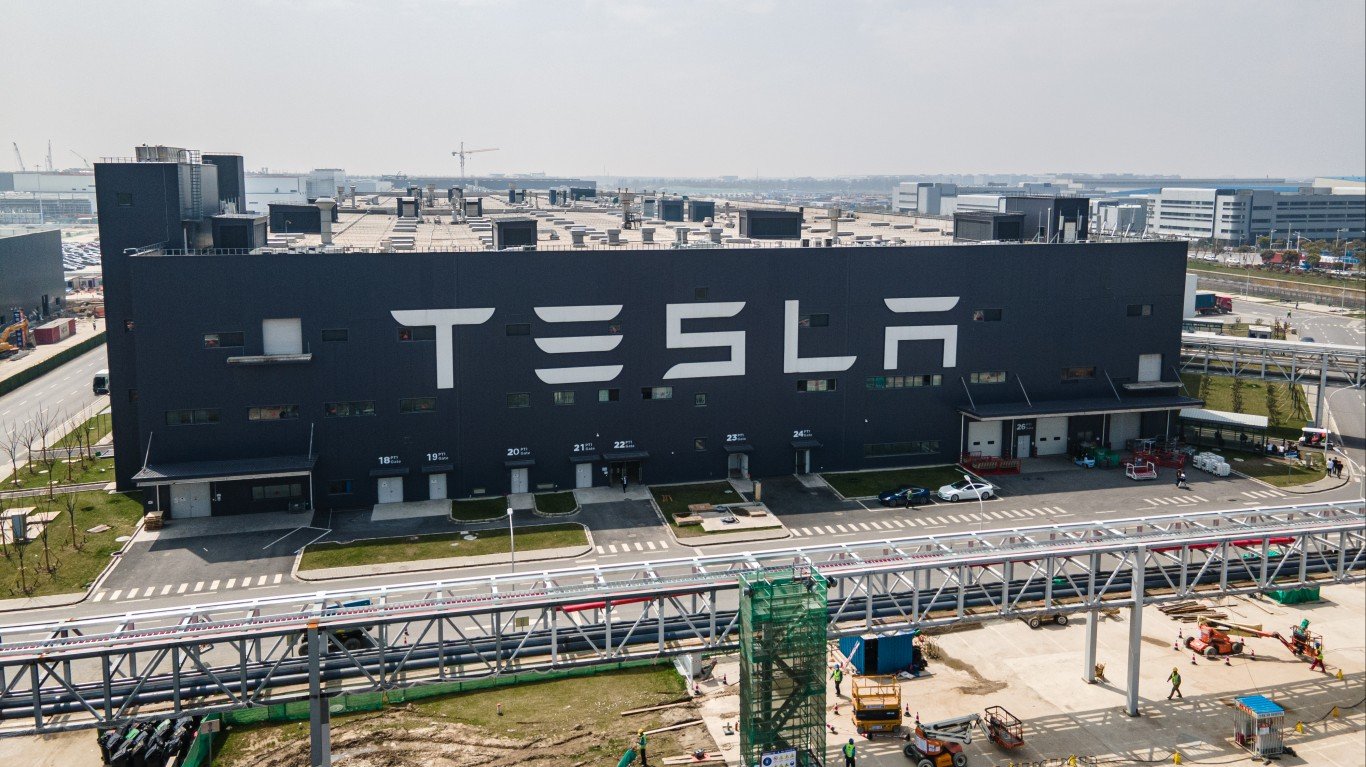
On October 21, 2026, two companies that rarely share a sentence reported after the close, and both talked about humanoid robots. Tesla (NASDAQ:TSLA | TSLA Price Prediction) said Optimus production began in Fremont on its high-volume lines, and that the bots coming off them are “the first production-quality bots that we have manufactured.”
On its own call, Texas Instruments (NASDAQ:TXN) CEO Haviv Ilan said TI’s chip content in a humanoid robot runs from $500 to $1,000. He did not name Tesla or Optimus as a customer.
That gap creates tension for TI and Tesla shareholders. Tesla is building toward millions of robots, TI sells the chips those robots need, and nothing signed links them.
TI closed at $284.65, up 2.47%, and rose 1.21% to $288.10 after hours. Tesla closed at $386.47, up 3.41%, then fell 3.32% to $373.65 by 7:59 PM ET.
What Tesla Actually Committed To in Fremont
Tesla’s factory table lists Fremont Optimus as “Early Ramp” and a Texas Optimus factory as “Construction.” A line is running, but Tesla disclosed no unit volumes.
Most of the Fremont production line, which Elon Musk estimated at a million units per line, has arrived. Musk also said reaching an annualized rate of 20,000 units a week would take “probably at least a year, maybe a little longer.”
Those are targets, and Musk has missed Optimus timelines before. CFO Vaibhav Taneja added that the Austin factory under construction could build far more robots than Fremont.
Where TI’s Chips Sit Inside a Humanoid
Every robot joint needs motor control, and the robot also needs power conversion, battery management, sensing, and microcontrollers. Those are TI’s core analog and embedded processing categories.
On March 5, 2026, TI announced a humanoid collaboration with NVIDIA (NASDAQ:NVDA) that combines TI radar with camera data on Jetson Thor, helping robots spot glass doors that cameras miss. “The next generation of physical AI requires more than just advanced compute,” said Giovanni Campanella, TI’s general manager of industrial automation and robotics.
Simple math on Musk’s target rate and Ilan’s range puts annual TI content at about $500 million to $1 billion. However, this assumes TI wins every socket in every robot.
TI booked $6.055 billion in revenue last quarter, up 28%. Even full robot content would be meaningful years from now but small against one quarter of the business TI already has. The robot thesis could break if timelines slip and industry volumes stay small for years. Analog Devices (NASDAQ:ADI) and Infineon compete for the same motor-drive and sensor sockets. Tesla is also pulling silicon in-house, with its next AI chip targeted for Optimus around April 2027 and a research fab underway.
Why TI’s Robot Case Stands Apart From Tesla
The TI case works without Tesla, because Ilan described humanoid content as a category opportunity across many customers: “Our content over there is actually, for example, per humanoid, is very high.”
Industrial revenue rose more than 40% year-on-year, and Ilan said: “I think 2027 is going to be a great deal of ramps.” Robots are upside on top of a recovering core.

Tesla is the riskier path to the same trend. At about $1.53 trillion and down 14.06% year to date, it needs Optimus to work on schedule.


Texas Instruments guided fourth-quarter revenue between $5.80 billion and $6.30 billion; a result below that range, or a fourth-quarter call with no robotics ramps named, would undercut this view.
Contact [email protected] for any questions or corrections.
Omor Ibne Ehsan is a writer at 24/7 Wall St. He is a self-taught investor with a focus on growth, cyclical, and dividend equities that have strong fundamentals, value, and long-term potential. He also has an interest in high-risk, high-reward investments such as penny stocks.