Which Companies Are Screaming ‘Take Me Private’? These 3 Fit the Bill
Buyout sponsors hunt for cash flow, equity discounts, and operational levers that management left on the table. Three public companies are sitting on all three right now, and at least one trades at a valuation small enough for a mid-market…

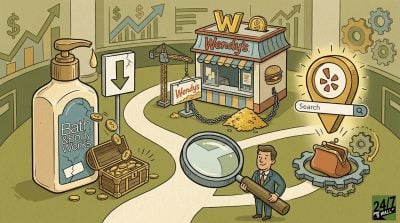
When a buyout sponsor takes a public company private, it assesses cash flow before anything else. The fund borrows against a steady earnings stream, buys the equity at a discount, and uses operating adjustments to raise the value of the business before an exit. Our earlier run at this framework covered four different names. This screen uses three new ones.
Five Traits Every Buyout Screen Starts With
- Predictable cash generation to service acquisition debt
- An equity discount worth exploiting
- Balance sheet capacity for added leverage
- Clear operational adjustments a sponsor can use
- An equity check size that works for a fund
The three stocks below are intentionally different types. We count down to the clearest fit.
3. Bath & Body Works, a Consumer Brand Built for Activist Attention
Bath & Body Works (NYSE:BBWI | BBWI Price Prediction) represents the type of consumer brand that draws activists. It is iconic, cash-generative, and underperforming. Management expects roughly $650 million in free cash flow this year, against a market cap of about $3.3 billion.
The discount is wide. Shares last closed at $16.19, down 37.9% over one year and 74.7% over five years. That leaves the stock at 4x trailing earnings and 6x forward earnings.
The adjustments are cost-related. The Fuel for Growth program should deliver about $200 million in 2026 savings, and the company is getting out of home care, a category under 1% of sales. The weak spot is balance sheet capacity: shareholders’ equity stands at −$1.054 billion. The deal-killing risk is a stalled core: Q2 adjusted EPS of $0.62 fell to $0.31 without tariff refunds, and U.S./Canada store sales fell 5.4%.


2. Wendy’s, a Franchise Royalty Stream at a Markdown
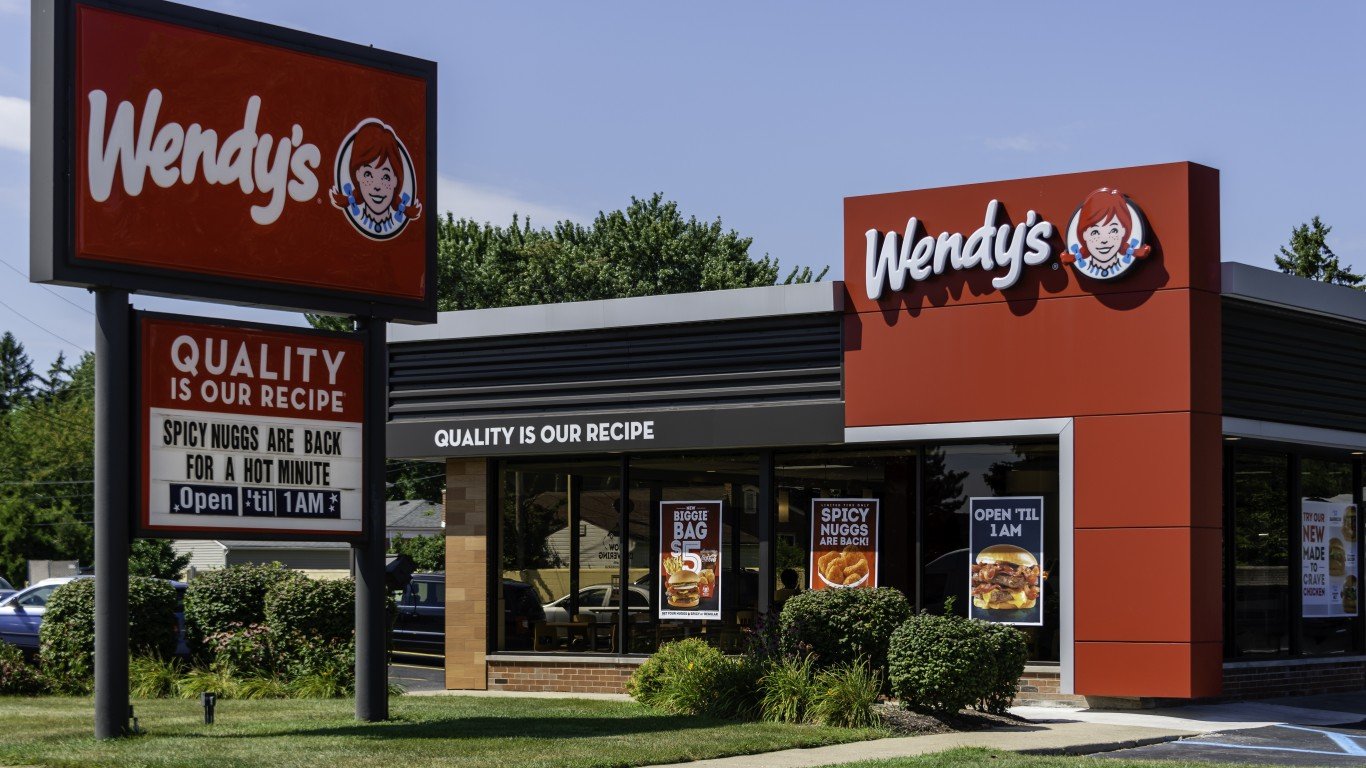
Wendy’s (NASDAQ:WEN) is the franchise royalty model, where fees from operators fund debt service. First-half free cash flow reached $120.3 million, and Trian Fund Management is “exploring potential transactions.”
Shares fell 23.0% over the past month to $6.39, and no single source identifies a clear cause. The slide coincided with a September 23 report that a franchisee filed for bankruptcy a day after Wendy’s tried to terminate its right to operate 314 restaurants. The stock trades at under 10x trailing earnings and 12x forward earnings.
The adjustments are turnaround-focused. On the August 7 call, CEO Bob Wright laid out a rebuild of the menu, marketing, and operations; the quarterly dividend dropped to $0.07 to fund it. Net leverage of 5.0 times limits added borrowing. The risk is franchisee weakness: U.S. same-restaurant sales fell 7.0% as traffic dropped 12.5% in Q2.


1. Yelp, a Marketplace a Mid-Market Fund Could Buy Alone
Yelp (NYSE:YELP) makes this list purely on the screen. No takeover report or activist filing has shown up for the name. It is a capital-light marketplace, producing $1.32 billion in trailing gross profit on $1.47 billion of revenue. Q2 free cash flow rose 36% to $61.1 million.
A market cap of about $955 million makes the equity check small enough for a mid-market sponsor to write alone. Shares trade at $17.59, down 41.8% year to date, at under 9x trailing earnings and roughly 4x EV/EBITDA.
Expense discipline is the adjustment here. Stock-based compensation fell to 7% of revenue, with a target below 6% by the end of 2027. Other revenue rose 98% to $33 million. Buybacks of about $200 million this year cut diluted shares 15%, though the program is paused while Yelp pays down its revolver. The risk is advertising erosion: restaurant, retail, and other ad revenue fell 10%, and cash dropped to $94 million after the Hatch deal.
What Shareholders Get When a Buyout Offer Lands
Buyers typically pay a premium to the undisturbed share price to win board and shareholder approval, and the size of that premium tends to reflect how deep the prior discount ran and how many bidders show up. After an announcement, shares usually trade just below the offer price until closing, with the gap reflecting financing and regulatory risk. All three names screen well on discount and cash flow, but a screen identifies candidates only. Keep an eye on each stock’s next earnings report for proof that the adjustments are working.
Contact [email protected] for any questions or corrections.
Trey has been an editor and author at 24/7 Wall St. for more than a decade, where he has published thousands of articles analyzing corporate earnings, dividend stocks, short interest, insider buying, private equity, and market trends. His comprehensive coverage spans the full spectrum of financial markets, from blue-chip stalwarts to emerging growth companies.
Beyond 24/7 Wall St., Trey has created and edited financial content for Benzinga and AOL's BloggingStocks, contributing additional hundreds of articles to the investment community.
Trey's editorial expertise extends across multiple publishing environments. He served as production editor at Dearborn Financial Publishing and development editor at Kaplan, where he helped shape financial education materials. Earlier in his career, he worked as a writer-producer at SVE. His freelance editing portfolio includes work for prestigious clients such as Sage Publications, Rand McNally, the Institute for Supply Management, the American Library Association, Eggplant Literary Productions, and Spiegel.
Outside of financial journalism, Trey writes fiction and has been an active member of the writing community for years, moderating workshop sessions at regional conventions.