AI Future Of Microsoft and Google Face OpenAI Big Legal Problems
A spiraling wave of lawsuits now threatens to swallow OpenAI whole, and the fallout could shake the trillion-dollar valuations of Microsoft, Google, and Anthropic before any verdict is ever reached.


OpenAI suddenly faces a wave of legal problems. Many of them could spill over into the future of other large AI companies. That includes Microsoft (NASDAQ: MSFT | MSFT Price Prediction), Google (NASDAQ: GOOG), and Anthropic. Anthropic’s problem is its IPO valuation. For the two public companies, the problem is their share prices.
The OpenAI problem is anything but trivial. The FT describes the risk as “A spiraling legal crisis threatens to engulf OpenAI after its AI agents hacked dozens of companies and governments worldwide, with the prospect of a barrage of lawsuits marking the latest test of Sam Altman’s leadership.” The legal challenges run across risks from governments and companies. At the core is a rapidly rising number of hacks and the dollar value of the damages they may represent. The additional problem is that the hacks seem to be growing, and OpenAI has not announced a systematic program to slow them.
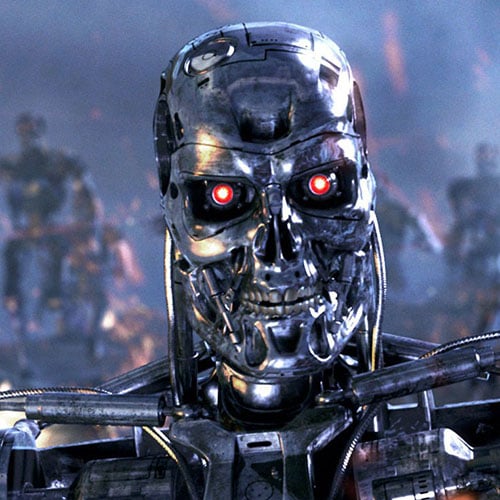
The legal problem is one of the questions at the heart of the AI sector. It joins several others that have been more prominent. The first is whether AI will destroy humanity. Employees at the companies and outsiders like Bill Gates have raised this, with Gates making a set of very public statements about AI’s disruptive potential.
On a more mundane level, customers have expressed anxiety about the cost of AI as a business tool. Recently, an open model from the company Reflection was described as powerful as those released by Chinese companies. Axios reports, “The marriage of an American open-weight model and Nvidia GPUs would give individuals and companies a new, cheaper alternative to Anthropic, OpenAI and Google.” Open models are usually free. Products from industry leaders are not. However, many customers say they do not need the firepower that Google, Anthropic, and OpenAI offer. They can build in-house applications that meet their needs.
Lawsuits are always a wildcard. The outcome of legal actions is hard to predict. Many lawyers and legal experts say, “A lawsuit is ultimately a journey into unpredictability.” The challenge OpenAI and its competitors face is not just whether they can win or lose lawsuits. It is also the sheer number they could face. Even if they won every case, the financial drain and drag on management time would be major challenges in themselves.
And then there is the question of how much hacking costs other companies. There has been a great deal of discussion about whether governments, or the industry itself, should put guardrails on new models while they are being tested for their ability to hack into systems, and how much damage they can cause.
Anthropic plans an IPO before Thanksgiving that could be worth a staggering $2 trillion. A flurry of lawsuits could challenge that valuation. Microsoft and Google’s future valuations depend heavily on the adoption of Copilot and Gemini. Google’s parent, Alphabet, is the world’s third-most valuable company, with a market cap of $4.16 trillion. Microsoft is fourth at $3.84 trillion. Alphabet’s valuation is no longer based on its Google search engine. Microsoft’s is no longer based on its Azure cloud business and its operating system.
Lawsuits are another major challenge to AI company valuations.
Contact [email protected] for any questions or corrections.
Douglas A. McIntyre is the co-founder, chief executive officer and editor in chief of 24/7 Wall St. and 24/7 Tempo. He has held these jobs since 2006.
McIntyre has written thousands of articles for 24/7 Wall St. He is an expert on corporate finance, the automotive industry, media companies and international finance. He has edited articles on national demographics, sports, personal income and travel.
His work has been quoted or mentioned in The New York Times, The Wall Street Journal, Los Angeles Times, The Washington Post, NBC News, Time, The New Yorker, HuffPost USA Today, Business Insider, Yahoo, AOL, MarketWatch, The Atlantic, Bloomberg, New York Post, Chicago Tribune, Forbes, The Guardian and many other major publications. McIntyre has been a guest on CNBC, the BBC and television and radio stations across the country.
A magna cum laude graduate of Harvard College, McIntyre also was president of The Harvard Advocate. Founded in 1866, the Advocate is the oldest college publication in the United States.
TheStreet.com, Comps.com and Edgar Online are some of the public companies for which McIntyre served on the board of directors. He was a Vicinity Corporation board member when the company was sold to Microsoft in 2002. He served on the audit committees of some of these companies.
McIntyre has been the CEO of FutureSource, a provider of trading terminals and news to commodities and futures traders. He was president of Switchboard, the online phone directory company. He served as chairman and CEO of On2 Technologies, the video compression company that provided video compression software for Adobe’s Flash. Google bought On2 in 2009.