Cramer Says $82 Semiconductor Stock Is A Buy After It Completes Merger With Rival
Jim Cramer just called a freshly merged RF chipmaker a buy, but Wall Street analysts are not nearly as enthusiastic, and the company just slashed its dividend to fund the deal. Here is what both sides of the argument look…

This post may contain links from our sponsors and affiliates, and Flywheel Publishing may receive compensation for actions taken through them.
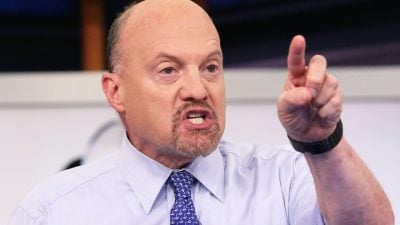
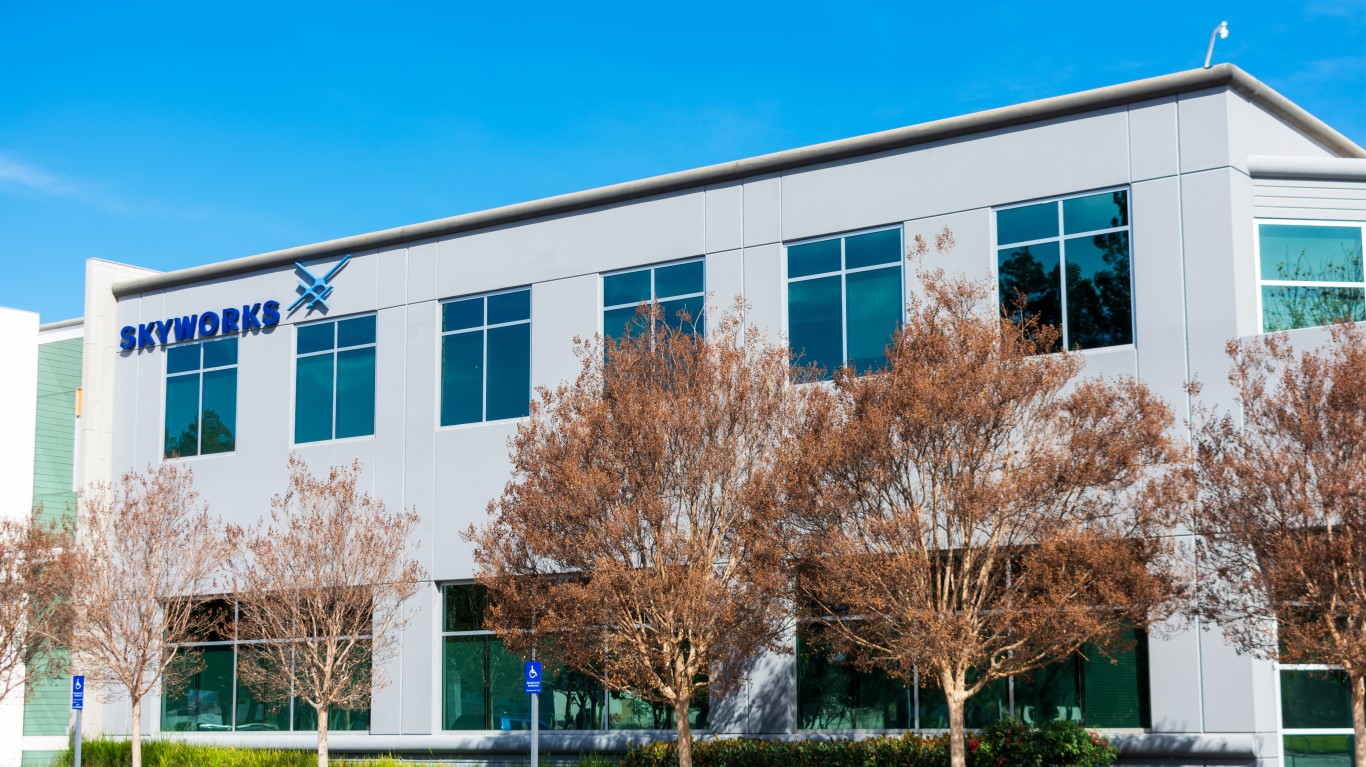
Hours after Skyworks Solutions (NASDAQ:SWKS | SWKS Price Prediction) completed its takeover of Qorvo (NASDAQ:QRVO), Jim Cramer told CNBC viewers the combined RF chipmaker is worth owning. He said so while also admitting that cellphone chips have been a tough part of the semiconductor market. On air, Cramer noted Skyworks “finally closed the deal with Qorvo” and added:
“I think the combination of the two is going to be a pretty good company. And I’d say you can buy Skyworks Solutions right here.”
In the same segment, he said the cellphone chip space “has been a bad area.”
Cramer’s Call Runs Well Ahead of Wall Street
While Cramer was speaking, Skyworks traded at $81.73, down 2.6% on the day. The average analyst price target is $69.82, which sits below that quote. Ratings break down to 1 strong buy, 1 buy, 19 hold, 1 sell and 1 strong sell.

The valuation reflects how far earnings have fallen. Skyworks trades at a trailing P/E of 43, and quarterly earnings dropped 68.6% year over year. Its forward P/E of 18 shows that the market expects a recovery. The stock has gained 30.45% in 2026 and is still down 41.65% over five years. Cramer has some company: B. Riley upgraded Skyworks on the Qorvo deal the same morning.

What Skyworks Brings to the Combined Company
In its fiscal third quarter, Skyworks earned $1.08 per share on a non-GAAP basis, ahead of the $0.65 consensus. Revenue of $934.8M fell 3.1%, and gross margin contracted to 44.9% from 47.1%. For the fourth quarter, management guided to $1.01B to $1.06B in revenue and $1.27 in EPS at the midpoint. Apple (NASDAQ:AAPL) is still the biggest exposure, with its largest customer accounting for about 57% of revenue.

CEO Phil Brace set out the integration priorities during the July call:
“Our number one goal is to close this transaction as quickly as we can, get started on delivering the synergies, and prove to ourselves, our customers, and our stakeholders that we can deliver value from that transaction.”
Management is aiming synergies of $500 million or more. To prepare for the deal, Skyworks planned about $2.0 billion in acquisition debt, approved a new $2.0 billion buyback and dropped its $0.71 quarterly dividend.
Qorvo Holders Leave After a Strong Year
Qorvo last traded at $114.17, up 35.1% for 2026. Its latest quarter delivered non-GAAP EPS of $1.64 against a $1.06 consensus, and gross margin expanded to 52.8%. High Performance Analog revenue rose 50.1%. CEO Bob Bruggeworth said:
“For full-year fiscal 2027, we continue to expect non-GAAP gross margin above 50% and now expect non-GAAP diluted earnings per share above $7.00.”
Skyworks gains Qorvo’s defense and data center growth, which could support the combined company’s 50-55% gross margin target.
Qualcomm Remains Cramer’s Top Phone Chip Pick
Cramer still ranked Qualcomm (NASDAQ:QCOM) ahead of the combined company, calling it “the semiconductor that you want to buy that is most connected to cell phones.” Brace argues the cycle is turning: “What’s in the rearview mirror is content shrinking over time. What’s in the headlights and in the windshield now is RF content growing.”
For what comes next, keep an eye on the first combined earnings report, early progress on synergies, and whether Apple content losses stay in the low teens.
Contact [email protected] for any questions or corrections.
AJ spent 10 years writing about financial markets at The Motley Fool. His coverage centers on technology stocks and the broader macroeconomic trends, from interest rates to geopolitics, that shape where markets are headed next. AJ is drawn to the stories where big-picture economics and individual companies collide.