Microsoft May Be Winning Enterprise AI, but When Does the Stock Catch Up?
Microsoft has beaten earnings estimates six quarters running while its stock sits roughly where it did a year ago, and Jim Cramer thinks he knows exactly why the market is finally starting to catch on.


Microsoft (NASDAQ:MSFT | MSFT Price Prediction) shares were at $528.25 in premarket trading on Tuesday, October 6, 2026, up fractionally from the previous close. The stock is 3.5% higher over the past week and 6.3% over the past month, but that puts it in the same neighborhood as a year ago.
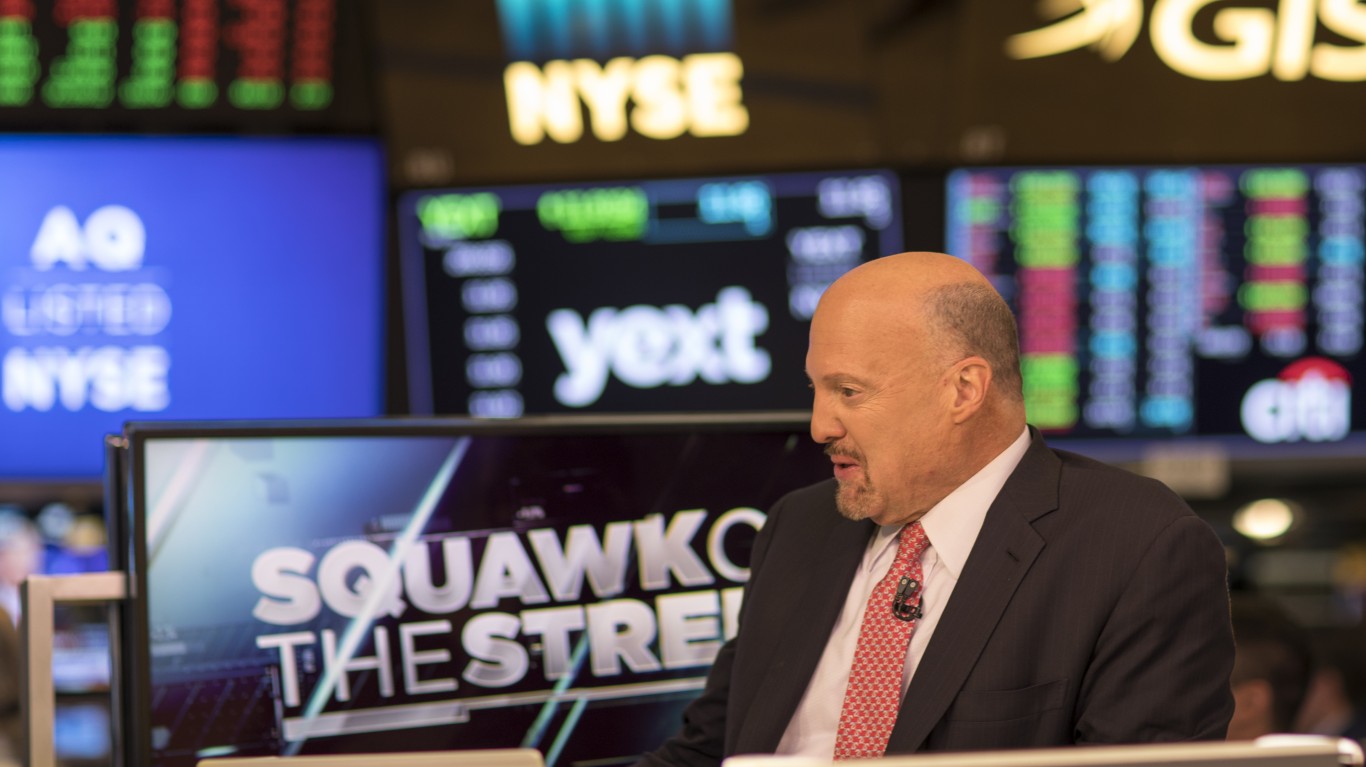
That flat year came while Microsoft beat earnings estimates in six consecutive quarters. Shares were at $517.85 when fiscal Q1 2026 results were filed in October 2025, $451.01 at the January filing (when the stock fell despite a beat), and $395.50 when the fiscal Q4 report came out on July 29, 2026. On Monday’s Mad Money, Jim Cramer argued that the market has been slow to see something enterprises already decided.

Cramer’s Boardroom Test Points to Microsoft
Cramer framed the enterprise AI decision as one an executive makes in front of directors: “If you’re going to be making a presentation to a board meeting right now after what’s happened about which AI platform you should use, you would say, I don’t know. Let’s just turn it over to Microsoft.”
His case rests on institutional trust and governance. He leaves aside the question of which model does best. “Microsoft is already a trusted partner of the enterprise, with nothing erratic about its leaders,” he said, adding that “boards don’t like surprises or erratic behavior, and Microsoft has good governance.” He also said he was “shocked” to see Microsoft leapfrogging rivals in what he called net future usage intent. He did not say where that finding came from.
What Microsoft Has Actually Reported
Trust only matters to shareholders if it shows up as revenue. Jim Cramer said Copilot has more than 30 million paid users. Microsoft’s own July disclosure counted more than 30 million paid Microsoft 365 Copilot seats, which is a different unit. A single customer can buy a huge number of seats: HSBC (NYSE:HSBC), for example, committed to 200,000 seats.
In fiscal Q4 results filed with the SEC, revenue reached $90.0 billion, up 17.8%, beating the $87.63 billion consensus. Azure and other cloud services grew 43%, and Azure passed $100 billion in full-year revenue for the first time. Per-share earnings of $4.74 topped the $4.24 estimate, though that figure includes a $3.2 billion gain from Anthropic.
The backlog data matches Cramer’s thesis best. Commercial remaining performance obligations rose 84% to $678 billion, and grew 25% excluding OpenAI. Nearly 90% of annual Microsoft Cloud revenue came from customers outside frontier model companies.

Why Shareholders Waited
The spending side of the story kept investors cautious. Fiscal 2026 capital expenditure reached $115.95 billion, up 79.6%, while free cash flow fell 6.5% to $66.99 billion. Management now expects calendar 2026 capex of about $175 billion and says fiscal 2027 spending will grow again. (All that money has to be spent on power, cooling, and networking gear supplied by someone, which is the whole basis of a free report we put together on seven AI infrastructure names that aren’t chipmakers.)
Jim Cramer said Azure “might grow as fast as 50%.” The company’s own guidance calls for fiscal Q1 Azure growth of approximately 45% in constant currency. On the July call, management said, “demand continues to exceed available supply” and warned that growth can vary by quarter depending on capacity, timing, and contract mix. More detail is posted on Microsoft’s investor relations site.
One Azure Number Will Settle the Debate
Microsoft’s next report is expected around October 27, 2026, though the company has not confirmed the date. If Azure grows at or above the 45% constant-currency guidance and backlog outside OpenAI keeps expanding, the recent rally has a genuine business foundation and Cramer’s trust argument is translating into revenue. If Azure falls short of guidance while capex keeps rising, the market’s year of skepticism was right.


Contact [email protected] for any questions or corrections.
Trey has been an editor and author at 24/7 Wall St. for more than a decade, where he has published thousands of articles analyzing corporate earnings, dividend stocks, short interest, insider buying, private equity, and market trends. His comprehensive coverage spans the full spectrum of financial markets, from blue-chip stalwarts to emerging growth companies.
Beyond 24/7 Wall St., Trey has created and edited financial content for Benzinga and AOL's BloggingStocks, contributing additional hundreds of articles to the investment community.
Trey's editorial expertise extends across multiple publishing environments. He served as production editor at Dearborn Financial Publishing and development editor at Kaplan, where he helped shape financial education materials. Earlier in his career, he worked as a writer-producer at SVE. His freelance editing portfolio includes work for prestigious clients such as Sage Publications, Rand McNally, the Institute for Supply Management, the American Library Association, Eggplant Literary Productions, and Spiegel.
Outside of financial journalism, Trey writes fiction and has been an active member of the writing community for years, moderating workshop sessions at regional conventions.