4 Historically Reliable High-Yield Dividend Stocks Ripe for Long-Term Income Seekers
Energy has a reputation for boom and bust, yet a handful of large-cap names have quietly handed investors raises for decades straight while crude prices swung wildly. These four companies reveal how the sector's biggest cash generators turn commodity chaos…

This post may contain links from our sponsors and affiliates, and Flywheel Publishing may receive compensation for actions taken through them.
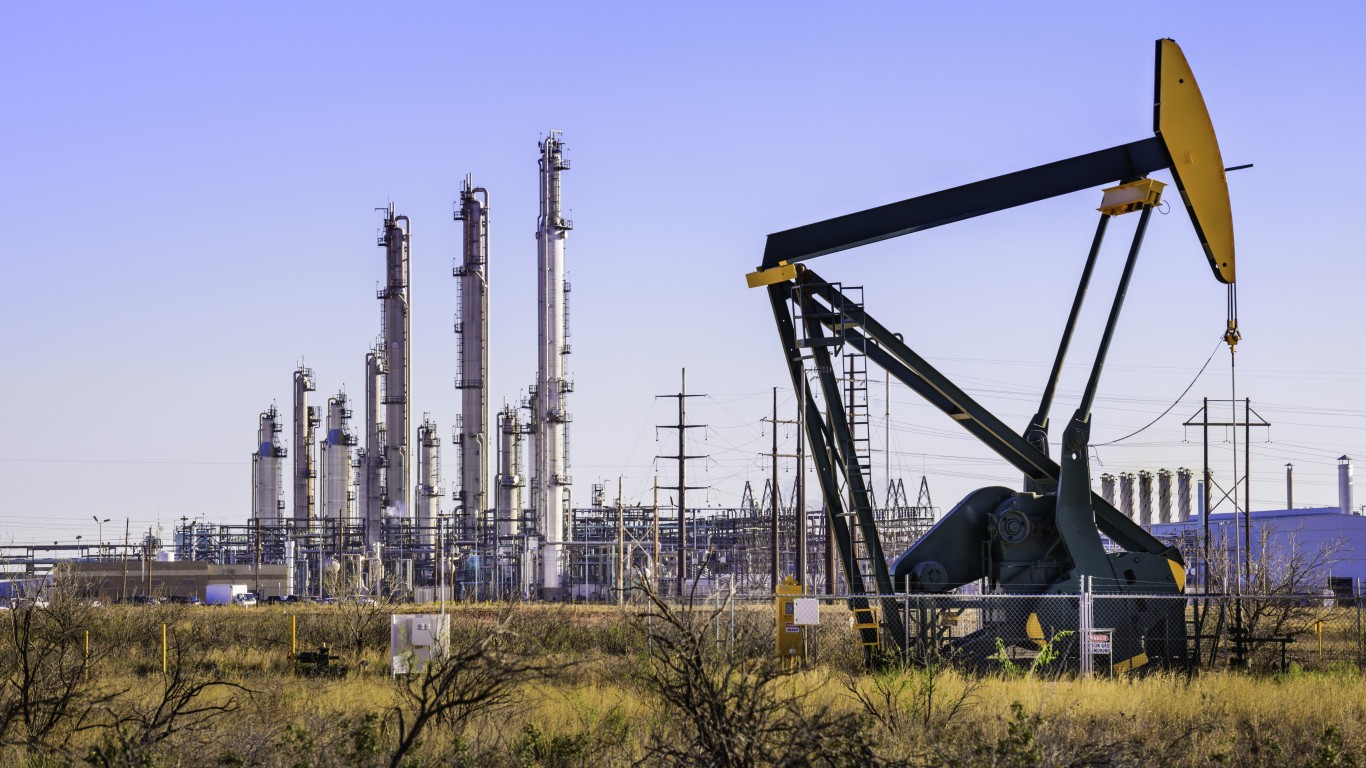
Energy has a reputation for boom and bust, yet the sector’s largest companies have turned volatile commodities into some of the market’s most reliable income. Exxon Mobil (NYSE:XOM | XOM Price Prediction) alone has grown its annual dividend per share for 43 consecutive years. The four large caps below split into two integrated oil majors and two midstream toll-road operators. Each pairs a well-covered payout with strong cash generation, making them natural candidates for a long-term income portfolio.
Exxon Mobil: 43 Years of Raises Backed by a Fortress Balance Sheet
At a recent price of $163.83, Exxon’s annualized forward dividend of $4.12 per share works out to a 2.51% yield. The quarterly payout is $1.03, up from $0.99 after a 4% raise late last year.
Dividend safety: Coverage is excellent. Exxon produced $26.13 billion of free cash flow last year. In the second quarter alone, it generated more than $17 billion of free cash flow, returned more than $9 billion through dividends and buybacks, and still cut net debt by more than $7 billion. Debt-to-equity is just 0.168, net debt to EBITDA is 0.55x, and interest coverage is 56.3x. For income investors, that means the dividend draws on a small piece of cash flow, with plenty left over for growth.
Bull case: Guyana is moving from an investment phase into a harvest phase. Exxon has “fully recovered the $55 billion of investment” there, and its CFO called the shift “very much an inflection into free cash flow”. Management expects Guyana’s free cash flow to double by the end of the decade compared with last year. Add $16.3 billion of cumulative structural cost savings since 2019 and a $20 billion buyback program for this year, and dividend growth has plenty of support.
Risk: Earnings still move with crude prices and geopolitics. The Middle East conflict caused the “temporary loss of approximately 10% of our upstream production” in the second quarter.
Chevron: Hess Cash Flow Is Funding Bigger Dividend Checks
Chevron (NYSE:CVX) yields 3.45% at a recent price of $206.18, based on an annualized forward dividend of $7.12. The quarterly payout rose to $1.78 from $1.71. It has climbed steadily from $1.19 per quarter in 2019, and the payment record goes back to 1999.
Dividend safety: Second-quarter free cash flow hit $18.10 billion, up 272% from a year earlier, and adjusted free cash flow came in at $15.4 billion. Chevron also paid down more than $8 billion of debt in the quarter, bringing net debt to 0.6 times operating cash flow. Debt-to-equity is 0.251, and interest coverage is 13.7x. The company has now returned over $5 billion to shareholders for 16 straight quarters.
For the bull case: the Hess deal is paying for itself. Synergies reached $1.5 billion, or 50% more than initially targeted, and management said: “The Hess assets are generating strong free cash flow, which has been roughly double the incremental dividends.” Chevron also finished $3 billion of structural cost cuts six months early. It signed a 20-year take-or-pay power agreement to supply AI data centers, which adds contracted cash flow that does not depend on oil prices. Adjusted free cash flow growth is targeted to average greater than 10% per year, using flat commodity prices below today’s levels.
Risk: Higher depreciation from the Hess assets will weigh on reported earnings, even while cash flow stays strong.
Enbridge: 31 Straight Raises From a Utility-Like Pipeline Giant
Enbridge (NYSE: ENB) brings the yield up a level. Its annualized forward distribution of $2.784 in U.S. dollars, against a recent price of $46.11, yields 6.04%. That makes it an ultra-high-yield bar. The quarterly dividend is declared at C$0.9700 per share.
Dividend safety: Enbridge has raised its dividend for 31 consecutive years. Its fee-based pipelines and utilities produced $2.95 billion of distributable cash flow in the second quarter. Management confirmed full-year guidance for distributable cash flow per share of C$5.70 to C$6.10. The Mainline averaged 3.1 million barrels per day during the quarter, so cash flow depends on volume and contracts more than on commodity prices. Debt to EBITDA of 5.1 times sits slightly above the 4.5 to 5 times target range. Management said leverage would be within that range after adjusting for currency moves.
Bull case: A $41 billion secured backlog supports about 5% annual growth in EBITDA and distributable cash flow after this year. Projects include the $4 billion Sunrise expansion and LNG-linked gas pipelines. Enbridge has returned $38 billion to shareholders over the past five years and expects to return between $40 billion and $45 billion over the next five. The shares fell 8.63% over the past month, including a drop on Friday that trailed the broader market, so new buyers get a higher starting yield.
Risk: Currency affects the check you receive. Because the dividend is declared in Canadian dollars, recent U.S.-dollar payments have changed from 0.712 to 0.707 to 0.696, even though the declared amount stayed the same.
Enterprise Products Partners: 1.9x Coverage on a 6% Yield
Enterprise Products Partners (NYSE:EPD) yields 6.10% at a recent price of $36.74, based on an annualized distribution of $2.24. The latest quarterly payout of $0.56 per unit is up 2.8% from a year earlier.
Dividend safety: Of the four names here, this one has the largest margin. Second-quarter operational distributable cash flow of $2.3 billion covered the cash distribution 1.9x. Over the past 12 months, the payout ratio on adjusted cash flow from operations was just 56%. Leverage fell to the partnership’s 3.0 target on a net basis, and about 97% of its debt carries a fixed rate. The partnership’s streak of annual distribution increases runs 27+ years, through several oil crashes.
Bull case: Adjusted EBITDA reached a record $2.83 billion, up 17%, as pipeline volumes rose to a record 14.7 MMBPD. With $6.5 billion of organic projects under construction and about 90% of its LPG export capacity contracted, management sees EBITDA growth in the 10% area from 2025 into 2027. At a forward P/E of 12x, investors pay a modest price for that growth.
Risk: As a master limited partnership, Enterprise mails unitholders a K-1 tax form instead of a 1099. That makes tax filing more complicated, and the units can be a poor fit for some retirement accounts.
Four Energy Payers Built for Decades of Income
Exxon and Chevron offer smaller yields, but their dividends come with strong balance sheets, rapidly growing free cash flow, and long records of raises. Enbridge and Enterprise yield more than 6%, and their payouts rest on fee-based pipelines, multi-decade growth streaks, and visible project backlogs. Together, they cover both sides of the energy income trade: dividend growth from the oil majors and high current yield from the toll roads.
Contact [email protected] for any questions or corrections.
Lee Jackson has covered Wall Street analysts' equity and debt research and equity strategy daily for 24/7 Wall St. since 2012. His broad, diverse career, including a stint as creative services director at an NBC affiliate in Austin, Texas, gives him unique insight into the financial industry.
Lee Jackson's journey in the financial industry spans more than 30 years, including nearly two decades as an institutional equity salesperson at Bear Stearns, Lehman Brothers, and Morgan Stanley. His career spanned pivotal sell-side Wall Street events, from the dot-com rise and bubble to the Long-Term Capital Management debacle, 9/11, and the Great Recession of 2008. This reflects his resilience and adaptability amid market volatility.
Lee Jackson’s practical financial industry experience, gained through a career at some of the biggest banks and brokerage firms, is complemented by a lifetime of writing across various platforms. This unique combination allows him to shed light on the intricacies of Wall Street in a way only someone with deep insider experience and knowledge can. Moreover, his extensive network across Wall Street continues to provide direct access for him and 24/7 Wall St., a privilege few firms enjoy.
Since 2012, Jackson’s work for 24/7 Wall St. has been featured in Barron’s, Yahoo Finance, MarketWatch, Business Insider, TradingView, Real Money, The Street, Seeking Alpha, Benzinga, and other media outlets. He attended the prestigious Cranbrook Schools in Bloomfield Hills, Michigan, and has a degree in broadcasting from the Specs Howard School of Media Arts.