Apple Is Setting The Stage For a Massive Windfall That Few Understand
The market sees a phone company that missed the AI revolution, but one investor keeps buying shares and believes Wall Street has the story exactly backwards.

This post may contain links from our sponsors and affiliates, and Flywheel Publishing may receive compensation for actions taken through them.

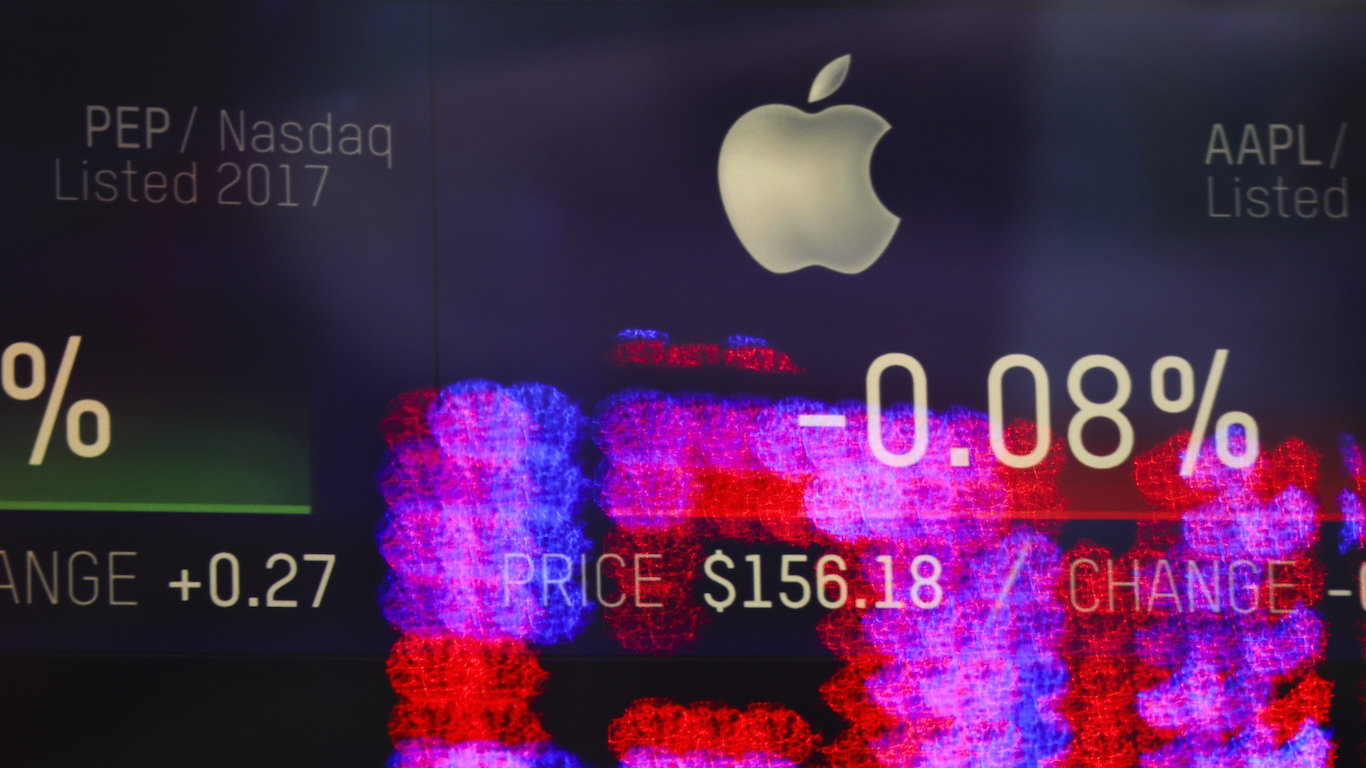
I added to my Apple (NASDAQ:AAPL | AAPL Price Prediction) position this month and expect to add more after the October 29 earnings report. The market has misunderstood Apple’s AI strategy.
Why I Keep Coming Back
Apple owns the device in your pocket and the relationship with it. The company counts more than 2.5 billion active devices, with iPhone install base at an all-time high in the June quarter. Apple delivers AI to a customer base it already owns, and that base is where the boom comes from.
Three Reasons the Data Backs Me Up
First, Apple can monetize AI without heavy data center spending. Tim Cook described Siri AI as “a completely reimagined version of Siri that is profoundly capable, deeply personal, and integrated seamlessly across our platforms.” It runs on-device and via Private Cloud Compute. Cook called on-device AI “very strategic and sort of a competitive weapon.” Paid iCloud+ upgrades sit atop Services revenue of $30.74B last quarter, up from $27.42B a year earlier, with 1.5 billion paid subscriptions.
Second, hardware demand is strong. iPhone revenue reached $54.25B versus $44.58B a year ago. Mac revenue grew 29%. Apple posted EPS of $2.02 against $1.8914 consensus, its 9th consecutive EPS beat.
Third, Apple keeps sending cash back to shareholders. The board authorized an additional $100B buyback, Apple repurchased $62.094B of stock in the nine months through June 27, 2026, and it raised the dividend 4% to $0.27 per quarter. Return on invested capital stands at 53.35%.
Why My Money Goes Here Instead of Microsoft
Microsoft (NASDAQ:MSFT) offers a different path to AI exposure. Microsoft’s P/E of 29 looks cheaper than Apple’s 43, but it is spending heavily on AI infrastructure. Fiscal 2026 capital spending hit $115.948B, up 79.62%, while free cash flow fell 6.46% to $66.987B. Microsoft trades at 59x free cash flow versus 49x for Apple. I prefer the company whose customers pay for AI hardware themselves.
Risks I Refuse to Ignore
Memory costs worry me. Cook called it “a 100-year flood on the memory pricing with exponential increases in memory prices,” with further rises expected. The June quarter’s 50.1% gross margin included about two points from tariff refunds worth $0.11 of EPS. Guidance calls for 47% to 48%. Greater China revenue fell to $14.49B from $15.03B.
Apple guided September-quarter revenue growth of 9% to 11%, with supply constraints from demand exceeding forecasts. Analysts expect EPS of $9.5758 for fiscal 2027, up from $8.8202 for fiscal 2026. Cook said: “We look at all three dimensions and think about it over the long term instead of a 90-day clock.”
Catalysts That Could Drive Apple Higher
Siri AI awaits regulatory approval in the EU and China. iCloud+ upgrades have yet to launch. Apple’s $30 billion-plus Broadcom (NASDAQ:AVGO) silicon deal strengthens chip control, the kind of infrastructure strategy we mapped out in a free report on the AI buildout beyond the chipmakers. Over ten years, shares returned 1179.19%. The market prices Apple as a phone maker that missed AI. I see a company putting AI on 2.5 billion devices.
Contact [email protected] for any questions or corrections.
Alex Sirois is a financial writer with experience spanning both retail and institutional investing. He has written for InvestorPlace and held roles at BNY Mellon and Bernstein, giving him a perspective that bridges Main Street portfolios and Wall Street analysis.
Alex holds an MBA from George Washington University and has built his career across multiple industries, including e-commerce, education, and translation — a breadth of experience that informs how he breaks down complex financial topics for everyday investors. His writing is conversational, actionable, and grounded in long-term, buy-and-hold investing principles.
At 247 Wall St., Alex focuses on delivering analysis that is both accessible and useful, with a clear emphasis on helping readers make more informed decisions with their money.