I’m Buying Apple’s Dip For Its Unbeatable Two-Way Game
Apple shares just slipped again, and one investor sees that dip not as a warning sign but as the latest entry point into a compounding machine built on hardware loyalty and software margins that very few companies on earth can…

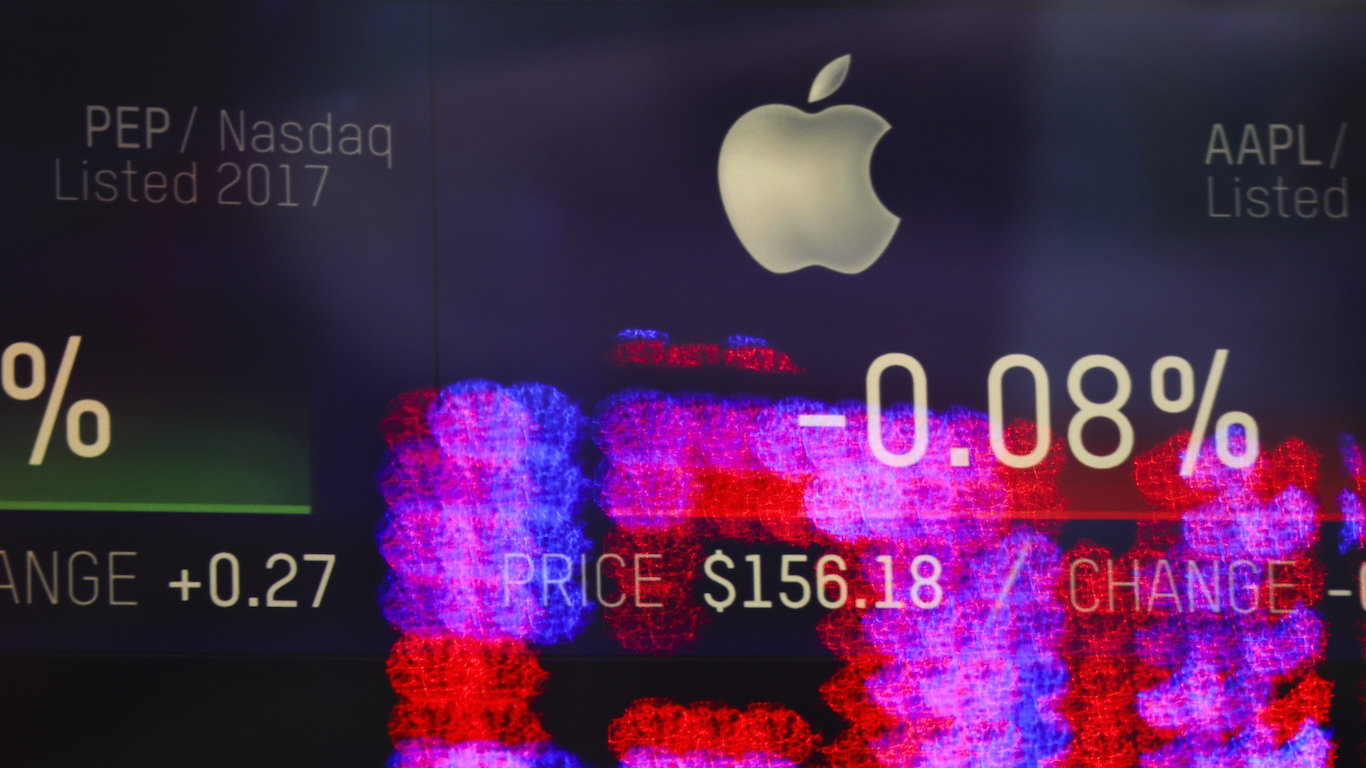
I keep hitting the buy button on Apple (NASDAQ:AAPL | AAPL Price Prediction) every time the market hands me a discount, and this week it did. Shares are down 2.96% over the past week to $315.34, and I added again. The setup is simple. Apple runs a two-way game almost nobody else can match: it sells the most defensible piece of hardware on the planet, then keeps that customer for life through a Services business that compounds at software economics.
Why the Dual Engine Keeps Pulling Me Back
Every quarter I open the segment table and see the same story get better. In the June quarter, iPhone revenue rose to $54.25B from $44.58B a year earlier, and Services climbed to $30.74B from $27.42B. That Services line carried a 75.6% gross margin against a company-wide 50.1%. Selling an iPhone is good business. Renting the App Store, iCloud, Apple TV, AppleCare, and payments to the same customer for a decade is a better one.
The scale is what makes the moat defensive. Apple’s installed base topped 2.5 billion active devices, and paid subscriptions surpassed 1.5 billion. That is a recurring revenue engine wearing hardware clothes, and it explains the ROE of 171.4% and ROIC of 53.3%.
Receipts I Trust Over Headlines
I care about earnings consistency, cash returned, and reinvestment runway. Apple checks all three. Q3 FY26 delivered revenue of $109.42B, up 16.36% year over year, and EPS of $2.02 versus a $1.8914 consensus, the ninth straight beat. On the cash side, the board authorized a fresh $100B buyback in Q2, and the company had already repurchased $62.094B of stock through the first nine months of the fiscal year. The dividend yield is a modest 0.335%, but the payment climbed to $0.27 quarterly after a 4% raise, and it rests on $147 billion in cash and marketable securities.
Reinvestment matters too. R&D expanded to $11.73B from $8.9B a year earlier, and the new Broadcom agreement expected to exceed $30 billion for custom silicon tells me Apple is buying its future supply chain rather than renting it.
Why Not the Obvious Alternative
The question I hear most is why not Microsoft (NASDAQ:MSFT). Fair. My answer is the shape of the moat. Apple’s 2.5 billion-device install base is a distribution channel no cloud-first peer can replicate, and the 75.6% Services gross margin on that captive base is a profit engine I want to own directly rather than through a diversified enterprise mix. The foldable iPhone duo launched at today’s event is one more wedge into the hardware funnel that feeds it.
Risk I Actually Respect
Memory pricing is real. Tim Cook called it “a 100-year flood on the memory pricing with exponential increases in memory prices”, and the DRAM market has three suppliers. Add China regulation around Siri AI and the tariff refund tailwind that will not repeat, and margins face a real test. It has not changed my thesis because Apple already reluctantly raised prices and still guided gross margin to 47% to 48%, which remains a fortress.
What to Watch From Here
A P/E of 41 asks a premium, and Apple has grown into premiums before. With Siri AI shipping, a foldable widening the hardware wedge, and Services compounding on 2.5 billion doors, the setup gives long-term holders a case worth monitoring on every red day the market delivers. Worth noting: Apple has long been one of Berkshire Hathaway’s largest holdings, and we ranked the cheapest dividend payers Buffett still owns in a free report here.
Contact [email protected] for any questions or corrections.
Alex Sirois is a financial writer with experience spanning both retail and institutional investing. He has written for InvestorPlace and held roles at BNY Mellon and Bernstein, giving him a perspective that bridges Main Street portfolios and Wall Street analysis.
Alex holds an MBA from George Washington University and has built his career across multiple industries, including e-commerce, education, and translation — a breadth of experience that informs how he breaks down complex financial topics for everyday investors. His writing is conversational, actionable, and grounded in long-term, buy-and-hold investing principles.
At 247 Wall St., Alex focuses on delivering analysis that is both accessible and useful, with a clear emphasis on helping readers make more informed decisions with their money.