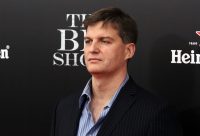
Michael Burry Predicts Investors Have Less Than 270 Days To Prepare For Next Phase Of 2008 Style Crash
Michael Burry just put a clock on the next phase of a crash he says mirrors 2000 and 2008, and the timeline he named is already running.


Michael Burry posted a two-sentence market call on X early Tuesday, and unlike most market warnings that lack a timeline, this one gives a duration.
Burry’s full post reads: “The stock market is quite obviously in its first stage of grief, denial. Per 2000 and 2008, this stage lasts 6-9 months.”
When we checked Wednesday morning, the post had 8,677 likes, 650 reposts and 894 replies.
What Burry Said and What He Did Not Say
Burry made two claims. First, the market is in denial right now. Second, in the two examples Michael Burry mentions, 2000 and 2008, the denial stage lasted six to nine months.
The post leaves three questions open:
- The next stage went undescribed.
- No price target was given.
- When the current denial stage began was left unspoken.
The years Michael Burry chose, 2000 and 2008, carry specific weight. Both are known for major market declines, so readers can fairly conclude that he expects a serious drop. How large it would be was left unspoken, and we do not claim to know either.
A Market Near Its High for the Year
The SPDR S&P 500 ETF (NYSEARCA:SPY) traded at $778.23 in premarket trading at 5:40 AM ET on October 7, 2026. That was a -0.11% move from the prior close. The fund is up 15.88% over the past twelve months and 14.12% so far this year.
The index Burry calls in denial is trading near the top of its range for the year. Options traders also expect fairly calm markets. The CBOE Volatility Index tracks expected moves in the S&P 500 over the next 30 days. It closed at 15.52 on October 5. That falls in the 15 to 20 range usually considered normal.
A few stocks make up a large share of the fund. NVIDIA (NASDAQ:NVDA | NVDA Price Prediction) was its largest holding at 7.58%, according to State Street’s SPY fact sheet dated March 17, 2026.
Burry Gave a Similar Warning in May
On May 11, 2026, Business Insider reported that Michael Burry warned the stock market may be on the “precipice of a major decline.”. SPY has gained 5.27% since May 11, 2026.
That warning has not played out yet, and the index has risen since. Burry describes a sequence that is still developing. One stretch of gains does not settle the question either way.
Riding a late-stage rally while planning the exit is the whole subject of our free bubble survivor’s handbook. It covers both sides of the trade.
No Disclosed Positions Behind This Call
Moneycontrol reported in November 2025 that Michael Burry’s Scion fund was deregistered, according to an SEC filing. The Australian Financial Review reported the same month that Michael Burry shut down his hedge fund. We looked for his institutional positions and found none on file, which matches that closure.
No current disclosed position stands behind this call. The most recent reported positions date to November 2025. Bloomberg reported then that Burry disclosed put positions on NVIDIA and Palantir after warning of a bubble. Palantir trades as Palantir Technologies (NASDAQ:PLTR). A put option gains value when the underlying stock falls, and we cannot confirm whether he still holds those positions or any others.
Observer reported that after closing his hedge fund, Michael Burry launched a Substack to speak “freely” about the AI bubble. His commentary now comes through that newsletter and his X account.
A Warning With a Deadline
Burry’s warning can be tested because it includes a timeline. Burry named a stage and how long it lasts, and by his own account that stage has already started. Within months, readers will know whether the sequence he described plays out.
Contact [email protected] for any questions or corrections.
AJ spent 10 years writing about financial markets at The Motley Fool. His coverage centers on technology stocks and the broader macroeconomic trends, from interest rates to geopolitics, that shape where markets are headed next. AJ is drawn to the stories where big-picture economics and individual companies collide.