Why Jim Cramer Is All-In on Intel’s CPU Comeback
Intel has already left the S&P 500 in the dust, and Jim Cramer is doubling down on its CPU business just as analysts debate whether the market has gotten ahead of the facts.

Intel (NASDAQ:INTC | INTC Price Prediction) trades at $112.50. Jim Cramer’s view that its CPU business is coming back now has hard numbers behind it, after a 204.88% year-to-date run.
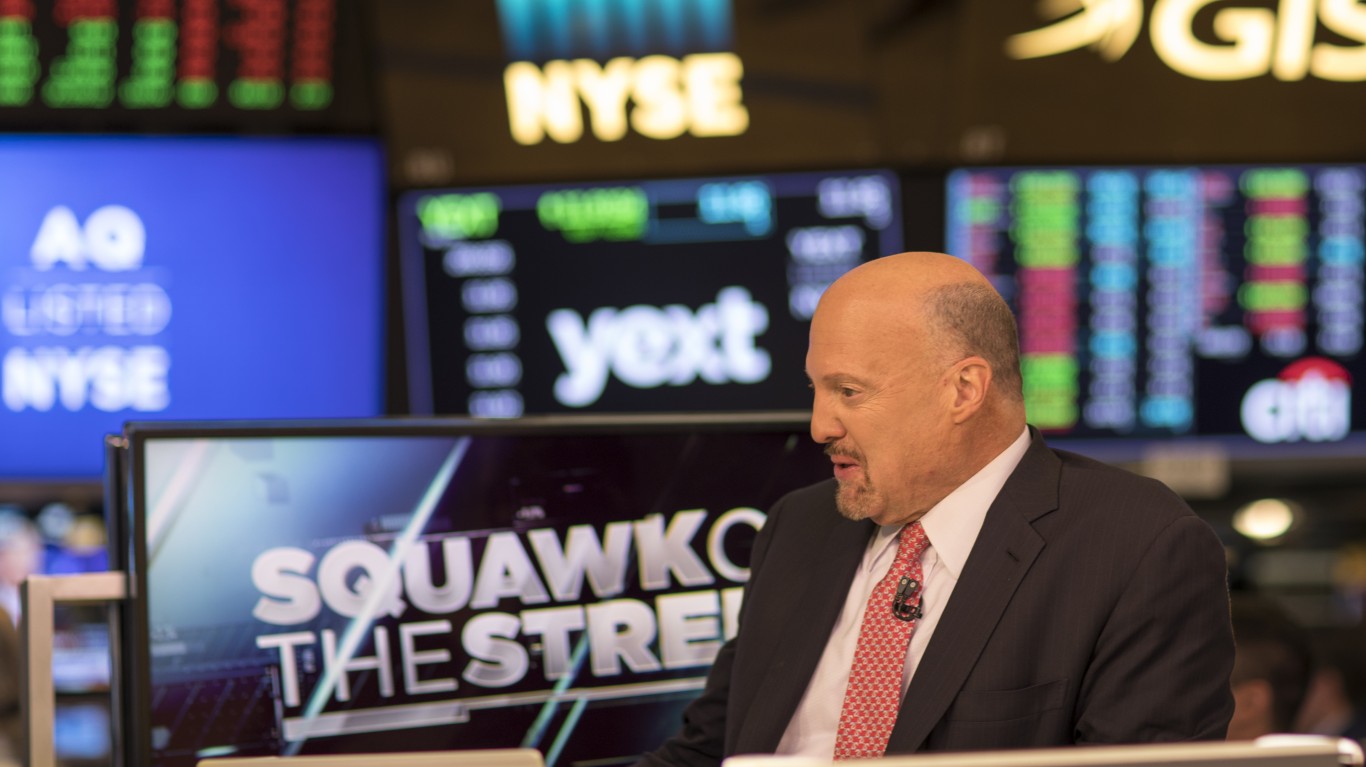
Intel designs the x86 processors inside most PCs and many data center servers. It also runs its own chip factories (a foundry network). Cramer has argued that Wall Street is rotating toward companies that supply AI tools, and he named Intel as one that benefits from the spending cycle (Cramer comments). Intel’s own results support that view. AI-driven businesses grew greater than 70% and made up approximately 70% of revenue last quarter.
Server CPU Shortage Hands Intel Its Best Growth in 15 Years
Q2 revenue rose 25.4% to $16.13 billion, beating the $14.45 billion estimate. Non-GAAP EPS came in at $0.42 against a $0.22 consensus. Data Center and AI revenue climbed 59% to $6.26 billion. Management said “strong demand for our products continues to outpace our growing supply.”
Optimists argue that AI agents need general-purpose CPUs. Intel put the CPU-to-GPU ratio at “almost in parity”. The factories are performing too: 18A output ran approximately 25% above target. NVIDIA (NASDAQ:NVDA) invested $5.0 billion and SoftBank invested $2.0 billion. The PEG ratio stands at 0.501.
Foundry Losses and a 63x Multiple Raise the Stakes
Bears point to a GAAP loss of $2.16 per share, driven by a $12.53 billion CHIPS Act escrow charge. Intel Foundry lost $2.1 billion while bringing in just $293 million from outside customers. The stock commands a forward earnings multiple of 63.
Spending is also rising fast. Capex will top $20 billion this year and climb significantly in 2027. Intel expects the PC market to fall low double digits percent in 2026. With a beta of 2.23, any stumble would hit the stock hard.
Why Most Analysts Are Waiting on 14A Customers
The market may have already priced in the return. Q3 EPS guidance of $0.38 trails Q2. No external 18A or 14A customers have been named yet. Risk production on 14A is set for the second half of 2027. If named foundry customers sign on, the optimistic story strengthens. If Foundry losses grow, the pessimistic story strengthens.
Intel Has Left the S&P 500 Far Behind
Intel currently trades at $112.50. The consensus target stands at $116.37, suggesting 3.44% of upside. Targets are estimates. Of 49 analysts:
- Strong Buy: 1
- Buy: 14
- Hold: 32
- Sell: 1
- Strong Sell: 1
Over the past year, Intel climbed 207.46% as the S&P 500 rose 16.01%. Last week, Intel slipped 2.96% as the index added 1.95%. CNBC’s Josh Brown said Intel “never gave you a reason to doubt.”
Supply Growth Is the Key Test for Cramer’s CPU Call
At $112.50, the optimistic thesis rests on supply growth.
Intel expects supply to rise toward the end of Q3 and into Q4, especially for servers. The main limit on growth is capacity, and customer demand remains strong. Each new wafer that goes to data center CPUs has about a 40% operating margin. Intel also expects its ASIC business to grow from a $2 billion run rate to $4 billion, which adds a second engine.
The next earnings report needs to show margins near the 42.0% guide. After that, a named 14A customer would be the biggest driver. The argument falls apart if Intel delays 14A, if Foundry losses grow again, or if memory shortages cut into server shipments.
The beta of 2.23 points to sharp drops along the way. Even so, Intel is selling every server CPU it can make, and that is strong support for Cramer’s CPU return call.
Contact [email protected] for any questions or corrections.
Alex Sirois is a financial writer with experience spanning both retail and institutional investing. He has written for InvestorPlace and held roles at BNY Mellon and Bernstein, giving him a perspective that bridges Main Street portfolios and Wall Street analysis.
Alex holds an MBA from George Washington University and has built his career across multiple industries, including e-commerce, education, and translation — a breadth of experience that informs how he breaks down complex financial topics for everyday investors. His writing is conversational, actionable, and grounded in long-term, buy-and-hold investing principles.
At 247 Wall St., Alex focuses on delivering analysis that is both accessible and useful, with a clear emphasis on helping readers make more informed decisions with their money.