Coca-Cola or PepsiCo: If I Had to Hand One to My Grandkids, It Would Be This One
Both Coca-Cola and PepsiCo have raised dividends for decades, but one carries structural cracks that could quietly erode a portfolio meant to outlast its owner. The choice between them comes down to a risk most investors overlook.

This post may contain links from our sponsors and affiliates, and Flywheel Publishing may receive compensation for actions taken through them.
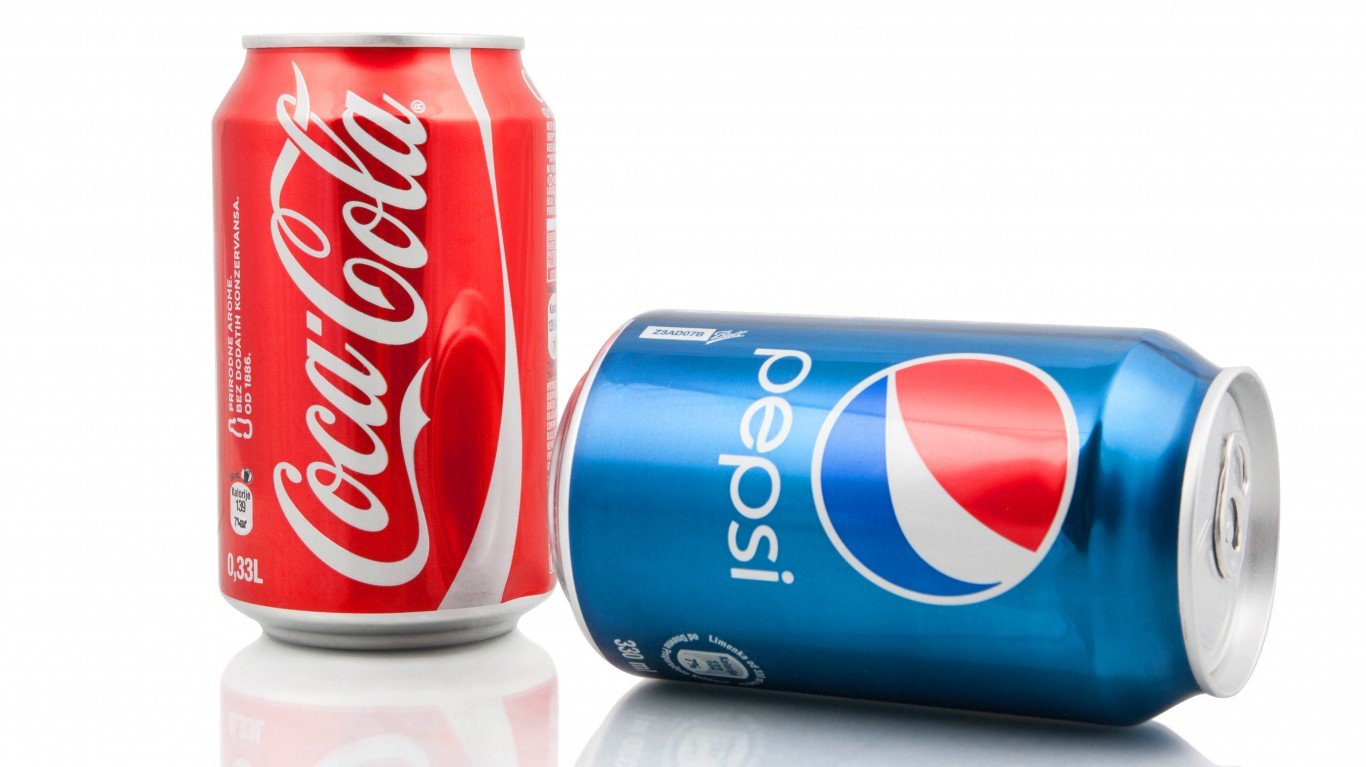
Coca-Cola (NYSE:KO | KO Price Prediction) or PepsiCo (NASDAQ:PEP): Which one better suits someone investing for retirement right now, knowing the shares may pass to the next generation? Looked at over several decades, Coca-Cola wins. PepsiCo pays the bigger yield today. Coca-Cola has the safer dividend, the stronger brand economics and fewer structural cracks.

Dividend Record and Coverage: Coca-Cola Wins
Both companies have paid an uninterrupted quarterly dividend since at least 1999, and the per-share amount has kept rising. Coca-Cola raised its payout for the 63rd consecutive year in 2025. PepsiCo’s 4% hike, effective with the June 2026 payment, was its 54th consecutive increase and took the annualized dividend from $5.69 to $5.92.
PepsiCo leads on income. It yields 4.44% against 2.38% for Coca-Cola. Since 2016, its quarterly payout has risen about 97%, from 75.25 cents to $1.48. Coca-Cola’s rose roughly 51% over the same stretch, from 35 cents to 53 cents.
Coverage settles it in Coca-Cola’s favor. PepsiCo’s earnings yield of 4.79% stands only just above its dividend yield, and its 4.46% free cash flow yield almost exactly matches the payout. Coca-Cola’s 3.56% earnings yield is well above its dividend yield. Its trailing free cash flow yield of 1.44% looks thin, but management expects about $12.4 billion of free cash flow in 2026, compared with $8.8B paid in dividends in 2025. A dividend meant for grandkids needs a buffer, and Coca-Cola has the bigger one.

Brand Longevity and Adaptation: Coca-Cola Wins
Coca-Cola is keeping up with changing tastes through its core brand. In the second quarter, Coca-Cola Zero Sugar grew 16% and trademark Coca-Cola volume rose 5%. Management called that the brand’s strongest volume growth in 17 years, leaving out the COVID-19 rebound. Coca-Cola Zero-Zero is also rolling out to more markets after “strong initial success” in Europe.
PepsiCo is adjusting too. Its permissible-food portfolio is already $3 billion and growing “almost double-digit”, and it has added Siete and poppi. It has also taken bigger hits: a $1.993B Rockstar loss, plus weakness in North America convenient foods. Coca-Cola wrote down BODYARMOR by $960 million, but margins show the real gap. Coca-Cola runs a 28.71% operating margin and a 27.34% net margin. PepsiCo’s are 14.36% and 8.77%, respectively.
Structural Risk Over Decades: Coca-Cola Wins
PepsiCo’s risks come with its business model. Management pointed to commodity inflation, tariff costs and stressed consumer budgets. Operating margin at Pepsi Beverages North America fell about 90 basis points last quarter, and the company warned that earnings may come in toward the low end of its 4% to 6% core constant currency EPS growth guidance. A food manufacturer in a mature U.S. market faces cost pressure that builds year after year.
Coca-Cola carries net debt of 1.4x EBITDA, below its own target range, and it raised 2026 guidance to 9% to 10% comparable EPS growth. Over 10 years, Coca-Cola shares rose 181.64%. PepsiCo gained 59.54% and is down 2.37% over five years.

Two Risks That Could Break the Coca-Cola Case
The first is the IRS tax dispute. An appeals court decision could come six to 12 months after oral arguments held in late June, and a loss would take cash that would otherwise go to dividends. The second is valuation. Coca-Cola is priced at 28x earnings (P/E 28), compared with 21x for PepsiCo (P/E 21). After a 24.16% gain this year as of the close on Oct. 7, the price leaves no room for growth to slow to PepsiCo’s pace.

Verdict: Coca-Cola Goes to the Grandkids
PepsiCo’s yield at $123.73 appeals to investors who need the most income right away. For a portfolio meant to survive its owner, Coca-Cola at $85.82 wins clearly. The company carries the longer dividend run, better coverage, much wider margins and a stronger 10-year record. Keep an eye on the IRS ruling. Coca-Cola has the stronger profile for shares meant to pass down.
Contact [email protected] for any questions or corrections.
Joel South covers large-cap stocks, dividend investing, and major market trends, with a focus on earnings analysis, valuation, and turning complex data into actionable insights for investors.
He brings more than 15 years of experience as an investor and financial journalist, including 12 years at The Motley Fool, where he served as an investment analyst, Bureau Chief, and later led the Fool.com investing news desk. He has also co-hosted an investing podcast and appeared across TV and radio discussing market trends.