Paul Tudor Jones Says He’ll Be Short Stocks All of 2027
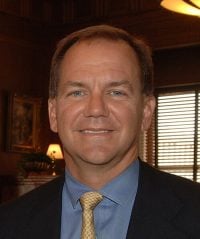
Paul Tudor Jones told live television he plans to short the stock market for an entire calendar year, and his reason has nothing to do with earnings or valuations.


Paul Tudor Jones went on live television on October 13, 2026, and said, “2027 is going to be really, really challenging for the stock market.” When he was asked how he was invested, the hedge fund manager answered: “I’ll be short the whole year. There just, there’s little value.”
The market barely responded, as the SPDR S&P 500 ETF (NYSEARCA:SPY) closed at $778.05, down 0.01%, and it sits less than 0.5% below its 52-week high of $781.62.
That gap matters for anyone holding index funds into retirement, because SPY is up 14.09% year to date and 17.34% over one year. The VIX, which measures how much traders expect the S&P 500 to swing over the next 30 days, stood at 15.21 on October 12, close to the level usually read as complacency.
His case stands out because it rests on how many shares exist, where most bearish calls rest on earnings or valuation, and Jones is forecasting 2027 while the market is pricing current conditions, so the muted reaction likely reflects timing more than disagreement.
A Supply Argument Most Investors Never Hear
Jones made a public statement of intent, and no position backs it up on the record. A short profits when prices fall, and funds change those trades privately. The sentence left the year unnamed, though he said it in the middle of his 2027 discussion.
He said, “You’ve probably got the most negative flow picture for the U.S. stock market that we’ve had, say, since 2002.” The share count sits behind every valuation. Buybacks and mergers retired shares throughout the bull market, so a fixed pool of savings kept chasing fewer claims on earnings.
That reverses when private companies list and insiders’ locked-up shares become free to sell, because the same pool of savings then has to absorb new stock, and prices fall until buyers take it. He expects planned offerings from Anthropic and OpenAI, following SpaceX, plus secondary sales to fund AI infrastructure. On 1998 through 2002, he said, “Those were the easiest years to be short because you kept having these unlocks that just kept adding supply to the market.”
Paul Tudor Jones said he is long oil and expects prices to rise another $20 to $25 after the midterms. WTI crude was at $96.24 on October 6.
Costlier energy raises inflation and makes rate cuts harder for the Federal Reserve. That keeps the 10-year Treasury yield, already 5.24% on October 9, high enough to shrink what investors will pay for future earnings. He said the market would “hate” that.
Reasons to Doubt His Timing
The AI offerings he named have not happened yet, no terms have been announced, and IPO timelines often slip. A thesis that needs specific deals to arrive on schedule is more fragile than one built on valuation.
Paul Tudor Jones put the chances at 60-40 that deficits eventually force a crisis, saying “if you put a gun to my head, I’d say 60-40, we’re down that path.” He was talking about fiscal policy, so the figure tells you nothing about how far stocks could drop.
His AI warning was starker: “if, all of a sudden, we wake up one day and a model has gone rogue or bad actors used it maliciously, you’ve got a donut.” A risk nobody can measure argues for diversification and moderate position sizes, because no hedge can be sized against it. Options traders are split, too: SPY’s full-chain put/call ratio is 1.1, while the January 15, 2027 expiration stands at 0.77.
What Jones’s Forecast Means for SPY Holders
For long-term index holders, the forecast looks early. By his own framing, his thesis doesn’t start until 2027, and it depends on offerings that haven’t been filed, which makes the call early.
If you sell a core index fund because of a public forecast, you take on a known tax bill in exchange for a guess about timing. Rebalancing may be worth a look. Investors whose gains have pushed their stock allocation above target may want to review whether it fits their plan (riding a mania is fine as long as you plan the exit, which is the whole subject of our free bubble handbook here: The Bubble Survivor’s Handbook). A 5.24% 10-year yield also gives Treasuries a meaningful return for investors who prefer to hold safer assets while the thesis plays out.
Investors who want less concentration may want to research the Invesco S&P 500 Equal Weight ETF (NYSEARCA:RSP). It holds the same companies at equal weights, so it leans less on the AI giants that would compete most directly with new AI shares.
Two things will test the thesis: a public registration statement from Anthropic or OpenAI on the SEC’s EDGAR system before March 31, 2027, and whether SPY closes above $781.62. A filing without a new high would mean extra supply is coming and the market is responding.
Contact [email protected] for any questions or corrections.
Omor Ibne Ehsan is a writer at 24/7 Wall St. He is a self-taught investor with a focus on growth, cyclical, and dividend equities that have strong fundamentals, value, and long-term potential. He also has an interest in high-risk, high-reward investments such as penny stocks.