Rocket Lab Has Imploded For 3 Months: 145% Gains Are Coming According to This Pro Analyst
Rocket Lab has shed nearly a fifth of its value in one week while sitting on a record backlog and a wall of analyst buy ratings. Something in that contradiction deserves a closer look.

Rocket Lab (NASDAQ:RKLB | RKLB Price Prediction) currently trades at $55.25, while Wall Street’s average price target stands at $105.05. That gap implies roughly 90% upside.
Rocket Lab builds rockets, satellites and spacecraft components. It is also buying its way toward vertical integration through Mynaric, Motiv and a pending deal for Iridium Communications (NASDAQ:IRDM). The Street-high target belongs to KeyBanc Capital Markets analyst Michael Leshock at $135.00 with an Overweight rating. That target implies about 144% upside.
That matters because the stock sits about 63% below its 52-week high of $151. Either the market is mispricing a growth story or analysts are slow to react.
Neutron Slips to 2027 and Shares Slide
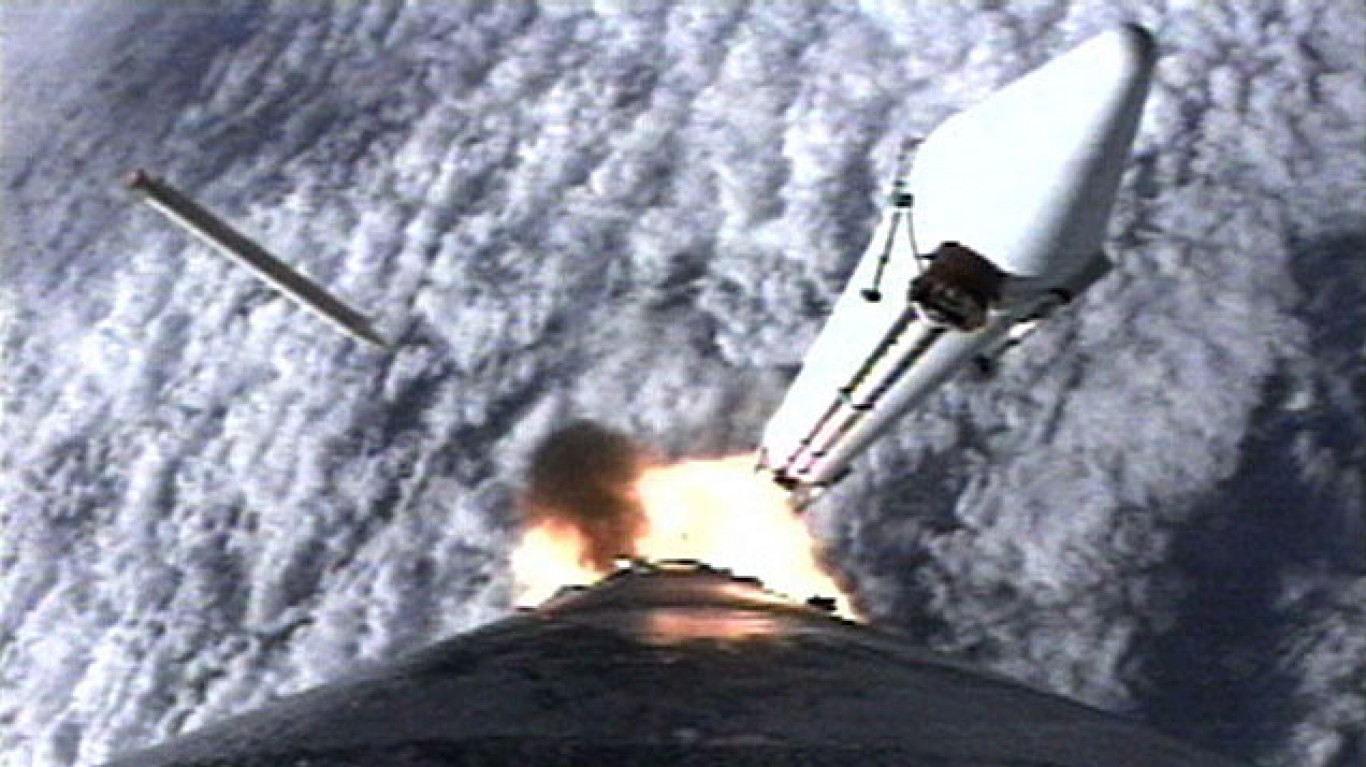
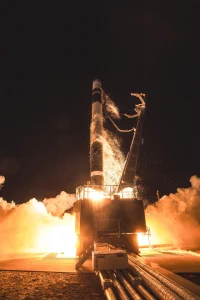
Neutron, Rocket Lab’s reusable medium-lift rocket, will miss its 2026 debut. The company pushed the first launch into 2027, and shares fell as much as 14% intraday before closing down 6.64%. The CEO, Peter Beck, blamed manufacturing issues in the first stage’s forward propellant dome, adding, “Possible success isn’t our standard.”
This is the second delay. Neutron had already moved to Q4 2026 after a stage-1 tank test failure. Timing drives the cash story: management said the quarter after a successful Neutron test launch marks the free cash flow turning point, followed by 18 to 24 months to reach positive cash flow. Each delay pushes that clock back.
Dilution adds pressure. Rocket Lab raised $1.53B through at-the-market sales in the first half. Q3 non-GAAP gross margin guidance of 35% to 37% also sits below Q2’s 41.5%.
KeyBanc Still Defends $135 as Estimates Drift Lower
Q2 revenue rose 62% year over year to $234.07M, beating the $230.94M consensus. Backlog jumped 137% to a record $2.36B, and management said it had signed over $1B in new Q3 contracts.
KeyBanc builds its case around three drivers: Neutron as the only practical secondary medium-lift provider for customers seeking alternatives to Falcon 9, a higher-margin space systems business, and a backlog covering NASA, the Space Force and the Space Development Agency (KeyBanc thesis). Customers are already paying for Neutron missions before it flies, including a $397 million Flatellite contract that Neutron will launch, at a $50 to $55 million average selling price.
Iridium is the second catalyst. Iridium stockholders approved the acquisition, and closing is expected in mid-2027. Management said Iridium’s significant free cash flow would materially change Rocket Lab’s cash profile.
Ratings remain strongly positive: four Strong Buy, 12 Buy and four Hold, with no Sells. Estimates are moderating, though. The FY2027 EPS consensus has slipped to -$0.0656 from -$0.0382 90 days ago, with six down revisions against two up in 30 days. Price targets often lag news like the Neutron delay.
Space Stocks Fell Together, Then Rocket Lab Fell Alone
The sector declined over the past week, but Thursday’s drop belonged to Rocket Lab alone.
AST SpaceMobile (NASDAQ:ASTS) fell 21.9% on the week and is down 38.79% year to date, though it rose 5.51% on Thursday. Trading at $44.46 versus a $74.28 target, implied upside is about 67%. Its ratings tilt cautious: one Strong Buy, four Buy, seven Hold, one Sell and one Strong Sell. Wall Street sees less upside here than at Rocket Lab.
Planet Labs (NYSE:PL) dropped 15.42% on the week and is down 26.27% year to date. Trading at $14.55 versus a $31.73 target, implied upside reaches about 118%, with one Strong Buy, six Buy and four Hold.
Planet has the biggest consensus upside among these stocks. Rocket Lab has the most bullish rating mix. Targets for all three are opinions, and they can be wrong.
Rocket Lab Lags the S&P 500 Despite Record Backlog
Rocket Lab currently trades at $55.25 against a $105.05 consensus target, roughly 90% implied upside. The stock lost 19.23% over the past week and 20.8% year to date. The S&P 500 has gained 13.18% year to date.
Longer term, shares remain up 331.64% over five years. A beta of 2.938 means swings in both directions will stay large.
Neutron Timing Decides Whether the 144% Call Holds
Rocket Lab’s bull case strengthens if Neutron reaches the pad early in 2027 and Iridium closes on schedule, which would turn backlog into revenue and flip the cash story. The thesis weakens if the dome issue triggers another slip, because more delays mean more cash burn and possibly more dilution.
The setup remains carefully constructive. The backlog and customer commitments are real. For now, though, the 144% upside call depends on one rocket that has already delayed twice.
Contact [email protected] for any questions or corrections.
Alex Sirois is a financial writer with experience spanning both retail and institutional investing. He has written for InvestorPlace and held roles at BNY Mellon and Bernstein, giving him a perspective that bridges Main Street portfolios and Wall Street analysis.
Alex holds an MBA from George Washington University and has built his career across multiple industries, including e-commerce, education, and translation — a breadth of experience that informs how he breaks down complex financial topics for everyday investors. His writing is conversational, actionable, and grounded in long-term, buy-and-hold investing principles.
At 247 Wall St., Alex focuses on delivering analysis that is both accessible and useful, with a clear emphasis on helping readers make more informed decisions with their money.