AbbVie’s Dividend Keeps Climbing. Is It Still a Buy for Income Investors?
AbbVie's stock has surged nearly 29% this year, but a rising share price compresses the yield even as the dividend keeps growing. Before adding shares for income, consider what the pending Apogee deal and lingering debt load could mean for…

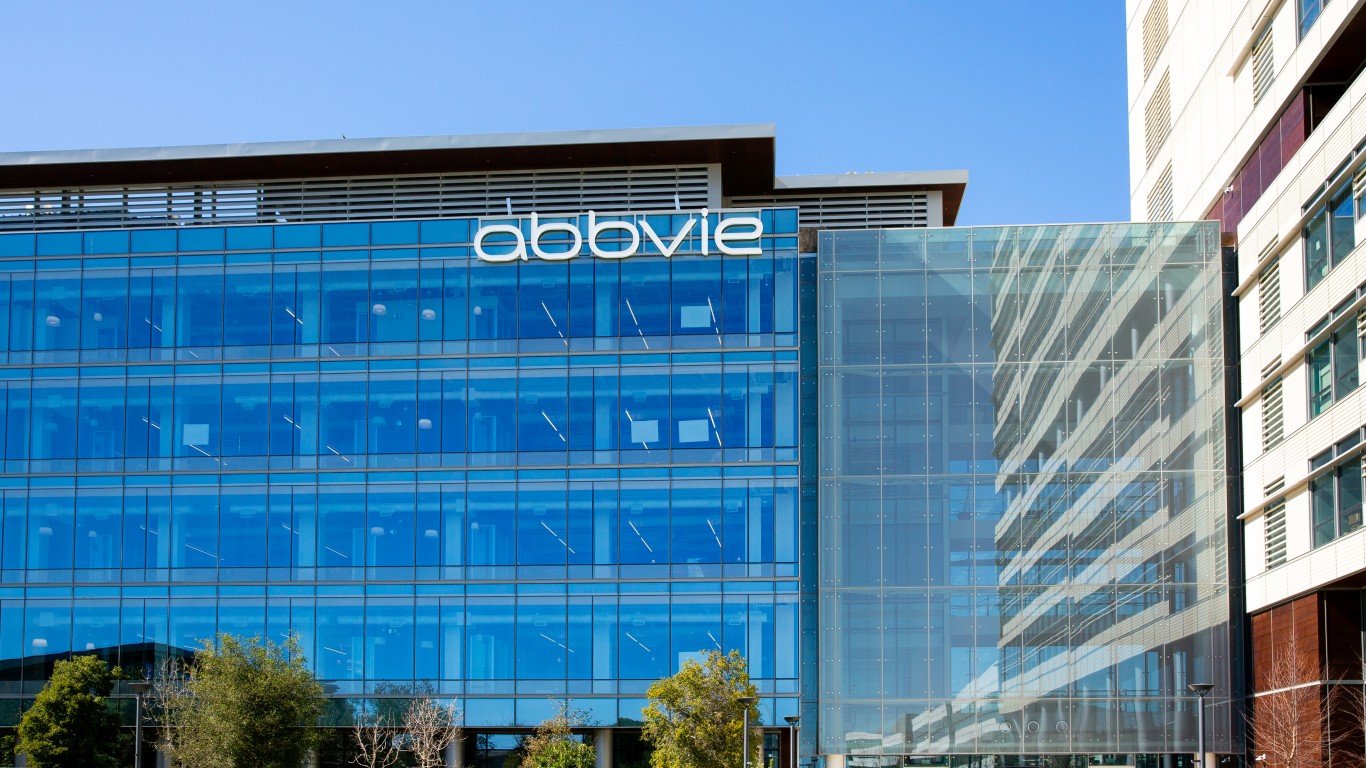
AbbVie (NYSE:ABBV | ABBV Price Prediction) now pays $1.73 per share each quarter, up from $1.64 in 2025. That 5.5% raise lifts the annualized forward dividend to $6.92. At Friday’s price of $285.40, the yield works out to about 2.4%. That yield has fallen because the stock is up 28.64% year to date, so income investors are paying more for every dollar of payout.

Payout Ratio Leaves Room for More Raises
Management guides 2026 adjusted EPS to $13.87 to $14.07. Measured against the midpoint, the annual dividend uses about 49.5% of adjusted earnings. On a GAAP basis, acquired IPR&D charges push the trailing P/E to about 118x. Cash flow gives a cleaner read: a free cash flow yield of 3.56% sits well above the dividend yield.
Chief Executive Robert A. Michael framed the latest increase this way:
“Based upon the strength of our business and its promising outlook, we are once again raising our quarterly cash dividend.”
Skyrizi and Rinvoq Now Carry the Humira Load
In the second quarter, Humira sales fell 35.9% to $756 million. Over the same stretch, Skyrizi rose 24.4% to $5.505 billion and Rinvoq climbed 24.5% to $2.525 billion, for a combined $8.03 billion. Neuroscience added 20.3% growth. Chief Commercial Officer Jeff Stewart said:
“We have achieved market share leadership now in more than 30 countries, and see substantial room for continued growth globally.”
Skyrizi has a long runway. Its composition-of-matter patent runs to 2033, and management said, “We do not expect to see biosimilar application filings until the end of this decade.” Imbruvica is the weak spot, down 29.4%.
Debt From the Apogee Deal Deserves Scrutiny
Net debt runs about 2.26x EBITDA, and shareholders’ equity is negative, a legacy from the Allergan deal. The pending $10.9 billion acquisition of Apogee Therapeutics (NASDAQ:APGE) will cut 2026 EPS by $0.14 and adds new borrowing. Chief Financial Officer Scott Reents said:
“We remain committed to achieving a net leverage ratio of two times within two to three years following the deal close.”

How AbbVie Stacks Up Against Its Pharma Peers
Johnson & Johnson (NYSE:JNJ) raised its quarterly dividend 3.1% to $1.34, its 64th straight annual increase. That payout uses about 45.9% of its adjusted EPS guidance midpoint. AbbVie’s coverage is similar, and its latest raise was larger.
Bristol Myers Squibb (NYSE:BMY) faces a steeper patent cliff. Revlimid fell 49% and Pomalyst 71% last quarter, and total debt stands near $43.1 billion. CEO Christopher Boerner pointed to the offset: “The Growth Portfolio continues to deliver, achieving 15% growth in the quarter.” AbbVie went through the same kind of transition earlier and has largely finished it.
Aristocrat Status Carries an Abbott Asterisk
S&P added AbbVie to its Dividend Aristocrats index at the spinoff by including the raise history of Abbott Laboratories (NYSE:ABT). AbbVie’s own run starts in 2013, when it paid $0.40 a quarter.
Verdict for Income Investors
On CNBC’s Halftime Report, Kevin Simpson said, “We like the two and a half percent dividend. We like the double-digit growth rate.” AbbVie’s dividend uses about half of adjusted earnings, free cash flow covers it, and drugs growing more than 20% a year pay for it. Investors focused on dividend growth will find it looks durable. Investors who need high current income get a lower yield after this rally. Over the coming months, watch how quickly AbbVie pays down debt after the Apogee deal and whether Skyrizi keeps growing at its current pace.
Contact [email protected] for any questions or corrections.
Chris Lange is a financial and geopolitical writer with more than a decade of experience covering a myriad of topics. He has published thousands of articles for 24/7 Wall St., with past coverage focused heavily on stocks, IPOs, healthcare, defense, global affairs, and technology.
His work has been quoted, or referenced by a number of outlets including Business Insider, USA Today, Yahoo Finance, MSN, The Motley Fool, and many other publications. A graduate of Southwestern University, he studied business with a focus on investments and has previous experience in banking and startups.
When not reading or writing the news, he is following his passion for Lacrosse, playing chess, or building solar projects with his dad.