Billionaire CEO: AI Is “The Biggest Bubble Of Our Lifetime,” But Investors Should Keep Buying During The Melt-Up
A billionaire CEO is openly calling AI the biggest bubble of his lifetime and still urging investors to pile in. His reasoning involves a 1997 comparison, a specific set of warning signals, and a view that the most dangerous part…


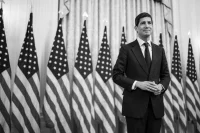
A crypto executive and former hedge fund manager is calling artificial intelligence the “biggest bubble of our lifetime” and telling investors to stay in. Mike Novogratz, founder and CEO of Galaxy Digital (NASDAQ:GLXY | GLXY Price Prediction), whose net worth Forbes estimates at $4.3 billion, made the remark on a panel at the Greenwich Economic Forum in Greenwich, Connecticut, in early October. Bloomberg’s account, republished by The Star, says he urged investors to pile in.
Conditions at the time, as Bloomberg reported them: AI-linked gains pushed the S&P 500 Index to a record that day, and NVIDIA (NASDAQ:NVDA) saw its market value approach $6 trillion.
Why Novogratz Says This Bubble Still Has Room
According to Bloomberg, Novogratz says he knows how bubbles end. They end spectacularly, and he says this one is not spectacular enough yet. In his view, AI-linked stocks still look cheap on a price-to-earnings basis. He sees rising long-term borrowing costs as a headwind that falls short of stopping the rally.
He also notes that competition with China makes it unlikely regulators or the industry will slow AI development, since both U.S. parties see the race as existential. That is his opinion. His “keep buying” case combines a call to buy in with patience.
Melt-Up Numbers Behind the AI Trade
“Melt-up” is our word for it. Novogratz did not use it. The term describes a fast, record-setting rally driven by investors piling in, which fits a record S&P 500 and NVIDIA approaching $6 trillion. NVIDIA’s market value now stands at $5.21 trillion.
Spending is driving the move. In its fiscal second-quarter release, NVIDIA reported revenue of $96.22B (+105.8% YoY) and guided to $108.0B +/- 2% for the third quarter. Management said “NVIDIA Compute is fully utilized across every cloud we serve” and expects top-five hyperscaler capex of $1.3 trillion in 2027. Microsoft (NASDAQ:MSFT) spent $115.95B on capex in fiscal 2026, and its CFO said “customer demand continues to exceed available capacity.” NVIDIA trades at about 43 times trailing earnings. Microsoft trades at about 29.

His 1997 Comparison and Warning Signs
He appeared on the Oct. 12 episode of “Money Rehab with Nicole Lapin.” A summary of the episode says he compared today to 1997 and sees no clear sign of a peak. According to that summary, the warning signs he watches are stocks and the dollar falling together, spiking bond yields, and foreign selling of Treasuries.
Skeptics and Believers Both Argue Against Selling
Ray Dalio, speaking at a Singapore conference on Oct. 7, said rising interest rates and investors’ need to convert wealth into cash are bringing an AI bubble closer to collapsing.
DBS chief investment officer Hou Wey Fook challenged the bubble view, saying NVIDIA’s earnings multiple sits near its lowest since 2016. Crypto Briefing reported that he projects 70% earnings growth for NVIDIA next year.
Gavin Baker, managing partner and CIO of Atreides Management, made a year-old argument at Andreessen Horowitz’s Runtime conference, published in October 2025, that AI does not qualify as a bubble. Baker says 97% of fiber laid in America was “dark” (never lit) at the 2000 peak, while today’s GPUs are fully used. Novogratz sees a bubble and Baker sees none, yet both notes against selling. Riding a mania is fine if you plan the exit, which is the whole point of our free bubble survivor’s handbook.
What Changed Since the Panel
The September CPI report, released Oct. 14, showed prices up 3.7% from a year earlier, above the 3.6% expected, per Fox Business. Fox Business reported that the S&P 500 fell about 0.95% and the Nasdaq about 1.42% in morning trading. That day, Fox Business put CME FedWatch odds of a 25-basis-point increase at the Fed’s Oct. 27-28 meeting at 41.5%, up from 22.1%. NVIDIA is down 6.05% over the past week. Rising yields and falling stocks are two of the signals Novogratz says he tracks.
Signals to Track Before the Fed Meets
The Fed’s late-October meeting is the next test. After that, watch long-term bond yields, whether stocks and the dollar start falling together, and foreign demand for Treasuries. The man calling AI the “biggest bubble of our lifetime” says the bubble isn’t over, and he has named the signals he expects to show up first if it is ending.
Contact [email protected] for any questions or corrections.
AJ spent 10 years writing about financial markets at The Motley Fool. His coverage centers on technology stocks and the broader macroeconomic trends, from interest rates to geopolitics, that shape where markets are headed next. AJ is drawn to the stories where big-picture economics and individual companies collide.