Spotlight on Levered Chip Financing Heightens: What is Happening at Nvidia and AMD?
CoreWeave's stumble has put a spotlight on how Nvidia and AMD are bankrolling the AI chip boom, and the two approaches carry very different kinds of danger lurking beneath blockbuster revenue numbers.


NVIDIA (NASDAQ:NVDA | NVDA Price Prediction) and AMD (NASDAQ:AMD) both posted record AI quarters this summer. Those reports deserve a second read now that CoreWeave (NASDAQ:CRWV) has dropped and leveraged chip financing faces fresh scrutiny. NVIDIA puts its own balance sheet behind customers. AMD signs gigawatt deals with no disclosed financing support.
NVIDIA Turns Financier as AMD Signs Anchor Tenants
NVIDIA’s revenue reached $96.22 billion, up 105.8% YoY, a scale that lets it finance demand. Supply commitments hit $279.00 billion, mostly memory for Vera Rubin, and partner guarantees are limited at $108.5 billion. A new take-or-pay structure serves as a minimum revenue guarantee for lenders on neocloud projects. Jensen Huang addressed the obvious objection: “We know some will call this circular financing. We see it differently.”
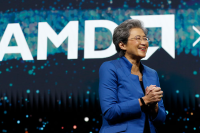
AMD’s model is simpler. Revenue rose 50.1% to $11.54 billion, driven by Data Center sales of $6.72B, up 107%. Anthropic will deploy up to 2 gigawatts of MI450 Series GPUs in Helios racks, alongside OpenAI and Meta Platforms (NASDAQ:META). Lisa Su said “customer pull for Helios is very strong and tracking ahead of our initial forecasts.”
| Lens | NVIDIA | AMD |
|---|---|---|
| Capital Lever | Over $500 billion in third-party capital via major asset managers | Customer commitments, no disclosed financing |
| Flagship Platform | Vera Rubin, in full production | Helios, ramping in Q4 |
| Key Exposure | Partner guarantees | Valuation near 199x earnings |
NVIDIA’s Balance Sheet Is Stretching Fast
Total debt climbed to $38.86 billion at July 31 from $12.81 billion in April. Receivables rose to $63.06 billion and DSO stretched to 60 days from 45, showing NVIDIA now takes longer to collect. It has also invested nearly $50 billion in frontier labs. Management maintains “our risk is limited” because the compute is interchangeable. I’m skeptical. CoreWeave’s slide shows how quickly neocloud credit sentiment can sour.
AMD carries just $4.28 billion of total debt. Its strain shows in capex, up 186.5%, which pulled free cash flow down 9.89% to $1.56 billion.
Memory Prices and Helios Shipments Decide the Next Round
NVIDIA guided Q3 revenue to $108.0 billion, with gross margin dipping at 71% to 72% in Q4 on memory costs. I will be watching whether that floor holds. AMD expects about $13 billion, and Su said the Helios ramp will be “much more substantial in Q4.” You should also track whether Anthropic’s first gigawatt starts in the first half of 2027.
How NVIDIA’s Leverage Stacks Up Against AMD’s Valuation Risk
AMD shares are up 146.89% year to date versus 15.08% for NVIDIA. Last week, AMD fell 13.05% while NVIDIA dropped 6.61%, a sign that higher valuations absorb more of the financing scare.
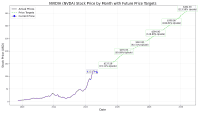
For me, NVIDIA’s risk is visible and priced at roughly 43x earnings. AMD has the cleaner balance sheet, but at 199x, any Helios delay could hurt. Growth investors may accept that trade. My view could change if NVIDIA’s guarantees start getting called or receivables keep growing faster than revenue.
Contact [email protected] for any questions or corrections.
Alex Sirois is a financial writer with experience spanning both retail and institutional investing. He has written for InvestorPlace and held roles at BNY Mellon and Bernstein, giving him a perspective that bridges Main Street portfolios and Wall Street analysis.
Alex holds an MBA from George Washington University and has built his career across multiple industries, including e-commerce, education, and translation — a breadth of experience that informs how he breaks down complex financial topics for everyday investors. His writing is conversational, actionable, and grounded in long-term, buy-and-hold investing principles.
At 247 Wall St., Alex focuses on delivering analysis that is both accessible and useful, with a clear emphasis on helping readers make more informed decisions with their money.