Elon Musk Says SpaceX Could Exit 2027 with Up to $1 Trillion in Sales Run Rate. That’s Higher Than Any Company on Earth.
Elon Musk dropped a revenue projection on SpaceX's latest earnings call that would put the company ahead of every business on the planet, and his CFO looked like he needed a moment to recover.

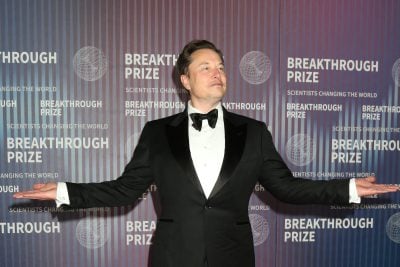
Elon Musk gave investors a striking new revenue projection. On the October 20, 2026 third-quarter earnings call for SpaceX (NASDAQ:SPCX | SPCX Price Prediction), Musk said: “I mean, in a nutshell, what this implies for SpaceX annual recurring revenue by the end of [2027] is somewhere between $500 billion and a trillion.”

He then added, “On that crazy note, I don’t want to give Bret a heart attack,” a reference to CFO Bret Johnson. Annual recurring revenue is a run rate: one period of current revenue annualized. It measures where the business is heading at a single moment, distinct from a full year of booked sales.
A Steep Climb From Today’s Run Rate
On the same call, Bret Johnson said SpaceX remains on track for $100 billion in annual recurring revenue by the end of this year, defined as December revenue annualized. Third-quarter revenue came in at $14.6 billion, up 161% from $5.6 billion a year earlier. Reaching the low end of Musk’s range means the run rate has to grow again within roughly 12 months of SpaceX crossing $100 billion. Wall Street currently estimates SpaceX will book $315 billion in sales in 2028 and $626 billion by 2030, so as usual, Musk is thinking a lot more optimistically than consensus.

Compute and Grokbot Power Musk’s Math
Musk tied the forecast to SpaceX’s AI expansion. Elon Musk said he “would be surprised if we brought on less than 13 gigawatts of compute by the end of next year.” Nameplate capacity was 1.7 gigawatts at the end of Q3. That compute already drives results: the superintelligence segment produced $7.6 billion in revenue and $5 billion in adjusted EBITDA.
Demand, by Musk’s account, exceeds supply. “We could rent out our compute several times over if we said yes to everyone,” he said, adding that contracts are “renewing at higher dollars per watt.”
The second driver is Grokbot. SpaceX said the agent had 800,000 paid weekly users earlier this month, more than doubling over the prior month. Musk said: “I think Grokbot may end up being what uses most of our superintelligence compute.”
How Musk’s $1 Trillion Compares to Amazon and Walmart
The largest U.S. companies by revenue are Amazon (NASDAQ:AMZN), at $716.9 billion for 2025, and Walmart (NASDAQ:WMT), at $713.2 billion for the fiscal year ended January 2026. Elon Musk’s $1 trillion upper end would top both. This comparison sets a forward-looking run rate against revenue those companies have already reported. Wall Street believes Amazon will first top $1 trillion in revenue in 2028, when estimates for sales top $1.1 trillion.
What to Watch Before You Trust the Trillion
Musk offered this range as his own projection on the call. SpaceX’s formal outlook is narrower: Bret Johnson guided Q1 2027 total revenue to $33 billion to $37 billion. Musk also tempered his compute plan: “I don’t expect everything to go right.”
Three milestones will show whether the trend holds:
- Compute online. Management expects 2.5 to 3 gigawatts by the end of Q4. Delays there undermines everything.
- Year-end run rate. If SpaceX’s December revenue supports $100 billion, Musk’s starting point holds.
- Q1 2027 results. A result at or above the guided range would support the steep climb. A miss would push the trillion further out.
Contact [email protected] for any questions or corrections.
AJ spent 10 years writing about financial markets at The Motley Fool. His coverage centers on technology stocks and the broader macroeconomic trends, from interest rates to geopolitics, that shape where markets are headed next. AJ is drawn to the stories where big-picture economics and individual companies collide.