Ken Griffin: There Are “Almost Certainly Bubbles” in AI Right Now
Ken Griffin spent most of 2026 dismissing AI hype, then watched agentic tools collapse weeks of Citadel research into hours. Now he thinks a bubble is forming, and his reasoning explains why the market barely flinched at the word.

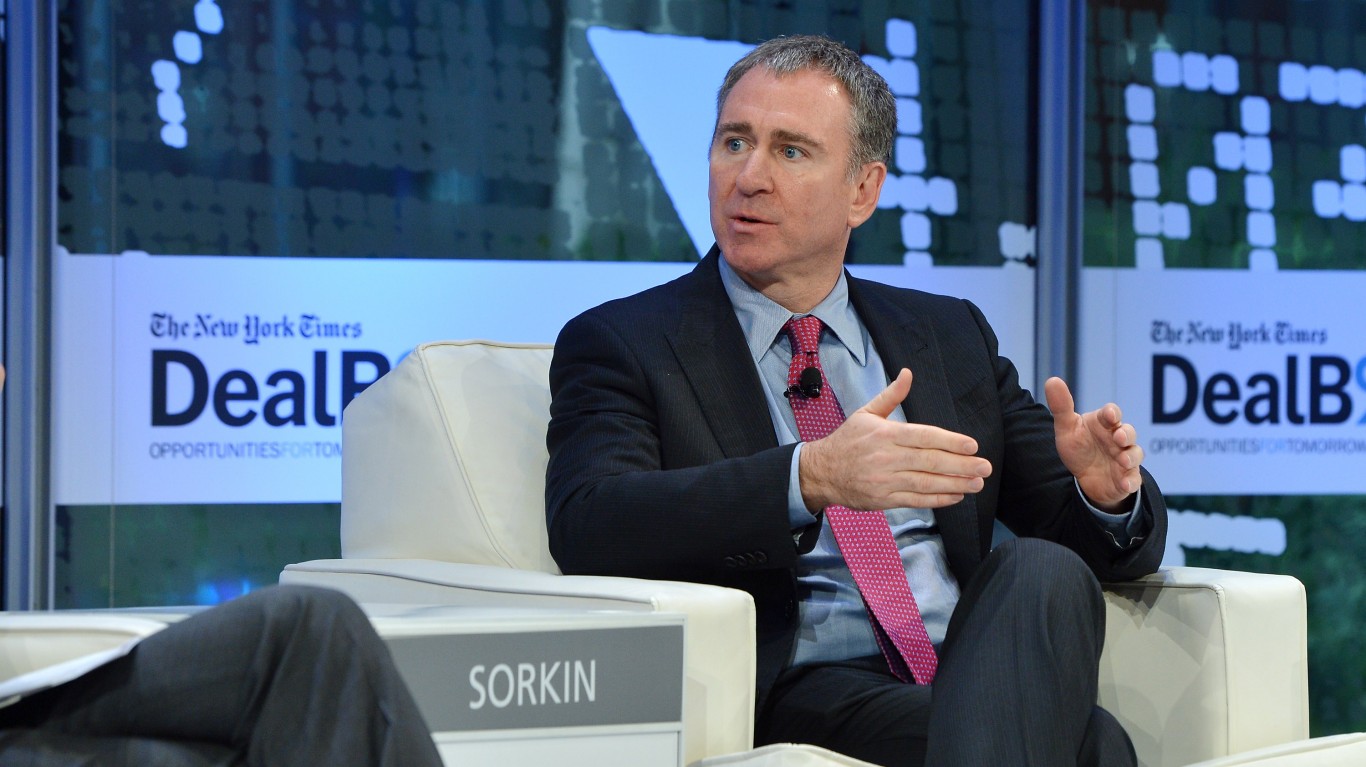
Ken Griffin changed his mind about artificial intelligence more than once in 2026. On October 20, 2026, at Citadel’s annual Future of Global Markets Conference in New York, the Citadel founder and CEO said investors are “almost certainly” in an AI bubble.
The market barely responded. After the close, NVIDIA (NASDAQ:NVDA | NVDA Price Prediction) ended at $216.47, off 0.29%, before climbing 2.12% to $221.06 by 7:59 p.m. ET in after-hours trading. The Invesco QQQ Trust (NASDAQ:QQQ) slid 0.10% to $717.63. That calm looks reasonable once you read past the word bubble.

Griffin Ties Bubbles to Lasting Economic Change
Griffin tied bubbles to real economic change: “Any radical transformation of our economy is generally intertwined with a bubble.”
He said the companies that make it through “are the market leaders for decades to come.” Remembering the dot-com era, he added, “I just wish I’d kept my Amazon stock in that moment.”
Money tends to arrive before the profits do, and while most new entrants fail, a few survivors keep growing for a generation.
Mixed AI Payoffs Would Reach Chipmakers First
His more pointed warning was about returns. “Corporate America has been very uneven in its ability to extract value from its AI models,” he said. He described finance teams reviewing bills from Anthropic and OpenAI and concluding, “Okay, we need to think about how to make sure we’re getting productivity out of this.”
That problem flows straight to Nvidia. If buyers cannot show a payoff, cloud budgets slow and chip orders shrink. Nvidia’s supply commitments climbed to $279 billion, mostly memory for its Vera Rubin systems, so any pause in spending would cost it more.
Over 2026, Griffin went from dismissive at Davos in January to “unsettled” by AI’s abilities at Stanford’s business school in May. Griffin said agentic tools (software that works through multistep tasks by itself) cut certain Citadel research from 6-8 weeks to 2-3 hours. “You’re seeing the threat to white-collar jobs playing out,” he said, adding that he also expects “a golden era for entrepreneurs.”
How Much Froth Has Already Left Nvidia and QQQ
Nvidia has a $5.23 trillion market value and is up 18.81% over the past year. Shares closed about 11% below their 52-week high of $243.37, and the 52-week low sits at $164.27.
QQQ is up 16.82% year-to-date, with a one-year total return of 19.39%. It sits about 6% under its $762.86 high and well above its $555.60 low. Nvidia made up about 7.6% of the fund’s net assets as of June 30, 2026.
Those pullbacks have taken some excess out, but Nvidia still trades at 44 times trailing earnings. In a separate view, Citadel Securities strategist Scott Rubner called the November 3, 2026 midterms a “clearing event for risk” and expects AI stocks to lead the market again after the vote.

What the Bull and Bear Cases Mean for AI Stocks
The bull case comes from Griffin himself: bubbles produce the decade’s leaders. Nvidia’s latest quarter backs that up, with revenue of $96.22 billion, up 105.8%, and a net margin of 55.60%.

The bear case centers on spending. If companies keep struggling to turn AI bills into productivity, orders could slow even while the technology keeps improving.
Over a long horizon, the bull case looks stronger. Doubts about spending usually show up first as slower growth, and Nvidia’s margins give it room to absorb that. QQQ offers broader exposure than a single stock, because it holds the leaders Griffin describes without tying results to one company. The expansion also runs well beyond the chipmakers (we featured seven of the power, cooling, and networking suppliers behind the data centers in a free report), which is part of why diversified exposure holds up even if any one name stalls.
The test to check is Nvidia’s earnings report on November 17. Results at or above its third-quarter guidance of $108.0 billion would support the bull case. A miss blamed on customer spending would mean the payoff problem Griffin described has reached the supplier.
Contact [email protected] for any questions or corrections.
Omor Ibne Ehsan is a writer at 24/7 Wall St. He is a self-taught investor with a focus on growth, cyclical, and dividend equities that have strong fundamentals, value, and long-term potential. He also has an interest in high-risk, high-reward investments such as penny stocks.