NVIDIA and Micron Alone Now Contribute 36% of S&P 500 Earnings Growth as Historic Market Concentration Grows
Two chip stocks now shoulder a disproportionate share of S&P 500 profit growth, and a single overlooked number buried in NVIDIA's financials may signal whether that momentum holds or breaks before either company reports.


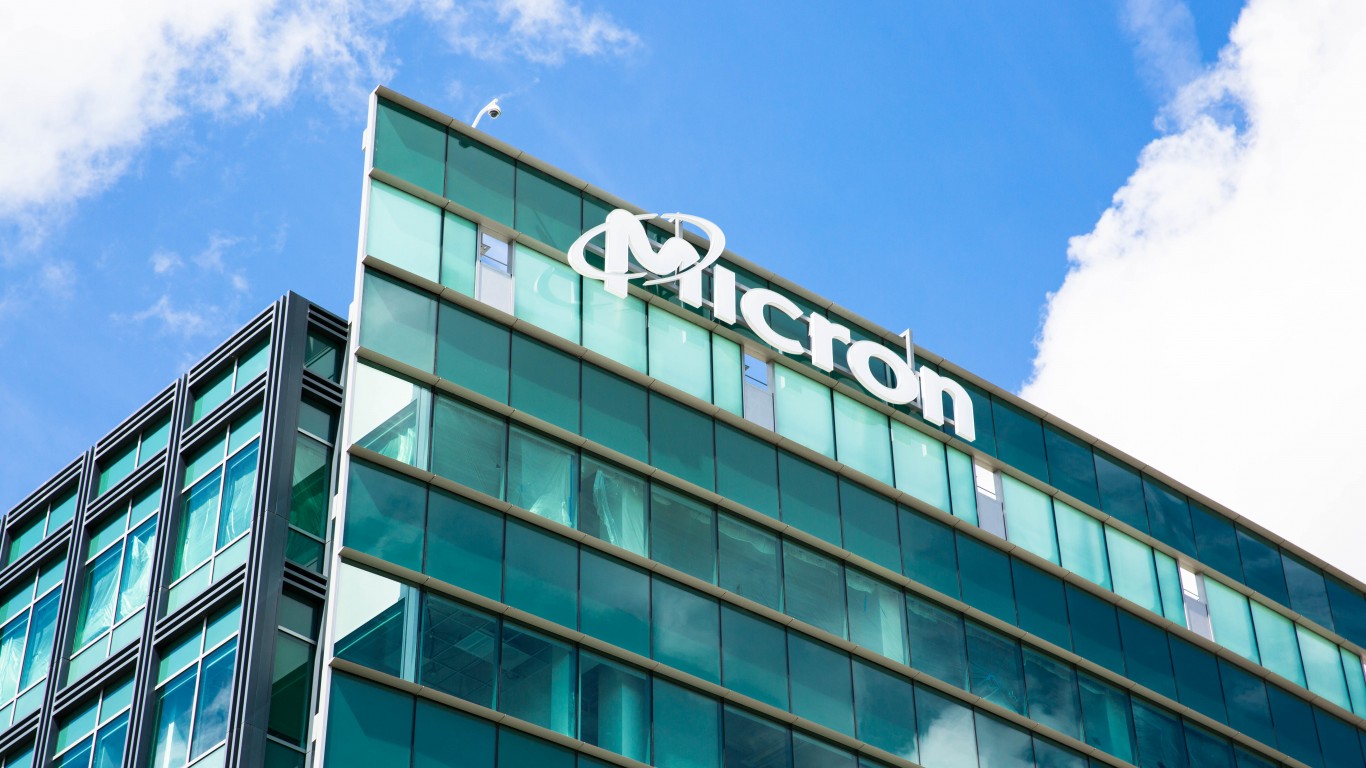
Two chip stocks are now carrying much of the S&P 500’s earnings season. The Kobeissi Letter says Micron Technology (NASDAQ:MU | MU Price Prediction) and NVIDIA (NASDAQ:NVDA) are expected to account for 36% of the index’s earnings growth this third-quarter reporting season. The Kobeissi Letter says they contribute 5.2 and 4.6 percentage points to expected year-over-year growth of 27%. A percentage point here is one piece of the index’s growth rate. These figures measure each company’s share of the increase in profits, which differs from its share of total earnings.
The Kobeissi Letter on X: View the post on Micron and NVIDIA’s share of S&P 500 earnings growth
Wall Street Expects Explosive Growth From These Two
For NVIDIA’s quarter ending in October, analysts expect revenue of $108.98 billion and EPS (profit per share) of $2.47. A year earlier, NVIDIA reported $57.0 billion and $1.30. That works out to 91.2% revenue growth and 90.3% EPS growth. Results are expected in mid-November, but the date is not yet confirmed.

Consensus for Micron’s November quarter is $61.67 billion in revenue and $38.23 in EPS. The year-ago figures were $13.64 billion and $4.78, so the estimates mean 352% and 699.8% growth. That report is expected in mid-December, also not yet confirmed. Last quarter Micron posted $54.23 billion in revenue and $33.42 in EPS, beating the $50.97 billion revenue consensus. The driver: AI data centers need huge amounts of memory, supply is short, and prices keep rising.

One Overlooked Number Links Both Companies: NVIDIA’s Supply Commitments
Revenue tells you what NVIDIA has already sold. Supply commitments tell you what it has promised to buy so it can fill future orders. Those obligations reached $279.0 billion in Q2 of fiscal 2027. That compares with $119B in Q1, $95.2B in Q4 of fiscal 2026 and $50.3B in Q3 of fiscal 2026. Much of the jump is memory bought for Vera Rubin production.
That memory is the product Micron sells. Micron has been co-designing HBM4E with NVIDIA for over a year. Manish Bhatia, Micron’s president and chief operating officer, said on the company’s last earnings call: “DRAM is the principal constraint versus logic or power to the data center.” Micron already has more than 75% of its shipments committed for the year.
What Would Break the Chain
Bullish: If commitments keep going up next to NVIDIA’s $108.0B revenue guide, demand is still running ahead of supply. Jensen Huang said “Even though our demand is much greater than 70%, our supply allows us to confidently deliver 70%.”
Bearish: Memory costs cut both ways. NVIDIA expects gross margins to bottom at 71% to 72% in Q4 because memory prices rose more than it expected. If commitments level off while memory prices keep going up, NVIDIA’s growth slows down first. Micron’s pricing power would likely weaken next.
Record Concentration Puts Index Investors on the Hook
The Kobeissi Letter says the fifteen largest S&P 500 stocks now hold a record 46.7% of the index’s market value, compared with 27.2% during the 2000 dot-com bubble. By The Kobeissi Letter’s count, the remaining stocks represent 53.3%.
The Kobeissi Letter on X: View the post on record S&P 500 concentration
Retirees and near-retirees who hold S&P 500 index funds own more AI exposure than the fund name suggests, and most of it runs through the data-center expansion behind NVIDIA and Micron (we covered seven suppliers driving that expansion, from electricity to cooling, in a free report you can grab here). Today’s leaders differ from 2000’s because they are producing real earnings growth. Still, a stumble at one or two of them would now hit the index’s value and its profit growth at the same time.
Verdict: NVIDIA’s supply commitments matter more than any EPS beat because they show months ahead whether the AI spending behind both companies is still speeding up. Watch the mid-November and mid-December reports, and watch whether earnings growth spreads beyond these two names.
Contact [email protected] for any questions or corrections.
AJ spent 10 years writing about financial markets at The Motley Fool. His coverage centers on technology stocks and the broader macroeconomic trends, from interest rates to geopolitics, that shape where markets are headed next. AJ is drawn to the stories where big-picture economics and individual companies collide.