Berkshire Finally Topped Its Pre-Buffett-Exit Peak
Berkshire Hathaway just clawed back to a record high, but the force driving it there has little to do with Warren Buffett's legacy and everything to do with a rotation that could reverse just as fast as it arrived.

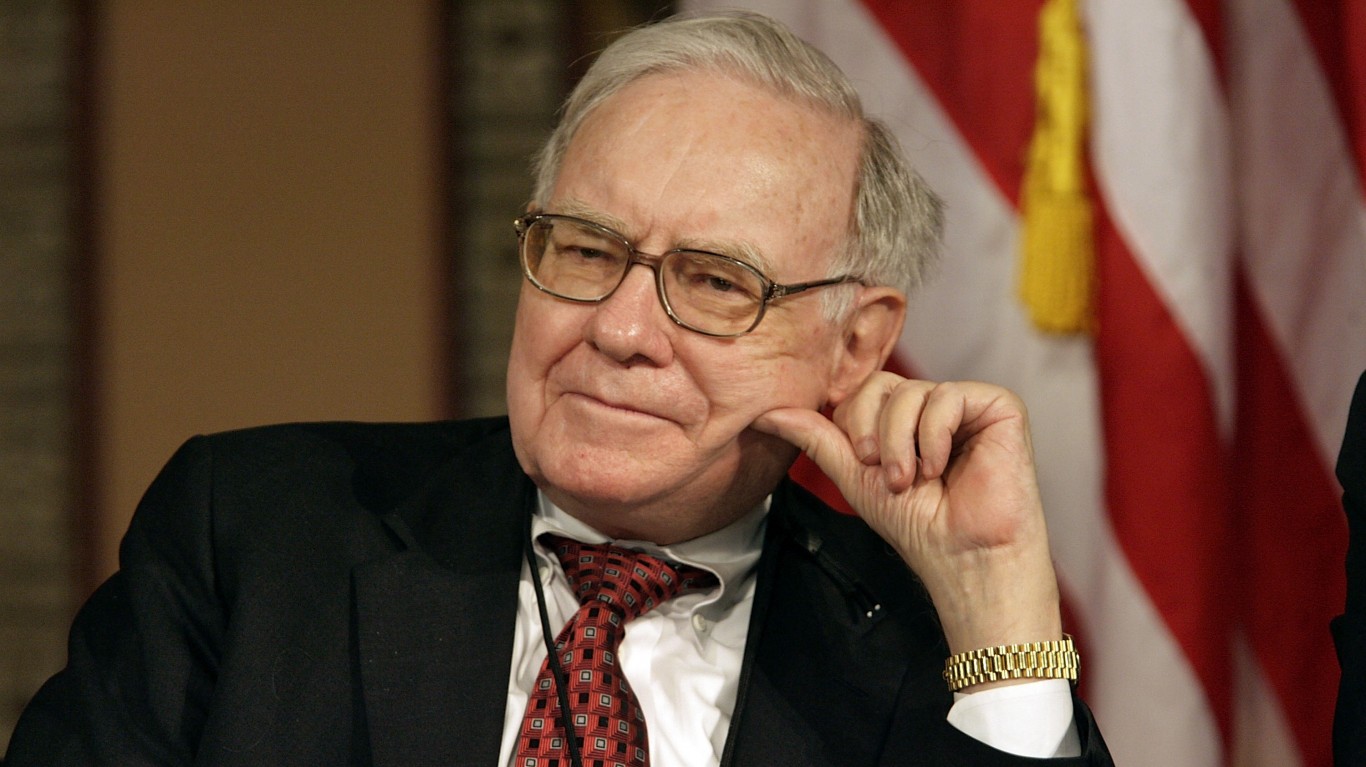
Berkshire Hathaway (NYSE:BRK-B | BRK-B Price Prediction) Class B shares closed at a record $539.82 on Tuesday, October 20, 2026, after a 1.43% gain. The old high was the $539.80 close on May 2, 2025, set the Friday before Warren Buffett told shareholders he would hand over the CEO job, so the new record beat it by just two cents.
Getting back there took 17 months. Over that time, the S&P 500 gained more than 35% while Berkshire stayed below its old high.
On October 21, both share classes set intraday records, with Class B reaching $543.34. Class B then closed at the day’s low of $538.99, down 0.15%, which left it slightly below the October 20 record close.
Berkshire’s market value at that close was about $1.16 trillion. Most of the push to the record came from investors pulling money out of AI stocks, and that rotation will likely determine how long the record holds.
Money Leaving AI Stocks Landed in Berkshire
The S&P 500 set a record on October 6 and has slipped since then, while Berkshire gained about 7%. From October 6 through October 20, the iShares Semiconductor ETF (NASDAQ:SOXX) fell in 10 of 11 sessions and lost 15.17%, while Berkshire rose in nine.
That run included a 10-day winning streak, Berkshire’s first since 2018. Investors pulling out of crowded chip trades looked for profits that hold up whether AI spending does, and Berkshire offers that through its insurance, BNSF railroad, utility and consumer businesses, plus a large cash cushion.
Abel Is Putting the Cash to Work
In the second quarter, Berkshire bought back $4.5 billion of its own stock and put $23.5 billion into other stocks, including $10 billion in Alphabet (NASDAQ:GOOGL) (NASDAQ:GOOGL). That ended 14 straight quarters of net stock selling, and cash fell to $364.7 billion from a record $380.2 billion.
Buybacks matter because they show management thinks the shares trade below intrinsic value, meaning the company’s underlying worth. Operating profit rose 16% to $12.98 billion, a quarter KBW analyst Meyer Shields called “very solid.”
Buffett already did the stock-picking work for a lifetime, and the cheapest dividend payers still sitting inside Berkshire’s own book are worth a look (we ranked the seven cheapest in a free guide here: 7 Warren Buffett Stocks to Buy Now).
Succession Doubts Are Fading
On September 18, 2026, Buffett, then 96, stepped down as chairman and became chairman emeritus. His son Howard Buffett, a board member since 1993, became non-executive chairman; Buffett stayed on as a director, and he wrote that “Howard will guard its culture and values.”
The stock hit its low about two weeks after the chairman change was announced. Investors wanted proof that Berkshire runs well without Buffett at the top, and rising profits plus buybacks under Abel, CEO since the start of 2026, gave them that proof.
What Could Stall the Rally
If AI stocks bounce back, the money that moved into Berkshire could move right back out. The chip ETF rose 2.07% on October 21, the same day Berkshire slipped from its intraday high.
Traders are treating $540 as the key technical level heading into earnings, and Berkshire closed just under it. The upcoming third-quarter report will show whether operating earnings can match the $13.48 billion from the same quarter a year earlier. A record price also gives you less margin of safety than the stock offered while it fell behind.
Should You Buy or Sell BRK-B Stock
At a P/E of 11x and a price-to-book of 1.06, Berkshire is modestly priced for a company with rising operating profit and a CEO buying back its shares. Index funds still lean hard on the same AI trade that is now reversing, so they carry more exposure if chip stocks keep falling. Berkshire’s mix of businesses has less direct exposure to that trade.

This view holds if Class B closes above $540 after the third-quarter report and operating earnings come in at or above $13.48 billion. If earnings fall short and the chip ETF wins back its October losses, the rotation is reversing, and the record likely won’t last.
Contact [email protected] for any questions or corrections.
Omor Ibne Ehsan is a writer at 24/7 Wall St. He is a self-taught investor with a focus on growth, cyclical, and dividend equities that have strong fundamentals, value, and long-term potential. He also has an interest in high-risk, high-reward investments such as penny stocks.