We Are Now Finding Out Why Warren Buffett and Berkshire Hathaway Built a $400 Billion Cash Hoard
Berkshire Hathaway's (NYSE: BRK-B) cash position became one of the defining financial stories of recent years, swelling to a record $397.4 billion by the end of Q1 2026. Now, under new CEO Greg Abel, the deployment phase has begun: the…

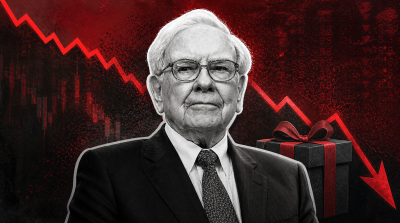
Berkshire Hathaway (NYSE: BRK-B | BRK-B Price Prediction) has built one of the most closely watched cash positions in financial history, and for much of the past year it kept growing. The company closed 2025 with $373.3 billion in cash and cash equivalents, the largest corporate cash hoard ever recorded in American business. That figure was surpassed within months: the reserve swelled to a record $397.4 billion by the end of the first quarter of 2026, according to Berkshire’s own 10-Q filing with the SEC. The prior peak, set in the third quarter of 2025, had stood at $381.7 billion. At its apex, the reserve surpassed the combined cash holdings of Apple, Amazon, Alphabet, and Microsoft.
How the Cash Mountain Was Built
This accumulation was not accidental. Between 2022 and 2024, Berkshire sold a net $172.93 billion in equities while buying relatively little in return, a deliberate and sustained withdrawal from positions that Warren Buffett concluded had reached or exceeded fair value. That included trimming Apple (NASDAQ: AAPL) from nearly half the equity portfolio down to roughly 22%, cutting Bank of America (NYSE: BAC) by more than half, and paring back Amazon.com (NASDAQ: AMZN), among others. Most of the accumulated cash sits in short-term Treasury bills, which at current yields provide meaningful income while preserving optionality for a major deployment.
Abel Takes the Helm and Signals Continuity
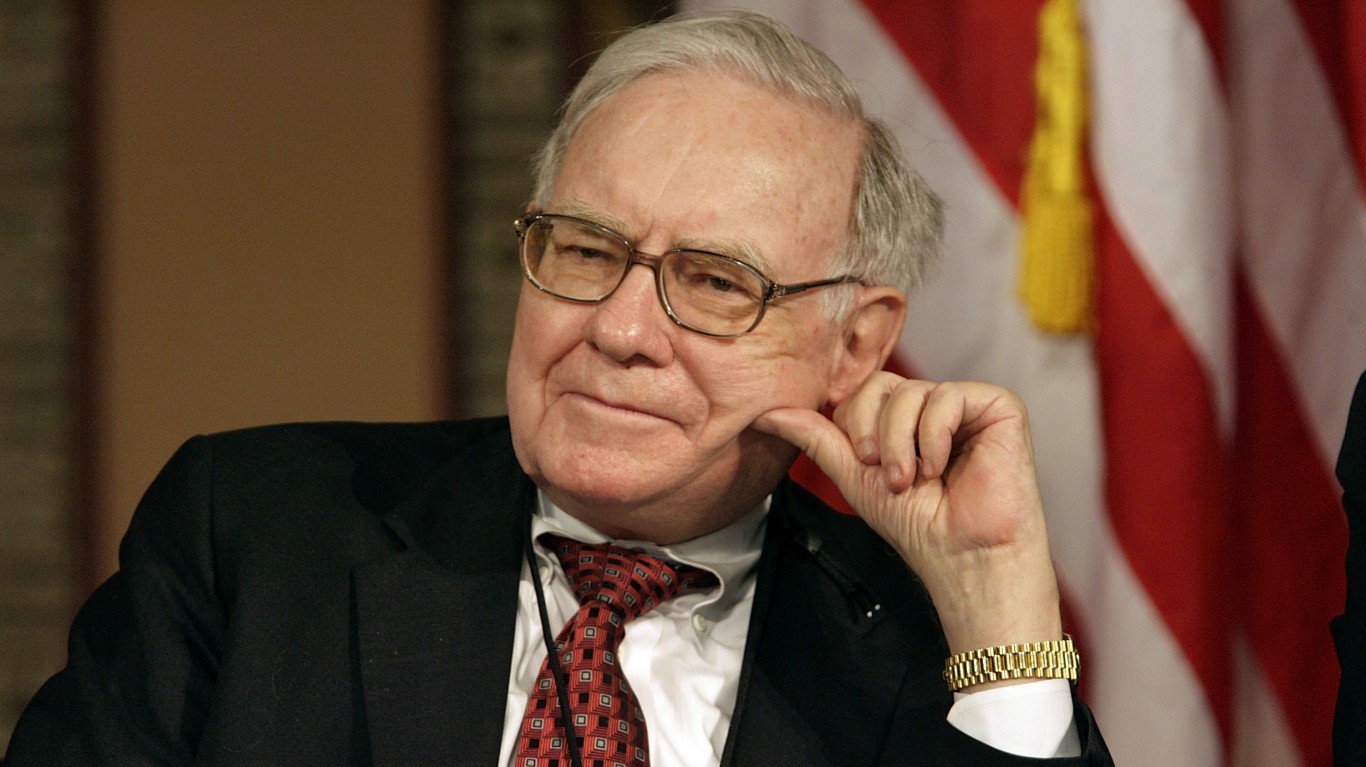
Greg Abel, who succeeded Buffett as CEO in January 2026, took the stage at the Berkshire annual shareholder meeting in Omaha for the first time, with Buffett watching from the audience as chairman. Abel moved to assure investors that the conservative posture would continue. In his first annual shareholder letter, he described the balance sheet as “a strategic asset to be deployed at the right time,” one that “allows us to act decisively, invest when others are tentative or fearful, and stand firm when financial storms roll through.” At the meeting itself, Buffett told CNBC that he did not see an ideal investing environment, a view consistent with Berkshire’s actions over the prior three years.
Abel Begins Deploying Capital
The deployment thesis is no longer purely theoretical. In Q1 2026, Berkshire completed its $9.7 billion all-cash acquisition of OxyChem from Occidental Petroleum on January 2, adding a leading U.S. chemicals producer to its portfolio. That deal, struck the previous October, was Berkshire’s largest acquisition since it paid $11.6 billion for insurer Alleghany in 2022. Then, on May 31, 2026, Berkshire announced the acquisition of homebuilder Taylor Morrison for $6.8 billion in cash, representing an $8.5 billion deal including debt. The transaction closed on July 24, 2026, expanding Berkshire’s already substantial footprint in the U.S. housing market alongside Clayton Properties Group.
The pace of capital deployment accelerated sharply in the second quarter of 2026. Berkshire reversed its 14-quarter streak of net equity selling, becoming a net buyer of nearly $20 billion in publicly traded stocks during the quarter. Buybacks also ramped up: after spending just $234 million on repurchases in Q1, Berkshire deployed approximately $4.5 billion in share buybacks during Q2. Those moves trimmed the cash pile to $365.5 billion as of June 30, 2026, still an enormous sum but a meaningful step down from the Q1 record. Operating earnings for the quarter came in at $12.98 billion, up 16% from the same period a year earlier, led by a 24% jump in manufacturing, service and retailing earnings and a 27% surge in Berkshire Hathaway Energy’s profit.
The Market Context Behind the Caution
The context for the earlier caution matters. The stock market was trading at or near all-time highs, and many investors had grown accustomed to parabolic gains in chip stocks and anything carrying an artificial intelligence narrative. The pattern of strong earnings followed by sharp sell-offs became a recurring feature. Consider Meta Platforms (NASDAQ: META): the company reported genuinely impressive first-quarter 2026 results, with ad impressions up 19% year over year and revenue beating estimates, only to see shares plunge nearly 10% after management raised its full-year capital expenditure guidance to $125 billion to $145 billion. That single-session decline erased roughly $175 billion in market value.
Markets priced for perfection are vulnerable. If a severe correction materializes, the kind of dislocations last seen in 2008 and 2009, cash-strapped companies could find themselves making the trip to Omaha. Buffett deployed capital on precisely those terms during the financial crisis, providing emergency financing to General Electric and Goldman Sachs (NYSE: GS), among others, in exchange for preferred shares carrying substantial dividends. By the end of 2009, that crisis-era dealmaking had delivered Berkshire outsized returns while the broader market was still recovering. With well over $300 billion still available even after Q2’s deployment, Abel’s Berkshire remains positioned to play exactly the same role if a deeper correction opens the door. The old Wall Street adage attributed to Baron Nathan Mayer Rothschild still applies: “Buy when there’s blood in the streets, even if the blood is your own.” What is now clear is that Abel is not simply sitting on the cash. He is beginning to put it to work.
Editor’s note: This article has been updated to include Berkshire Hathaway’s Q2 2026 results, which showed the cash pile declining to $365.5 billion as Greg Abel deployed nearly $20 billion in net equity purchases and $4.5 billion in buybacks, ending a 14-quarter streak of net selling. The article also adds Abel’s $6.8 billion acquisition of homebuilder Taylor Morrison, which was announced May 31, 2026 and closed July 24, 2026, and Q2 2026 operating earnings of $12.98 billion, up 16% year over year.
Contact [email protected] for any questions or corrections.
Lee Jackson has covered Wall Street analysts' equity and debt research and equity strategy daily for 24/7 Wall St. since 2012. His broad, diverse career, including a stint as creative services director at an NBC affiliate in Austin, Texas, gives him unique insight into the financial industry.
Lee Jackson's journey in the financial industry spans more than 30 years, including nearly two decades as an institutional equity salesperson at Bear Stearns, Lehman Brothers, and Morgan Stanley. His career spanned pivotal sell-side Wall Street events, from the dot-com rise and bubble to the Long-Term Capital Management debacle, 9/11, and the Great Recession of 2008. This reflects his resilience and adaptability amid market volatility.
Lee Jackson’s practical financial industry experience, gained through a career at some of the biggest banks and brokerage firms, is complemented by a lifetime of writing across various platforms. This unique combination allows him to shed light on the intricacies of Wall Street in a way only someone with deep insider experience and knowledge can. Moreover, his extensive network across Wall Street continues to provide direct access for him and 24/7 Wall St., a privilege few firms enjoy.
Since 2012, Jackson’s work for 24/7 Wall St. has been featured in Barron’s, Yahoo Finance, MarketWatch, Business Insider, TradingView, Real Money, The Street, Seeking Alpha, Benzinga, and other media outlets. He attended the prestigious Cranbrook Schools in Bloomfield Hills, Michigan, and has a degree in broadcasting from the Specs Howard School of Media Arts.