Instacart Is Exploring a Sale, and Uber and DoorDash Are Circling
Instacart's stock surged after reports that grocery delivery's biggest rivals are circling the company for a potential acquisition, but one named buyer has already walked away and the other carries serious antitrust baggage.

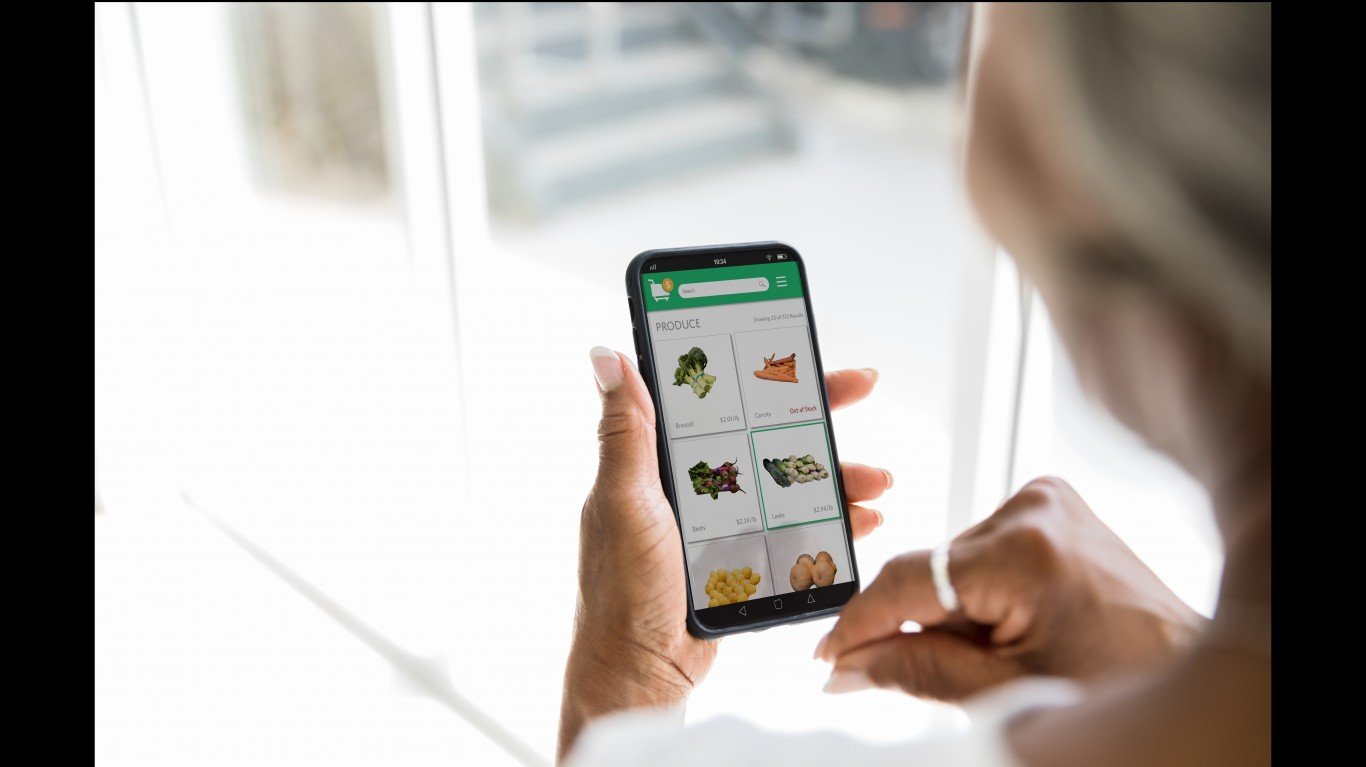
Shares of Instacart (NASDAQ:CART | CART Price Prediction) jumped in the last minutes of trading on October 23, 2026. A report at around 3:56 PM ET said the grocery delivery company is exploring a sale. The stock closed up $4.76, or 9.21%, at $56.44, just under its 52-week high of $57.98.

People familiar with the matter said Instacart has held preliminary talks with Uber (NYSE:UBER) and DoorDash (NASDAQ:DASH) and is working with an investment bank. The talks were described as early and ongoing, and they may not produce a deal.
Hours later, a second report said Instacart had approached Uber in recent weeks, and Uber walked away. Talks with other companies continue. Instacart declined to comment, no company has confirmed talks, and nobody has made a bid.
Both of the named buyers fell. Uber dropped 3.43% to $66.70, and DoorDash fell 3.53% to $179.38, so shareholders are more worried about overpaying than excited about the asset.
What a Buyer Would Actually Get
Instacart makes money and generates cash. Second-quarter revenue rose 14% to $1.043 billion. Net income was $111 million and free cash flow was $480 million on 90.3 million orders.
Advertising and other revenue grew 16%, and Instacart sells e-commerce software and Caper smart carts to retailers. A buyer would get a retail advertising business along with the delivery network.
DoorDash would likely value Instacart most, because U.S. grocery and retail already drive its order growth. With a $77.72 billion market cap against Instacart’s $13.07 billion, DoorDash could afford the deal. The purchase would also give DoorDash its closest grocery competitor.
Uber already lets customers order Uber Eats through the Instacart app. Uber is also absorbing its nearly $15 billion Delivery Hero deal from July and a pending ezCater purchase, which likely explains why it reportedly stepped away.
Why Instacart Would Sell Now
Instacart’s revenue grew 11% in both 2024 and 2025, while DoorDash’s grew 28% last year. Retailers are building their own digital channels, and bigger platforms bundle delivery with other services.
The stock’s run gives Instacart more leverage in any negotiation. Shares rose 31.38% over one month and 43.18% over one year. The close sits about 88% above the $30 IPO price, although that is still far below the $39 billion valuation Instacart announced in early 2021.

Antitrust Risk Limits the Premium
DoorDash reportedly discussed buying Instacart in 2021 at a likely $40 billion to $50 billion, and those talks fell apart partly over antitrust concerns. Industry analyst Zak Stambor said the Trump administration has shown “greater willingness” to approve deals, possibly on the condition that parts of the business are sold off. If a buyer has to sell off pieces, it would likely pay less for the whole.
Instacart was worth about $12 billion at the October 22 close. A typical takeover premium of 30% to 40% means roughly $16 billion to $17 billion, but that range is only an example, and no buyer has offered it. At $13.07 billion, the stock already reflects part of that premium.
What Investors Should Watch Before Instacart’s November 5 Report
The gain rests on anonymous sources, one of the two named buyers has reportedly walked away, and the most likely remaining buyer carries antitrust risk.
Chief executive Chris Rogers said on the August 6 call, “Our business is performing incredibly well.” Results on November 5 will test that claim against guidance of $10.30 billion to $10.55 billion in GTV (gross transaction value, the total dollar value of orders) and $320 million to $340 million in adjusted EBITDA.
DoorDash offers a useful comparison. It is down 20.8% this year, yet its second-quarter revenue rose 35.6%. DoorDash remains the faster-growing company whether or not a deal happens.
Watch for a signed agreement or confirming filing by Instacart’s November 5 report. Without one, the stock would likely drift back toward its $51.68 close from before the report.
Contact [email protected] for any questions or corrections.
Omor Ibne Ehsan is a writer at 24/7 Wall St. He is a self-taught investor with a focus on growth, cyclical, and dividend equities that have strong fundamentals, value, and long-term potential. He also has an interest in high-risk, high-reward investments such as penny stocks.