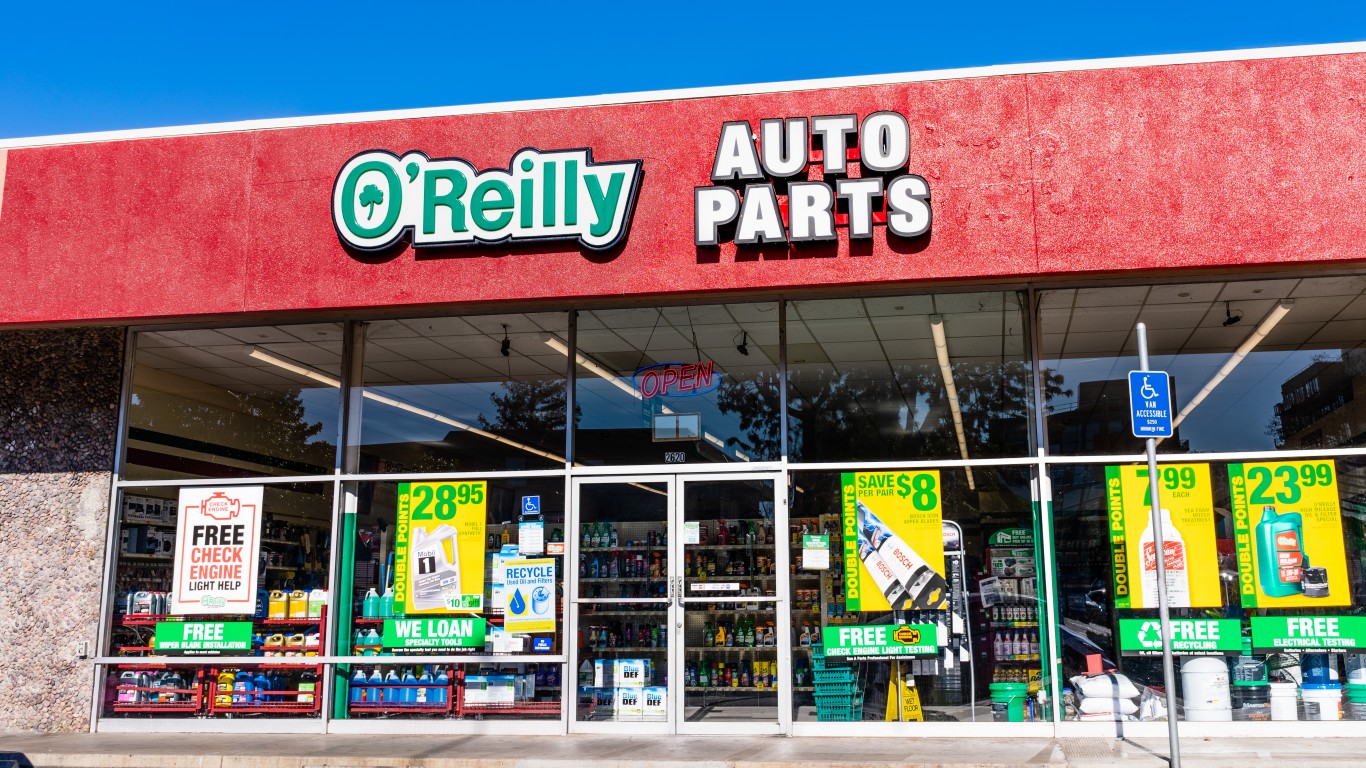
O’Reilly Gears Up for Q3 on Oct. 28: Can DIFM Growth Outrun a Heavy $10B Acquisition Overhang?
O'Reilly Automotive reports third-quarter results on Oct. 28 with professional sales momentum on one side and a rumored $10 billion acquisition hanging over the stock on the other. Which force shapes the narrative first?

This post may contain links from our sponsors and affiliates, and Flywheel Publishing may receive compensation for actions taken through them.

Investors are watching O’Reilly Automotive (NASDAQ:ORLY | ORLY Price Prediction) ahead of its third-quarter results on Oct. 28. Professional demand carried the first half. Even so, shares are down 1.41% year to date while talk of a rumored $10 billion acquisition hangs over the stock.
Double-Digit Pro Comps Meet a Stalled Stock
Last quarter, O’Reilly reported EPS of $0.86 on revenue of $4.89 billion, up 8.1% year over year, and inched past both estimates. Comparable store sales rose 6.0%. Professional comps grew right at 10%, which made it the fourth consecutive quarter of double-digit gains.

DIY was softer. Comps rose in the low single digits, while transaction counts fell, partly because hot-weather categories were weak. Free cash flow jumped 51.9% to $692.7 million.
The company raised full-year comp guidance to 4% to 6% from 3% to 5% and increased EPS guidance to $3.20 to $3.30. The stock closed at $89.92 on Oct. 23. That leaves it 8.5% lower over the past year despite a 4.68% gain in the last month.

Wall Street Expects High-Single-Digit EPS Growth
| Metric | Consensus | Year-Ago Actual | Implied YoY Growth |
|---|---|---|---|
| Q3 2026 EPS | $0.9263 | $0.85 | 8.98% |
| Q3 2026 Revenue | $5.01 billion | $4.71 billion | 6.45% |
| FY 2026 EPS | $3.2829 | $2.97 | 10.54% |
| FY 2026 Revenue | $19.13 billion | $17.78 billion | 7.57% |
Pro Growth, Fading Inflation, and the NAPA Question
Professional sales will be the first metric to watch. They reached $2.47 billion in Q2, and the year-ago Q3 base is $2.31 billion. Double-digit pro comps against that base would be the clearest sign that O’Reilly is still taking share.
Pricing gets harder from here. Same-SKU inflation ran 5.5% in Q2. Management expects it to ease to 1% to 2% in the back half, with Q3 at the top end, as the company laps last year’s tariff-driven price increases. Management already noted uneven comparisons against last year’s 5.6% comp.
You should also check margins. Operating margin was 20.7% in Q3 2025, and full-year guidance calls for 19.3% to 19.8%. SG&A per store rose 4.8% in Q2, and the full-year outlook was tightened to 3.5% to 4%.
Then there’s the pressure. Market chatter about a around $10 billion bid for NAPA, the parts business of Genuine Parts (NYSE:GPC), has raised questions about integration costs and strain on the balance sheet. In July, CEO Brad Beckham said O’Reilly has “no expectation or intention of executing a large transformative acquisition in the foreseeable future.” I want to hear that language repeated.
Leverage matters either way. Adjusted debt-to-EBITDAR reached 2.17x against a 2.5x target. Buybacks in July alone amounted $632 million.
Organic Growth Has to Carry the Story
O’Reilly has beaten EPS estimates in each of the last two quarters, yet shares fell 3.61% on the Q2 earnings day. A clean beat has produced mixed reactions. Beckham says the company holds around 10% of the market across North America and plans to keep expanding organically. If pro comps hold as inflation fades and management shuts down the acquisition talk, that strategy can take back control of the narrative.
Contact [email protected] for any questions or corrections.
After two decades of patrolling the dark corners of suburbia as a police officer, Rich Duprey hung up his badge and gun to begin writing full time about stocks and investing. For the past 20 years, he’s been cruising the markets looking for companies to lock up as long-term holdings in a portfolio while writing extensively on the broad sectors of consumer goods, technology, and industrials. Because his experience isn’t from the typical financial analyst track, Rich is able to break down complex topics into understandable and useful action points for the average investor. His writings have appeared on The Motley Fool, InvestorPlace, Yahoo! Finance, Money Morning, and, of course, 24/7 Wall St. He has been featured in both U.S. and international publications, including MarketWatch, Financial Times, Forbes, Fast Company, and USA Today.