These 3 REITs Own the Towers Behind America’s Wireless Networks. Which Pays Best?
Three REITs quietly collect rent from the antennas powering every call and text in America, but their dividends tell very different stories about risk, safety, and how much longer each payout can hold.


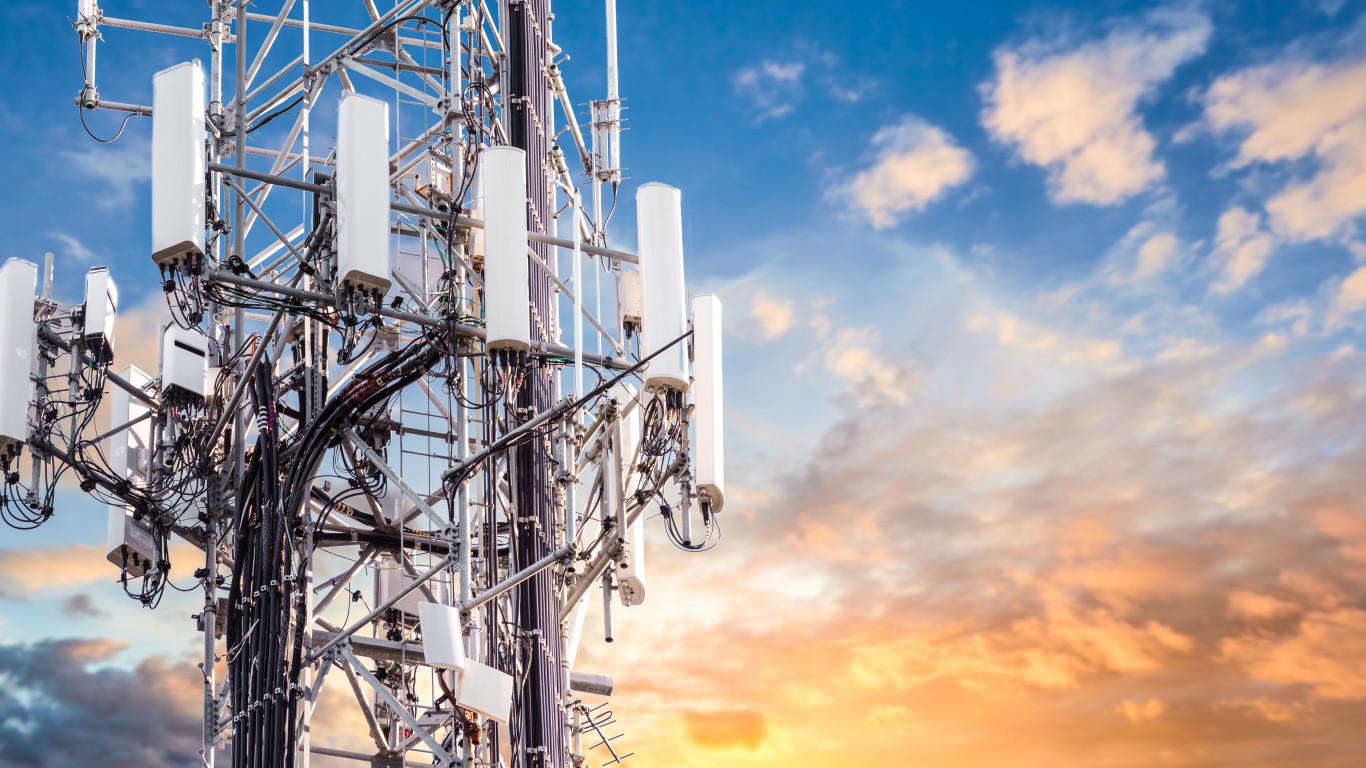
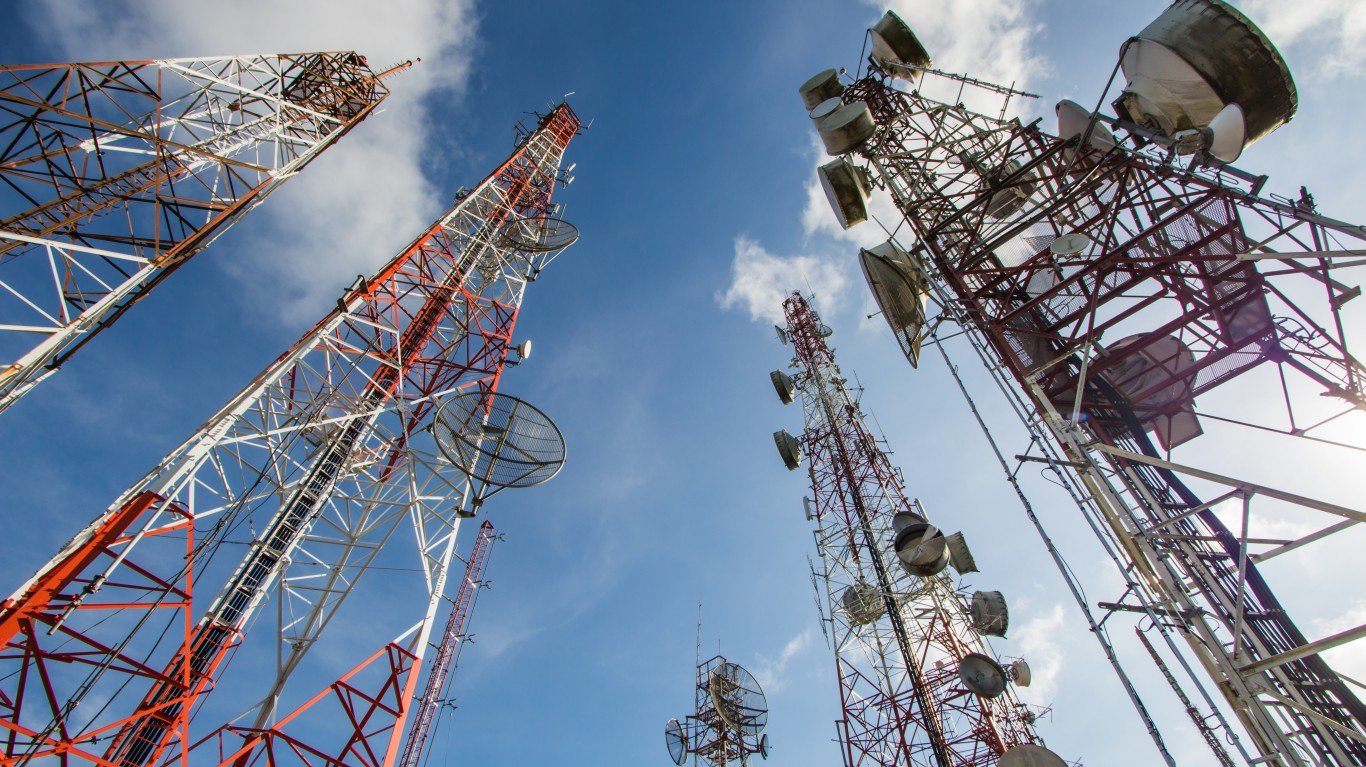
A cell tower works like a landlord with three or four tenants in the same building. Wireless carriers sign long-term, non-cancellable leases to hang antennas on a tower, pay rent that rises each year through built-in increases, and add more equipment every time they deploy new spectrum. That model now faces a fresh demand wave: management at American Tower (NYSE:AMT) says carriers will need to double network capacity by 2030, and roughly 800 megahertz of new mobile spectrum is expected to come to market over the next few years. All three REITs below are equity REITs that own physical towers. Their dividends depend on tenant rent, free of the interest-rate spread and credit risk that lending REITs carry. For tower REITs, dividend safety comes down to one number: how much of adjusted funds from operations (AFFO) per share the dividend uses up.
American Tower: Global Towers Plus a Data Center Engine
American Tower is the giant of the group, with over 148,000 communications tower sites across the U.S., Canada, Latin America, Africa, Asia Pacific and Europe, plus U.S. data centers through its CoreSite subsidiary. Most revenue comes from long-term, non-cancellable tenant leases with wireless carriers.
Demand background: Management says U.S. carriers are shifting from 5G coverage to capacity. In its words, “As we move out of the coverage phase, there’s a little less amendment activity and more new colocations, which is a trend we expect to continue.” CoreSite is the fastest-growing piece: data center revenue rose 13.4% in the second quarter, and full-year data center growth guidance was raised to about 15%. International operations also expanded, with Africa and APAC property revenue up 23.5%.
Yield: The quarterly dividend is $1.79, for an annualized forward payout of $7.16. At the $188.97 share price, that works out to a yield of about 3.79%.
Coverage read: Full-year 2026 AFFO per share guidance is $11.00 to $11.17, raised twice this year. The annualized dividend uses about 64.6% of the guidance center, which leaves a comfortable margin. The payout rose from $1.62 per quarter in 2024 to $1.70 in 2025, and now to $1.79. Management lists supporting “the dividend and a growing dividend” as its first capital priority.
Bull case: Leverage sits at 4.9x, inside its 3 to 5x target range and the lowest in this group. The CFO called 2026 the bottom: “We expect to be on the other side of DISH churn next year and believe 2026 is the trough year for AFFO per share growth, with an expected return to mid- to high-single-digit AFFO per share growth thereafter.” The stock is up 10.96% year-to-date.
Risk: The U.S. and Canada tower business is contracting for now. Segment property revenue is guided to decline 3.0% in 2026 as DISH cancellations hit, and higher rates have increased the refinancing drag on AFFO per-share growth to about 150 basis points.
Crown Castle: Highest Yield and Thinnest Cushion
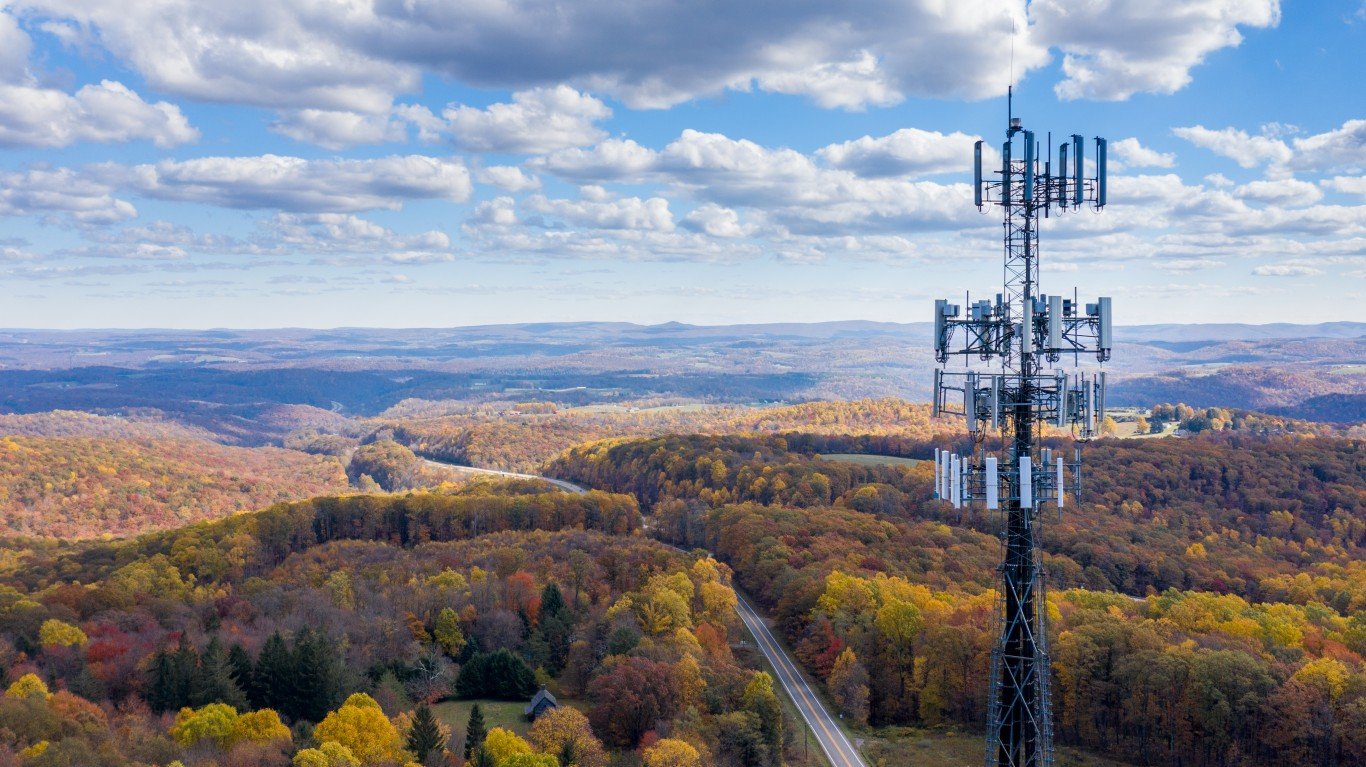
Crown Castle (NYSE:CCI) became a pure-play U.S. tower owner on May 1, 2026, when it closed the sale of its fiber and small cell businesses for $8.4 billion in net cash proceeds. It now owns about 40,000 cell towers, all in the United States, backed by about $28 billion in remaining contracted tenant receivables.
Demand background: Third-quarter organic growth excluding Sprint cancellations and expirations was 3.5%. Shares rose 9.13% on October 23 as investors responded to SpaceX’s cell tower push, according to Barron’s. Management says SpaceX’s new spectrum could create tower demand directly or push existing carriers to spend more. Asked about talks, it said, “You can assume that we’re talking to all of them.”
Yield: The quarterly dividend is $1.0625, or $4.25 annualized. At $86.03, that is a high-yield 4.94%, the highest in the group.
Coverage read: 2026 AFFO per share guidance is $4.54 to $4.66, so the dividend uses about 92.4% of the center. On FFO, which is the stricter measure, guidance of $4.08 to $4.15 per share sits below the $4.25 annual payout. Income investors should remember this history: the quarterly dividend was cut from $1.565 to $1.0625 in 2025 and has stayed flat since.
Bull case: Third-quarter AFFO per share rose to $1.24, up 11% YoY, helped by interest expense falling to $177M vs $247M. Debt is 97% fixed-rate, buybacks amounted to $1.043B year to date, and land ownership under its towers has risen to 43%.
Risk: Tenant concentration. The three national carriers account for 93% of site rental revenues, and DISH expirations are expected to cut 2026 site rental billings by $220 million. Leverage of 6.5x net debt to adjusted EBITDA leaves less room for error than American Tower.
SBA Communications: Smallest Yield, Strongest Coverage
SBA Communications (NASDAQ:SBAC) owns 46,358 communications sites, including 17,362 sites in the U.S. and 29,028 internationally across the Americas and Africa. Site leasing contributed 98.2% of total operating profit.
Demand background: International site leasing revenue rose 30.5% year over year, and the company expects about 600 new tower builds in 2026, mostly in Central America and Tanzania. Management says its Latin American and African markets are at least five years behind the U.S. in the 4G-to-5G cycle. At home, the FCC plans to auction 160 megahertz of upper C-band spectrum starting in April of next year, with strict build-out deadlines.
Yield: The quarterly dividend is $1.25, or $5.00 annualized. At $184.75, the yield is about 2.71%, the lowest of the three.
Coverage read: Management says the dividend represents about 41% of the center of full-year AFFO guidance, set at $11.95 to $12.40 per share. Second-quarter AFFO per share was $3.05 against a $1.25 dividend. The payout grew about 13% from the prior year and has risen from $0.37 per quarter in 2019. The chief executive said, “Our dividend remains the fastest growing in the industry and among the fastest growing of all REITs.”
Bull case: S&P upgraded SBA to BBB in June, and the company sold its first $3.5 billion of unsecured investment-grade bonds at a combined 5.11% coupon. It has $1.1 billion left on its buyback authorization and calls repurchases a “low-risk, high-return opportunity.”
Risk: U.S. turnover. Domestic site leasing revenue fell 3.7% on Sprint consolidation and EchoStar (NASDAQ:SATS) churn, and SBA is fighting in federal court over EchoStar’s claim that bankruptcy law lets it cut claims by 85%. Foreign currency swings in Brazil, Tanzania and South Africa add volatility, and leverage stands at 6.4x.
Tower Dividend Scorecard: Where Yield Meets Coverage
| REIT | Annual Dividend | Yield | Dividend as Share of AFFO/Share Guidance | Leverage |
|---|---|---|---|---|
| American Tower | $7.16 | 3.79% | 64.6% | 4.9x |
| Crown Castle | $4.25 | 4.94% | 92.4% | 6.5x |
| SBA Communications | $5.00 | 2.71% | 41% | 6.4x |
Which Tower REIT Has the Safest Payout
SBA Communications has the safest dividend in the group. It pays out about 41% of AFFO, has investment-grade credit, and has raised its dividend every year, though you take a smaller yield today in exchange. American Tower comes second, with roughly 65% coverage, the lowest leverage of the three, and management’s call that 2026 is the bottom year. Crown Castle pays the most, but its dividend eats about 92% of AFFO and exceeds FFO guidance, so its higher yield comes with the most risk until DISH churn rolls off and new leasing picks up.
Contact [email protected] for any questions or corrections.
Chris Lange is a financial and geopolitical writer with more than a decade of experience covering a myriad of topics. He has published thousands of articles for 24/7 Wall St., with past coverage focused heavily on stocks, IPOs, healthcare, defense, global affairs, and technology.
His work has been quoted, or referenced by a number of outlets including Business Insider, USA Today, Yahoo Finance, MSN, The Motley Fool, and many other publications. A graduate of Southwestern University, he studied business with a focus on investments and has previous experience in banking and startups.
When not reading or writing the news, he is following his passion for Lacrosse, playing chess, or building solar projects with his dad.