16% of Employers Are Thinking About Cutting Weight-Loss Drug Coverage
Employers are quietly reconsidering who foots the bill for GLP-1 weight-loss drugs, and the fallout hits Eli Lilly and Novo Nordisk very differently heading into earnings week.

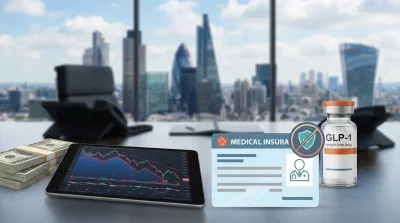
WTW (NASDAQ:WTW | WTW Price Prediction) released its 2026 Best Practices in Healthcare Survey in full on Wednesday, October 28, 2026. One figure in it matters to anyone who owns obesity-drug stocks: in WTW’s survey, 16% of employers that cover GLP-1 weight-loss drugs are considering dropping that coverage, up from 9% in WTW’s prior-year survey.
These employers are weighing the move and have not acted yet. WTW’s survey also counts only employers with more than 100 employees, so it describes larger plan sponsors, which is a smaller group than all U.S. employers.
Eli Lilly (NYSE:LLY) rose 0.2% on Tuesday, October 27, closing at $1,281.91. Novo Nordisk (NYSE:NVO) American depositary receipts (ADRs, the U.S.-traded shares of a foreign company) fell 1.2% to $38.67.


For shareholders, what matters is where patients go once their employer stops paying. If they move to the drugmakers’ own cash channels, demand can hold up while the price collected per patient falls, and that trade-off hits one of these two companies harder than the other.
What WTW’s Survey Measures
WTW surveyed 471 employers representing about 7 million employees, with questions fielded over the summer. Coverage itself fell for the first time in three years. In WTW’s data, 53% of employers cover GLP-1s for weight loss, down from 57% in 2025.
Employers are also changing how they buy: in WTW’s survey, 8% have already moved to direct-to-consumer arrangements, in which drugs are bought through the manufacturers’ own channels, and 28% are planning or considering the switch.
Employers are balking at the bill because coverage usually costs an employer mid-$500s to mid-$600s per user per month. WTW expects employer health costs to rise 11.1% in 2027 if plans change nothing, and 9.7% with plan changes.
Bank of America (NYSE:BAC) CEO Brian Moynihan described how fast the bill has grown in August 2026: “We spend about $250 million or more on GLPs, and that’s up from zero.” In a separate survey, Business Group on Health (BGH) found that 14% of employers have dropped or plan to drop this coverage by 2027.
Where Dropped Patients Go Next
Jeff Levin-Scherz, who leads population health at WTW, said: “Many people will choose to pay for this on their own even if it’s not covered by the plan.” Cash prices are well below what employers pay. Novo’s lowest-dose Wegovy pill starts at $149 a month and the lowest-dose shot at $199 a month. Lilly’s Zepbound vial or KwikPen starts at $299 a month.
Those prices apply only to the lowest doses, and Novo says its promotional pricing may change or be canceled in 2027. At Lilly, self-pay accounted for about 45% of Zepbound prescriptions in the second quarter. That share shows Lilly is already relying on cash buyers for a large part of its Zepbound volume.
Two GLP-1 Stocks in Opposite Positions
Lilly trades near its 52-week high of $1,321.21, carries a $1.14 trillion market cap, and has raised its 2026 revenue guidance to $85.0B-$87.0B. At that valuation, the stock has little room for slower growth.
Novo’s ADRs sit closer to their 52-week low of $35.12 than to their high of $64.16. Even before WTW’s survey, the company guided to 2026 adjusted sales growth of 0% to -6% at constant exchange rates, meaning flat to lower sales.
Lilly is expected to report third-quarter results on Thursday, October 29. Novo follows on Wednesday, November 4.

How Weight-Loss Drug Stocks Stack Up Before Earnings
The bull case is that obesity is still undertreated and cash channels can take in the patients employers drop. Despite WTW’s findings, Lilly said U.S. obesity prescriptions grew 78% in the second quarter.
The bear case is that employers pulling back will turn high-priced covered prescriptions into cheaper cash ones. That would happen just as Novo’s list price cut of about 50% on Wegovy takes effect on January 1, 2027.
On balance, Lilly looks like the stronger of the two. It writes about six out of ten U.S. obesity prescriptions and has so far made up for lower prices with higher volume. Novo, meanwhile, is cutting cash prices to maintain market share while guiding to flat or lower sales.
If Lilly cuts its 2026 revenue guidance below $85.0B when it reports on October 29, the case for Lilly gets weaker.
Contact [email protected] for any questions or corrections.
Omor Ibne Ehsan is a writer at 24/7 Wall St. He is a self-taught investor with a focus on growth, cyclical, and dividend equities that have strong fundamentals, value, and long-term potential. He also has an interest in high-risk, high-reward investments such as penny stocks.