Eli Lilly Jumps 8% as Strong Quarter Lifts Revenue Outlook; Novo Nordisk Ticks Up, Viking Therapeutics Eases
Eli Lilly just posted a quarter that left its GLP-1 rivals in the dust, but margin pressure and a $900 million pile of one-time benefits raise questions about how much of that strength is real and how long it can…

Eli Lilly (NYSE:LLY | LLY Price Prediction) just extended its lead in obesity drugs, and its newer cancer, immunology and neuroscience products are starting to matter, while the rest of the glucagon-like peptide-1 (GLP-1) group is barely moving. Eli Lilly stock is trading at $1,393, up 8%.
Taking a look at the peers, Novo Nordisk (NYSE:NVO) stock is at $38.73, up 1%. Viking Therapeutics (NASDAQ:VKTX) stock is at $25.07, down 1%.
Mounjaro and Zepbound Power Eli Lilly’s Beat and Raise
Eli Lilly reported Q3 2026 results before the open on October 29, posting revenue of $24.4 billion, up 39% year over year.
That top line cleared Wall Street analysts’ $22.61 billion S&P consensus, and its adjusted earnings per share (EPS) of $7.48 beat their $6.61 estimate.
Riding that momentum, Eli Lilly raised its full-year 2026 revenue guidance to $91 billion to $92 billion from $85 billion to $87 billion.
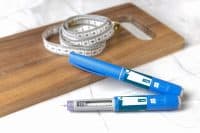
Demand for Eli Lilly’s two tirzepatide brands did the heavy lifting, with Mounjaro sales up 65% to $10.72 billion and Zepbound up 49% to $5.35 billion.
Foundayo, Eli Lilly’s newer oral obesity drug, added $184 million. Chair and CEO David Ricks commented. He stated: “Revenue growth was driven by broad global consumer demand for Mounjaro and Zepbound, the global launches of Foundayo, expanded U.S. coverage for obesity care and a doubling in our newest products in oncology, immunology and neuroscience.”
Still, the quarter got a lift from about $900 million in one-time benefits, including $410 million in Jardiance milestones, so the underlying beat was smaller than the headline suggests. Eli Lilly said acquired in-process research and development charges of $4.57 per share tied to business development deals also weighed.
Eli Lilly therefore cut its adjusted EPS guidance to $35 to $36 from $35.50 to $36.50.

Eli Lilly Pulls Away While Its GLP-1 Rivals Stall
Year to date (YTD), Eli Lilly stock is up 30%. Novo Nordisk stock is down 20% YTD, a gap that shows Eli Lilly’s results pulling it further from its Danish rival while the strength isn’t spreading across the group. Where Eli Lilly has branched out, Novo Nordisk remains concentrated in diabetes and obesity drugs and faces U.S. pricing pressure, including Wegovy and Ozempic list price cuts it has announced for January 1, 2027.
Viking stock is down 29% YTD and is easing even after Eli Lilly reported surging demand. The company’s value rests on VK2735. The pre-revenue, clinical-stage developer’s dual agonist targets the GLP-1 and glucose-dependent insulinotropic polypeptide receptors in subcutaneous and oral Phase 3 trials, with VANQUISH results expected in 2027.
Viking Therapeutics reported a third-quarter net loss. On October 28, the loss of $1.55 per share was wider than Wall Street analysts expected, and the company ended September with $960 million in cash and investments after a capital raise. Every gain Eli Lilly makes in obesity care may raise the bar a late-stage challenger must clear on efficacy, convenience and price.
Further along the obesity-care chain, Hims & Hers Health (NYSE:HIMS) stock is at $28.80, down 2%. Hims & Hers stock is down 11% YTD, and the telehealth platform is switching its U.S. weight-loss offering toward branded GLP-1 medications.
Eli Lilly’s Next Chapter Hinges on Diversification and Obesity Share
Eli Lilly must now show whether its newer products can keep growing fast enough to branched out revenue beyond weight loss. Alzheimer’s treatment Kisunla generated $193 million for Eli Lilly, up 175%, and blood cancer drug Jaypirca brought in $228 million, up 59%. Growth at that pace could gradually ease the company’s reliance on tirzepatide.
Margins are one pressure point, with Eli Lilly’s adjusted operating margin falling to 35.3% from 41.8%. A second open question is whether Novo Nordisk or Viking Therapeutics can close the gap in obesity care, where Eli Lilly keeps adding volume.
Eli Lilly enters the next phase with momentum, while its rivals still face pivotal trial data and pricing changes in 2027. Investors may want to weigh both the growth and the margin risks carefully as the race for obesity-care share develops.
Contact [email protected] for any questions or corrections.
David Moadel is financial writer specializing in stocks, ETFs, options, precious metals, and Bitcoin. David has written well over 1,000 articles for leading online publications, helping investors understand markets, income strategies, and risk.His work has appeared in The Motley Fool, InvestorPlace, U.S. News & World Report, TipRanks, ValueWalk, Benzinga, Market Realist, TalkMarkets, Finmasters, 24/7 Wall St., and others.With a master’s degree in education, David has taught at the elementary, high school, and college levels. That teaching background shapes his writing style: clear, educational, and practical. David has also built a loyal social-media audience by providing trustworthy financial content on YouTube, X/Twitter, and StockTwits.