In 2005, Sean Parker Told a Graffiti Artist to Take Stock In The Company Instead of Cash for the Murals He Painted Across The Office. The Company’s Name Was Facebook. Seven Years Later, David Choe’s Shares Were Reportedly Worth About $200 Million
A graffiti artist turned down a guaranteed check to paint murals across a startup's office, betting instead on a founder he trusted more than the product. What that gamble ultimately produced depends heavily on which number you believe, and who…


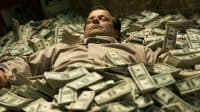
Although Wall Street now values Meta Platforms (NASDAQ:META | META Price Prediction) at about $1.4 trillion, one of the company’s best-known early payouts started with spray paint on a Palo Alto wall. In 2005, Facebook’s president gave graffiti artist David Choe a choice for painting murals across the startup’s office: cash or company stock. Choe thought the whole venture was a joke, and he took the stock anyway. But the famous figure attached to that decision is a New York Times estimate of $200 million. It was never a public holding, and that gap between legend and record matters to anyone considering equity against a paycheck.
A Napster Founder Made the Pitch
According to CNBC, Sean Parker founded Napster and became president of then-fledgling Facebook in 2005, when he hired Choe to cover the original Silicon Valley headquarters with murals. CNBC reported that Parker “offered him a choice between cash and company stock, but advised him to take the stock.” That advice came from the person running the business, and it ended up steering Choe’s decision.
The artist was skeptical of the company. Choe told Howard Stern that at the time “Facebook was a joke.” ABC News, citing The New York Times, reported that Choe considered the idea of Facebook “ridiculous and pointless.” He explained his reasoning to Business Insider: “I didn’t care about Face[book]. I’m like, this kid knows something, and I’m going to bet my money on him.” His confidence was in Parker. He didn’t think much of the website.
Sixty Grand Was the Price on the Table
The cash option was real money. David Choe told Stern, per CNBC: “My prices had been going higher and higher and I was like, ‘Yeah, I mean, if you want me to paint the entire building, it’s going to be 60, you know, 60 grand.'” CNNMoney told it a little differently, reporting that Parker offered him $60,000. In both versions, the artist turned down a guaranteed check for an illiquid interest in a young social network.
Reports also disagree on how much he needed that check. Business Insider described Choe as broke after just coming out of prison. Bloomberg described a successful artist with gallery shows who “wasn’t hurting.” Both accounts are still in circulation, and neither has been publicly settled.
A February 2012 Filing Turned Murals Into Headlines
The payoff estimate appeared when Facebook filed to go public in February 2012. The Christian Science Monitor, citing The New York Times, reported that “assuming Choe hasn’t otherwise unloaded the stock, his Facebook shares will be worth approximately $200 million when Facebook goes public later this year.” According to ABC News, the Times based that figure on a former employee’s guess that advisers like Choe received about 0.1% to 0.25% of the company, combined with an ABC News-cited market value of $100 billion. CNBC reported that Facebook went public at $38 a share in 2012.
Choe’s Share Count Was Never Disclosed
According to CNNMoney, Choe wouldn’t say how many shares he had, and he sold some on the secondary market while Facebook was still private. So the New York Times’ $200 million figure is an estimate built on a guessed interest and an assumed valuation, with no confirmed holding behind it. Bloomberg reported that the murals themselves were saved when Facebook moved, so the artwork is better recorded than the money.
Equity Instead of Pay Typically Ends Differently
Silicon Valley has told Choe’s story for two decades because outcomes like it are rare. Later funding rounds can dilute early stakes. Taking equity also ties a worker’s income and wealth to one company that can’t easily be sold. This payoff came from an extreme outlier: a dorm-era startup that grew into one of Wall Street’s largest companies.
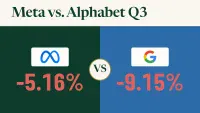
Meta shares traded at $623.42 as of 11:25 AM ET Oct. 30, 2026, and the stock trades at a P/E of about 23. Third-quarter revenue grew 26.1% year over year to $64.60 billion. GAAP EPS of $3.83 missed expectations of $5.70 after a $9.89 billion settlement charge, a report we followed in our live Q3 earnings coverage. Barron’s reported this week that Meta has given back all of its Muse advance.


For anyone offered equity instead of pay, the stock works more like a speculative option than a salary, cash needs still come first, and Choe’s result took a skeptical artist, a persuasive president, and one of the rarest growth stories the market has produced. For Meta holders, the next quarterly report will show whether heavy AI spending and the Muse models start paying off. All of that capex has to be powered, cooled, and networked by somebody, and we rounded up seven suppliers riding that expansion in a free report.
Contact [email protected] for any questions or corrections.
AJ spent 10 years writing about financial markets at The Motley Fool. His coverage centers on technology stocks and the broader macroeconomic trends, from interest rates to geopolitics, that shape where markets are headed next. AJ is drawn to the stories where big-picture economics and individual companies collide.