Apple Lost About $140 Billion After Hours as Its New CEO Calls Memory Prices “Unprecedented”
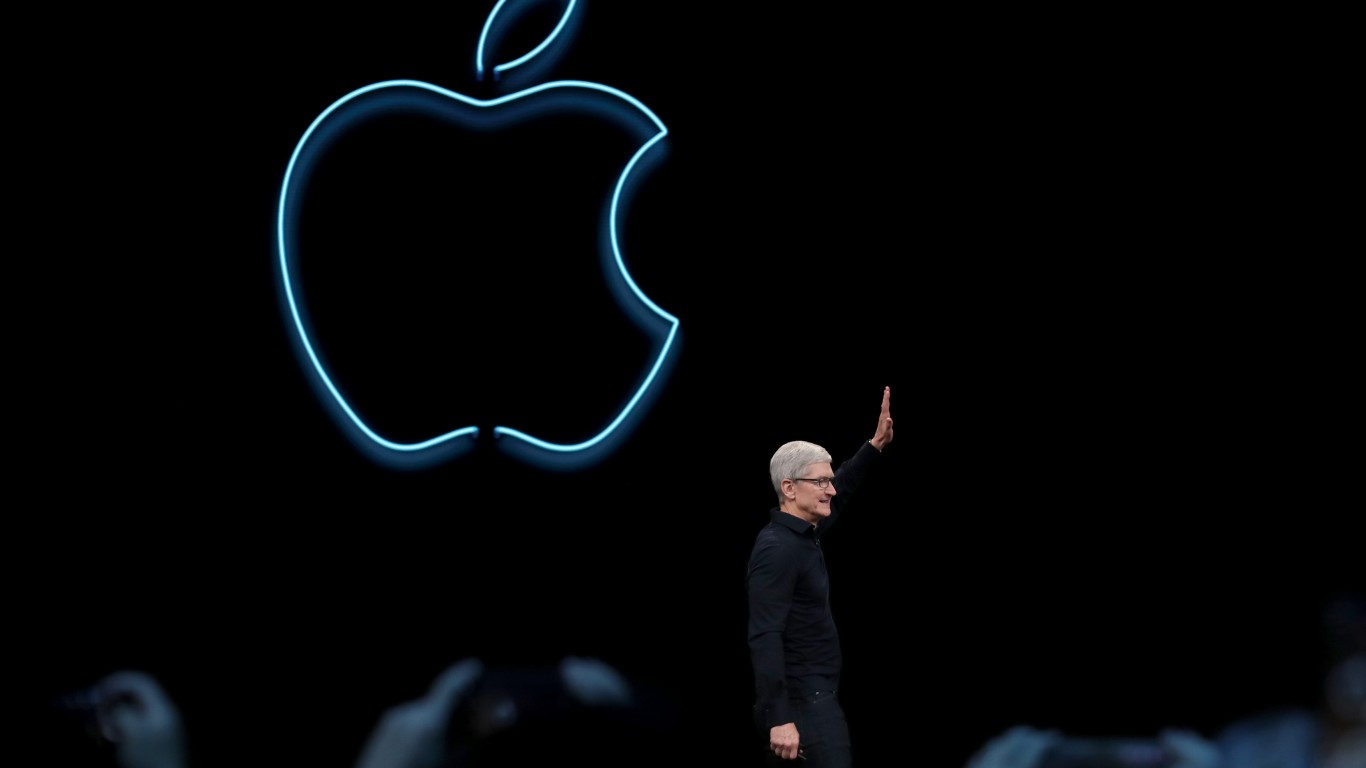
John Ternus used his first words as Apple CEO on an earnings call to warn investors about a cost problem spreading across every device the company sells, and the market responded before he finished speaking.

Apple (NASDAQ:AAPL | AAPL Price Prediction) reported results on November 2, 2026, that beat estimates on revenue and earnings. The stock first rose 0.5% after hours to $340.00. Then, on his first earnings call as chief executive, John Ternus turned to memory chips.
“What we’re seeing with memory pricing right now is unprecedented,” Ternus said. At 7:59 p.m. ET, the shares were at $329.03, down 2.75% from the $338.32 close. On 14.59 billion shares, that works out to about $136 billion in lost value by our math.
The session ended at $328.81, down 2.81%, for a loss near $139 billion. A $328.60 print implied about $142 billion, hence the roughly $140 billion figure. The $323.33 low, down 4.43%, had put the paper loss near $219 billion, so buyers clawed back part of it.
That figure leaves out the 1.83% regular-session drop before results, which was worth about $92 billion. The November 3 session can still reverse or deepen it. Apple closed at $4.94 trillion, ahead of NVIDIA (NASDAQ:NVDA) at $4.88 trillion. NVIDIA would move past Apple only if after-hours prices held.
A Beat Wall Street Declined to Reward
Revenue for the fiscal fourth quarter, which ended September 26, came to $114.48 billion, ahead of the $113.39 billion estimate. EPS of $2.10 also beat the $1.99 consensus.
Apple guided December-quarter revenue growth to 7% to 10%, above the 6.1% analysts expected. Demand held up, which places the problem further down the income statement.
Memory Costs Reach Every Device Apple Sells
Gross margin is the share of revenue left after production costs. It was 47.9% in the September quarter, and tariff refunds added about one percentage point. The December guide of 45% to 46% came in under the 46.3% estimate.
CFO Kevan Parekh said that once refunds are removed, higher memory costs should account for most of the fall to the guide midpoint. Every iPhone, Mac and iPad uses DRAM for working memory and NAND flash for storage, so chip prices hit all Apple hardware.
Ternus weighed in. He added that “looking beyond the December quarter, we see the pricing for memory purchases continuing to increase.” So the pressure outlasts this guide.
Price Increases Face Their First Real Test
Apple raised Mac and iPad prices at the end of June and iPhone prices in September. Parekh said “we did reluctantly make the decision to change pricing” and that “it’s really early to really assess any elasticity impact.” Elasticity is how far demand drops when prices go up, and for now that number is unknown.
Chief operating officer Sabih Khan said memory is the main cause of December-quarter Mac and iPad constraints. On iPhone Duo, he said, “It’s really hard to predict when supply and demand will be in balance.”
Manufacturing purchase obligations rose $33 billion from June to September. Inventories reached $14.54 billion, up 154.3% from $5.72 billion a year earlier and up 31.1% from $11.09 billion in June. The filing reports amounts only, so the claim that the increase is mostly memory comes from media reports, not the filing.
Services Guide Falls Short
Apple guided Services growth to 8% to 9%, below the roughly 10.7% analysts expected. Market commentary blamed the after-hours drop on the gross margin and Services guidance, and that explanation makes sense because Services is the higher-margin business that usually cushions swings in hardware costs.


What Comes Next for AAPL Stock After the Memory Warning
Apple rose more than 24% in 2026, so expectations were high. The underlying business still looks solid because demand is exceeding supply, the revenue guide beat estimates, and the memory squeeze is a cost problem Apple has already started passing on to customers.
The risk is elasticity. If the higher prices cut holiday unit sales, the margin case and the demand case get weaker at the same time.
One test is whether the stock closes above $328.81 on November 3. Second, read what the annual filing out that day shows on purchase obligations. Third, see whether December-quarter gross margin comes in inside 45% to 46% when results arrive in late January 2027. Holders of record on November 12 will also receive the $0.27 dividend on November 16.

Contact [email protected] for any questions or corrections.
Omor Ibne Ehsan is a writer at 24/7 Wall St. He is a self-taught investor with a focus on growth, cyclical, and dividend equities that have strong fundamentals, value, and long-term potential. He also has an interest in high-risk, high-reward investments such as penny stocks.