Arm Stock Has Crashed 37%. Is It a Better Buy Than Qualcomm?
Arm has shed more than a third of its value in a single month while Qualcomm stumbles through a handset slump, and both companies report earnings tonight. Which chip stock actually holds up better when the pressure is on?

This post may contain links from our sponsors and affiliates, and Flywheel Publishing may receive compensation for actions taken through them.

Arm Holdings (NASDAQ:ARM | ARM Price Prediction) or Qualcomm (NASDAQ:QCOM): which chip stock is the better choice for a retiree’s portfolio? Both report after the close today, November 4, and enter it in very different shapes. Arm trades at $194.22, down 36.84% over the past month. Qualcomm trades at $167.07 and pays a quarterly dividend. The two businesses also make money differently. Arm collects license fees and royalties on its chip designs. Qualcomm designs and sells chips, licenses wireless patents, and relies heavily on smartphones while it builds out automotive, PC, and data center businesses.
Valuation: Qualcomm Wins Decisively
Arm trades at roughly 239 times trailing earnings and about 221 times free cash flow, which works out to a free cash flow yield of 0.45%. Qualcomm trades at roughly 32 times earnings and about 14 times free cash flow, a 7.30% free cash flow yield. Arm’s 92.5% gross margin and tiny debt load are top tier. Its multiple, though, assumes years of perfect execution, and the stock has already shown what happens when the view turns.
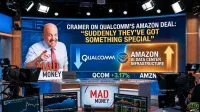
Jim Cramer noted on Mad Money that the stock “went to $452 in June”. Today’s price is about 57% below that peak. Qualcomm’s lower multiple leaves a much bigger margin of safety.
Income: Qualcomm Wins Outright
Arm has no dividend history at all. Qualcomm pays $0.92 per quarter, or $3.68 annualized, for a yield of about 2.17%. The quarterly payout has grown from $0.53 in early 2016, an increase of about 74%, and its dividend records go back to 2003. In fiscal Q3 alone, Qualcomm returned $2.3 billion to shareholders, and it holds a $20B buyback authorization. Interest coverage of about 18.6x and net debt/EBITDA of 0.61 give it plenty of room to keep paying.
Growth Trajectory: Arm Wins Clearly
Arm’s fiscal Q1 2027 revenue rose 22% to $1.29 billion. Royalty revenue grew 22% to $715 million, and licensing hit a record $574 million. Data center royalties more than doubled year over year for another quarter, and Neoverse shipments passed 1.5 billion cores. Fiscal 2026 revenue reached $4.92B, up 22.8%.

Qualcomm went the other way. Fiscal Q3 revenue fell 4.0% to $9.95B as handset revenue dropped 20%. Automotive was the bright spot: it grew 61% to $1.59B, its 23rd straight quarter of double-digit growth. Non-GAAP EPS of $2.21 came in just short of the $2.22 consensus, which ended a six-quarter run of beats. Management also said it expects its share of Apple (NASDAQ:AAPL) iPhone launches to be significantly lower than previously estimated.

What Tonight’s Reports Need to Show
Results come out after the close. Arm needs to show that royalty growth is holding up despite smartphone weakness and that its new AGI CPU silicon business is ramping on schedule. The sharp drop over the past month makes an earnings miss expensive. Qualcomm needs to show that Chinese handset demand is steadying and that its double-digit price increases are starting to lift gross margins. Investors will also want confirmation that its two hyperscaler custom silicon deals are on track to generate revenue in the December quarter, as management said in July.

Verdict: Qualcomm Fits the Retirement Profile Better
Qualcomm wins two of the three categories, the two that matter most to retirees. It pays a 2.17% yield, trades at about 32 times earnings, and has a 7.30% free cash flow yield. That combination provides income today and some valuation support if the chip cycle slows. Its beta of 1.762 means the stock will still swing, and the handset slump is a real problem. Still, automotive and IoT give Qualcomm a credible second growth engine.
Arm is the stronger fit for investors who are decades from retirement, can sit through declines of more than 50% and want the most direct exposure to Arm-based data center computing. At 239 times earnings with no dividend, SoftBank as its controlling shareholder, and a Q4 2026 trial against Qualcomm still ahead, Arm asks a retiree to take on too much risk for no current income. On these metrics, Qualcomm screens as the better choice for retirees.
Contact [email protected] for any questions or corrections.
Chris Lange is a financial and geopolitical writer with more than a decade of experience covering a myriad of topics. He has published thousands of articles for 24/7 Wall St., with past coverage focused heavily on stocks, IPOs, healthcare, defense, global affairs, and technology.
His work has been quoted, or referenced by a number of outlets including Business Insider, USA Today, Yahoo Finance, MSN, The Motley Fool, and many other publications. A graduate of Southwestern University, he studied business with a focus on investments and has previous experience in banking and startups.
When not reading or writing the news, he is following his passion for Lacrosse, playing chess, or building solar projects with his dad.