Since Evercore Said the OpenAI Deal Made AMD a ‘Buy,’ It’s Up More Than 140%. Here’s Where We See It Going
Evercore stepped in the day after a headline pop and built its case around a single OpenAI deal, and the stock rewarded that conviction in a very specific way. But with AMD now trading at a stretched multiple and a…

On Oct. 7, 2025, the OpenAI news was a day old and the stock had already rose. Evercore ISI stayed with the stock anyway. It raised its price target on AMD (NASDAQ:AMD | AMD Price Prediction) to $240 from $188 and kept its Outperform rating. Buying the day after a headline pop has burned plenty of investors.
This time it paid off: From the Oct. 6, 2025 close of $203.71, AMD is up 147.4%. SPY (NYSEARCA:SPY) gained 12.5% over that period.
The stock also sits more than 24% below its one-year high of $658.52. Friday’s session cut 11.04% from the stock after chip stocks sold off on Intel (NASDAQ:INTC) earnings and a weak PC forecast (Intel’s report on Oct. 30, 2026). Evercore’s call has been settled. The live question is where AMD goes from here.
Why Evercore Stepped In After the Jump
Evercore built its case on AMD’s five-year deal with OpenAI and on what the deal said about AMD’s technology and roadmap. OpenAI agreed to install 6GW of AMD Instinct GPUs over five years. That gave AMD clear sight of large-scale deployments. Evercore estimated the deal could add over $2 to AMD’s 2027 EPS and over $4 to its 2028 EPS.
Several firms took the same side that day. UBS raised its target to $265 with a Buy. It noted the deal is at least partly funded by AMD stock warrants tied to installation and performance milestones and said the AI trade “still has legs.” Wells Fargo went to $275 at Overweight and lifted its 2027 revenue estimate to $62.98 billion from $43.75 billion. Citi held back, raising its target to $215 and keeping a Neutral rating.

How AMD Turned a Headline Into Earnings
The return took time. In early March 2026, AMD dipped below the price it closed at before the call, so anyone who bought on Evercore’s note was briefly sitting on a loss.
The business kept delivering anyway. Fourth-quarter revenue reached $10.270 billion, and non-GAAP EPS of $1.53 came in well ahead of the $1.3192 estimate. Then came May, the month that decided the call. On May 5, 2026, AMD reported data center revenue up 57% and announced a deal for up to 6GW of Instinct GPUs with Meta (NASDAQ:META). Days earlier, Northland had cut AMD to Market Perform with a $260 target, and HSBC had moved to Hold at $340. Bernstein upgraded to Outperform on May 6 as part of a wave of target increases, and the stock rose.
On Aug. 4, 2026, AMD put up revenue of $11.536 billion, up 50.11%. Data center sales rose 107%, and non-GAAP gross margin expanded to 56% from 43%. Anthropic signed on for up to 2 gigawatts of MI450 GPUs. CEO Lisa Su called these “the early stages of a multiyear AI adoption cycle.”
Citi supplied the irony. The one Neutral voice on call day upgraded AMD to Buy at $575 on June 12, 2026, then raised its target to $800. Raymond James went to Strong Buy at $641, and Mizuho lifted its target to $705. Evercore itself raised its target to $283 in November 2025, and AMD went on to clear its $240 target.
The call was spot on: Evercore paid up for a headline, priced the deal in earnings terms, and the earnings showed up.

Where We See AMD Going
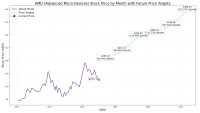
AMD traded around $492.64 on the morning of Monday, Nov. 2 — roughly 213x trailing earnings. Our one-year base-case target is $523.67, about 4% above the current price. That sits well below Wall Street’s average target of $640.21. The analyst breakdown is five Strong Buy ratings, 40 Buy ratings, 11 Hold ratings and zero Sell ratings.
Bull case, $684.95 (35.9% upside): The OpenAI deployment ramps on schedule, more hyperscalers sign on, and AI GPU revenue keeps climbing. Management has forecast third-quarter revenue to about $13 billion and expects data center revenue to more than double in 2027, which makes that path realistic.
Bear case, $417.39 (17.2% downside): Helios deployments slip, the PC and chip demand worries behind Friday’s selloff spread, and investors stop paying a premium multiple.
We still see AMD’s thesis as sound after its run. Valuation is the main risk. At that multiple, any delay in the Helios ramp will hit the stock hard. The small gap to our base case shows how much good news the price already shows, while the key contracts with OpenAI, Meta and Anthropic make the bull path more likely than the bear. All of that compute has to be powered, cooled, and networked by somebody, and we pulled together seven of those suppliers in a free AI infrastructure report.
Evercore’s numbers mattered more than its rating. When the next upgrade hits your brokerage app after a big headline, check whether the analyst attached an earnings figure to the news.

Contact [email protected] for any questions or corrections.
Joel South covers large-cap stocks, dividend investing, and major market trends, with a focus on earnings analysis, valuation, and turning complex data into actionable insights for investors.
He brings more than 15 years of experience as an investor and financial journalist, including 12 years at The Motley Fool, where he served as an investment analyst, Bureau Chief, and later led the Fool.com investing news desk. He has also co-hosted an investing podcast and appeared across TV and radio discussing market trends.