Can You Retire in Albuquerque on Social Security Alone? New Mexico Stopped Taxing It for Most Retirees
New Mexico changed its tax rules for retirees a few years ago, which shifted the math on whether Albuquerque is actually affordable on a single Social Security check. Whether that check survives the month comes down to one number that…

This post may contain links from our sponsors and affiliates, and Flywheel Publishing may receive compensation for actions taken through them.
People who expect a Social Security check to be their only real income tend to ask the same thing: where is that check actually enough? Albuquerque shows up on a lot of those lists. New Mexico’s cost-of-living index is 92.212, where 100 is the national average.
Arizona comes in at 100.677, Texas at 97.057, and Florida at 103.414. The state also stopped taxing benefits for most retirees a few years ago. For a single retiree living on the average check, the math breaks down this way.
How New Mexico Dropped Its Tax on Benefits
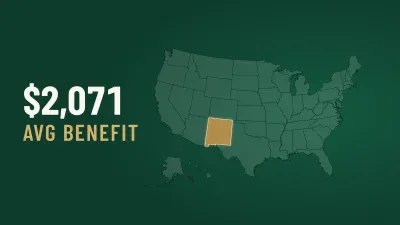
Under New Mexico law, retirees can exempt the Social Security income that shows up in federal adjusted gross income (AGI) as long as AGI stays under $100,000 for single filers, $150,000 for joint filers, heads of household and surviving spouses, and $75,000 for married couples filing separately. The exemption has applied to taxable years beginning on or after January 1, 2022. A typical retired worker collects $2,071 a month after the 2.8% COLA for 2026. That’s about $24,852 a year, below the limit.
Other retirement income gets less generous treatment. Pensions and IRA withdrawals stay taxable. Residents 65 and older can exempt up to $8,000 of income, but that break phases out completely above $28,500 of AGI for single filers and $51,000 for joint filers. Purchases inside Albuquerque city limits carry a 7.625% gross receipts tax, which works like a sales tax. Overall, New Mexico ranks fourth among states for income-adjusted tax burden.
A Renter’s Budget Leaves Almost No Margin
HUD puts the fair market rent for a one-bedroom in the Albuquerque metro at $1,185. HUD bases that figure on gross rent, so it covers most utilities. Medicare Part B costs $202.90 a month and usually comes straight out of the check. USDA’s Thrifty Food Plan puts a single adult at roughly $328 to $388 a month.
| Renter, monthly | Amount |
|---|---|
| Average benefit | $2,071 |
| One-bedroom rent with utilities | $1,185 |
| Food (upper thrifty estimate) | $388 |
| Medicare Part B | $202.90 |
| Left for everything else | $295 |
About $295 has to cover transportation, drug coverage, supplemental insurance, a phone, clothing, and every surprise expense. Rent takes about 57% of the check. Inflation adds pressure too. Americans 62 and older saw prices climb 3.6% over the past year, faster than the 2026 COLA. The 3.6% raise coming in 2027 catches up, but it doesn’t make up for the gap that already opened.
Paid-Off Owners Have a Freeze in Their Favor
Albuquerque’s median detached home sold for $386,990 in September 2026. One-third of a home’s value is taxable, and the 2025 composite rate in Bernalillo County was roughly 42.258 mills. On a median home, that comes to about $5,450 a year, or around $454 a month. After property tax, food, and Part B, about $1,026 is left for insurance, utilities, maintenance, and a car.
Bernalillo County also offers a senior valuation freeze. For the 2026 tax year, homeowners 65 and older qualify if their prior-year modified gross income was $44,200 or less. Benefits count toward that figure, but a retiree on the average benefit still easily tops it. Once approved, the home’s taxable value stops rising. Metro home prices are up 44.65% over five years. The county’s low-income rebate cuts off at $24,000 of income, so the average retiree just misses it.
What Albuquerque Offers, and What It Asks
The city has sunshine, mild winters, and an academic medical system. That system includes UNM Hospital and the UNM Comprehensive Cancer Center. Trade-offs include hot summers, high-altitude air, long-term water questions in the desert, and thinner health care outside the metro. More people left New Mexico than moved in, with a net loss of 1,924 individuals in the most recent IRS data.
Housing’s Share of the Check Decides It
Retiring in Albuquerque on Social Security alone appears more feasible for retirees who own their homes outright than for renters on the average benefit. Property tax takes about 22% of the check for a homeowner, and the freeze holds that share roughly steady. For a renter, the 57% figure leaves almost nothing for a car repair or a dental bill. A couple collecting the average combined benefit of $3,208 brings rent down to about 37% of income.
A single renter may need additional savings (we outlined how a mid-six-figure balance can throw off significant monthly income in a free report here). Adding $300 a month with a 4% draw takes about $90,000 in savings. Without that, the plan depends on below-market rent. Housing’s share of the check varies the most across these cases.
Contact [email protected] for any questions or corrections.
David Beren has been a Flywheel Publishing contributor since 2022. Writing for 24/7 Wall St. since 2023, David loves to write about topics of all shapes and sizes. As a technology expert, David focuses heavily on consumer electronics brands, automobiles, and general technology. He has previously written for LifeWire, formerly About.com. As a part-time freelance writer, David’s “day job” has been working on and leading social media for multiple Fortune 100 brands. David loves the flexibility of this field and its ability to reach customers exactly where they like to spend their time. Additionally, David previously published his own blog, TmoNews.com, which reached 3 million readers in its first year. In addition to freelance and social media work, David loves to spend time with his family and children and relive the glory days of video game consoles by playing any retro game console he can get his hands on.